Kurapia, dymondia, creeping thyme, buffalograss, and clover are candidates to investigate for a lower-growing lawn alternative. None is a universal walkable surface. Match the named plant or cultivar to light, drainage, traffic, irrigation, and current nursery guidance. A planted conversion may qualify for SoCal Water$mart turf replacement only if the applicant, existing turf, and design meet current rules and receive approval before removal.
Note: this post is for flat and low-grade areas: lawn replacement, path edges, and between-paver planting. For sloped or erosion-prone yards, see drought-tolerant groundcovers for San Diego slopes.
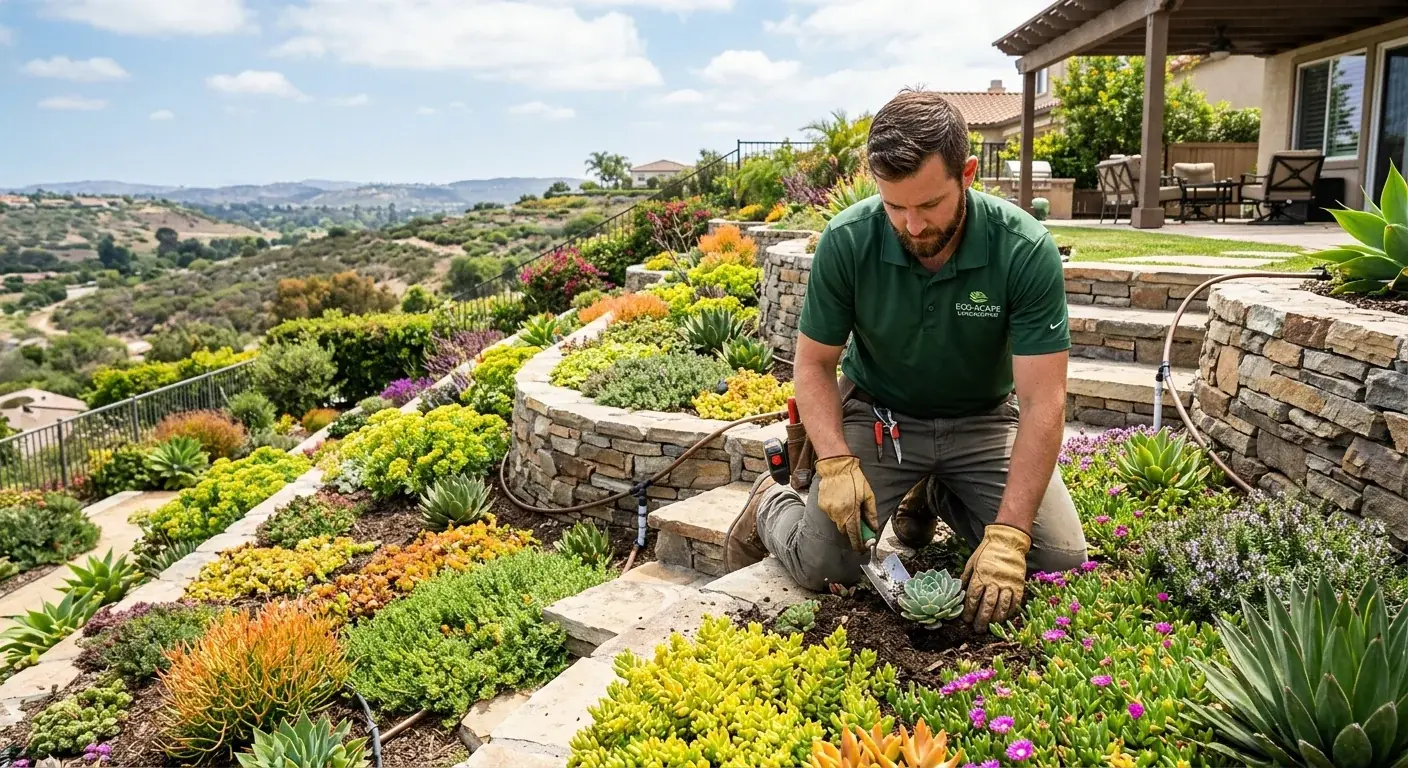
Kurapia in San Diego
Kurapia is sold as plugs for a lawn-replacement carpet. The grower specifies 12 to 15 inches on center, and says plugs at that spacing can fill in within about two months in warm weather (this site’s claims ledger, from the Kurapia installation guide). Other spacing you hear from crews is not a substitute for that spec. Follow the grower’s current establishment notes. Probe soil.
Creeping thyme in San Diego
Creeping thyme is a path-edge and between-paver plant more than a whole-lawn replacement. It wants sharp drainage and light traffic. Planting season and cultivar come from the nursery. For a front yard people walk daily, compare Kurapia or dymondia instead.
Grass alternatives you can walk on in San Diego
National lists often include moss, Corsican mint, and creeping Jenny. Those are a poor match for dry San Diego summers or local invasive rules. Candidates to verify locally:
- Kurapia and dymondia for rebate-oriented carpets, if the rest of the design qualifies
- A named warm-season turf if you still want a mowed lawn
- Clover as a seed option with bee and winter-patch caveats
- A true lawn species from best grass types for San Diego if you need sports traffic
If the area is a slope, stop and use the slope groundcover guide.
Why replace a lawn with ground cover
A cool-season lawn needs regular summer irrigation to stay green. A matched groundcover, once established, usually uses less water on the same footprint. That is a tendency, not a guaranteed bill cut. Mowing also drops if the plant stays low on its own. Confirm height on the tag.
Current SoCal Water$mart rules (from the program eligibility page captured for this RANK run): approval before turf removal; existing live turf (dead or dying turf and bare dirt do not qualify); at least 250 square feet of turf removed, or all present turf if the entire site has less than 250 square feet; at least three plants per 100 square feet; a stormwater feature; surfaces permeable to air and water; irrigation modification or conversion; no synthetic turf. Turf-looking grasses and invasive plants do not qualify even if they are drought-tolerant or California natives. Bare soil between plants classified as groundcover, which are expected to grow together after planting, does not need to be covered with mulch. See 2026 turf rebate guide.
Compare also artificial turf vs drought-tolerant landscaping.
Walkable vs look-only
Usually discussed for light to moderate walking: Kurapia, dymondia, creeping thyme, named buffalograss such as UC Verde, white clover. Traffic tolerance is cultivar- and site-specific.
Usually look-only or border: trailing rosemary, dwarf myoporum. Lippia / Phyla nodiflora can spread aggressively. Ask UCCE Master Gardeners or Cal-IPC before you plant it.
Use pavers or decomposed granite for high-traffic paths and plant groundcover in the gaps.
Comparison table (tendencies, not a spec sheet)
| Plant | Traffic (ask nursery) | Water after establishment | Typical look | SD note |
|---|---|---|---|---|
| Kurapia | Moderate walking, not sports | Low if the stand is healthy | Low carpet, white bloom | Use grower 12 to 15 in spacing |
| Dymondia | Light to moderate | Low | Silver-green mat | Slow fill; coastal conversations |
| Creeping thyme | Light | Low | Fragrant, needs drainage | Paths and pavers |
| UC Verde buffalograss | Moderate | Low | Lawn-like | Dormancy and mowing: follow cultivar |
| White Dutch clover | Light | Lower than fescue | Patchy in dry stretches | Bees; mixed-lawn use |
| Trailing rosemary | None | Very low | Woody border | Not a walkable lawn |
| Dwarf myoporum | None | Low | Fast cover | No foot traffic |
| Lippia | Verify | Very low | Very low mat | Spread risk: check before planting |
Coastal vs inland
Coastal: dymondia and thyme often enter the shortlist. Buffalograss bred for heat may sulk in heavy marine layer. Confirm.
Inland heat: Kurapia and named buffalograss are common lookups. Thyme as a full lawn can thin in peak heat.
If you are unsure: have the installer walk sun hours and soil, not just the city name. Broader context: drought-tolerant plants for San Diego.
Installing and establishing ground cover
Skipping establishment water is a common failure. Follow the grower for that species.
Remove existing turf. Physical removal beats planting through dead sod if rhizomes can return. If herbicides are used, the applicator follows the label and your turf species.
Amend only if the soil test and plant require it. Kurapia wants drainage. Dymondia often prefers lean, sandy conditions. Compost is not automatic.
Set drip before planting. Adding drip after a closed canopy is messy.
Spacing. Kurapia: 12 to 15 inches on center per the grower. Dymondia and thyme: use the nursery’s current spacing. Do not invent a county average.
Mulch. Organic mulch between plants can suppress weeds while they fill. Keep it off crowns. Rebate projects have their own mulch rules.
Establishment watering. Probe the top of the root zone. Follow the grower, then stretch intervals. Do not copy a cool-season lawn timer onto a new groundcover stand.
Frequently asked questions
Which ground cover plants work best in San Diego yards?
The ones that match sun, traffic, and drainage. Kurapia is a common inland walking carpet. Dymondia is a common coastal or lean-soil candidate. Thyme is for paths. Buffalograss is for a lawn-like look. Clover is a mixed-lawn conversation.
What is the best walkable ground cover for San Diego?
There is no universal winner. Kurapia is the usual comparison for sunny, moderate walking. Dymondia is a usual coastal comparison. Thyme is for stepping stones. Get a written quote for the same area.
Is creeping thyme a good ground cover for San Diego?
As a path plant with drainage, often yes. As a whole front lawn with daily traffic, usually no.
Is a clover lawn a good idea in San Diego?
As part of a mixed lawn, sometimes. It does not replace a sports surface, and it draws bees.
Is ground cover cheaper than a lawn?
Cost depends on removal, prep, plant size, drip, access, and establishment care. Get both options itemized. Do not assume a rebate credit until the reservation exists.
Does ground cover qualify for San Diego water rebates?
It may, if the project meets current SoCal Water$mart rules. Approval is required before removal. Artificial turf does not qualify. Verify at SoCal Water$mart.
How long does it take for ground cover to fill in a San Diego yard?
Kurapia’s grower: about two months in warm weather at 12 to 15 inch spacing. Other species are slower. Ask the nursery.
Can ground cover replace lawn on a slope?
Only after an erosion and drainage assessment. This page does not set a slope percentage. See the slope guide.
What ground cover works between pavers in San Diego?
Creeping thyme is the usual path-gap candidate. Dymondia is another. Both need emitters near the roots because pavers dry the joints.
Ready to replace your lawn
A conversion is plant selection, drip changes, and rebate paperwork if you are removing turf. Bloom Pro SD matches you with licensed independent contractors. They quote. You hire them. See drought-tolerant landscaping.
Call (760) 400-6355.