Common questions. Straight answers.
Common questions before hiring an independent landscaper. Don't see your question? Call us at the number in the header.
How does weekly lawn service work?
How much does weekly lawn service cost in San Diego?
Your contractor quotes for the property and agreed scope. Lawn area, access, growth rate, visit frequency, and disposal affect the price. Ask whether edging, trimming, blowing, and haul-off are included and whether billing is per visit or monthly.
How often will you come out?
Mowing frequency should follow growth, not a fixed calendar. Warm-season grasses grow most actively in warmer months; fescue grows actively in cooler periods. Ask the contractor for a schedule that avoids removing more than one-third of the standing grass height per mow.
Do you bring your own equipment?
Bloom Pro SD does not send its own crews or equipment. Ask the independent landscaper what equipment they bring, whether it fits your gates, and whether power, water, or access is needed. Confirm cleanup and disposal before booking.
Can I pause service when I travel or during winter?
Pause, cancellation, and seasonal changes depend on your maintenance agreement. Ask about notice requirements, minimum charges, and what happens to irrigation or plant care while you are away.
How much does landscape design and installation cost?
How much does a full landscape install cost?
Ask for an itemized quote covering design, removal, grading, drainage, irrigation, plants, hardscape, and disposal. Area alone does not determine cost: a small yard with difficult access can be complex. If seeking a turf rebate, obtain program approval before starting removal.
What do I get for the design fee?
Ask which deliverables the design fee includes: a scaled plan, plant list, irrigation layout, material specifications, and cost estimate may be separate items. Confirm revision limits and whether any design fee is credited toward installation in writing.
How long does a full yard install take?
The contractor should set the schedule after inspecting access, removal, drainage, utilities, and the proposed work. Permits, material availability, and weather can affect the finish date. Agree on work areas, access, and cleanup during construction.
Do you warranty the plants?
Bloom Pro SD does not provide a plant warranty. Ask the contractor whether one is offered and get its duration, covered plants, care requirements, exclusions, and replacement process in writing before you hire.
Are there rebates for drought-tolerant conversion?
Eligible properties may qualify through SoCal Water$mart. Check the current address-specific rate, funding, and project requirements in the official program before budgeting. Obtain approval before removing turf or starting work; ask whether application help is included in the contractor quote.
How do I fix a sprinkler system or cut water use?
My water bill jumped, what should I check first?
Compare the bill period and usage with earlier bills, then check controller start times and recent schedule changes. Observe each irrigation zone for overspray, broken heads, or leaks. Persistent water with irrigation off needs diagnosis; a bill increase can also have indoor causes.
Are smart controllers worth the cost?
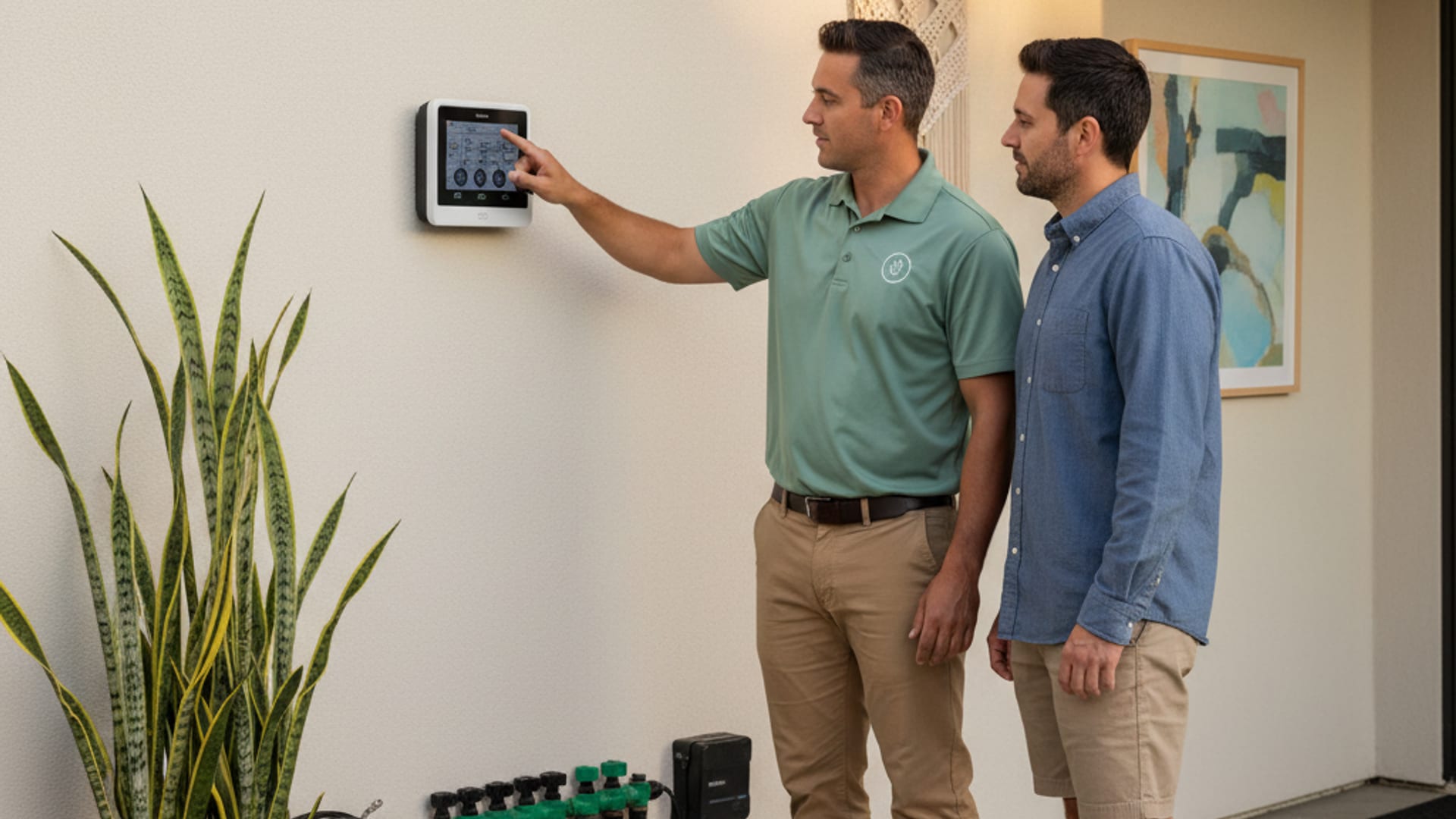
A compatible smart controller can adjust schedules using weather or soil-moisture information, but savings depend on the old schedule, setup, and landscape. Compare installation and device costs with your actual usage. Enter local watering restrictions correctly and check the settings; compliance is not automatic.
Can you retrofit a lawn system to drip for drought planting?
A contractor can assess whether existing valves and pipework suit a drip conversion. The plan should specify filtration, pressure regulation, separate water-use groups, emitter coverage, and new runtimes. Reusing existing parts depends on their condition and compatibility.
How often should landscape work happen?
When should I fertilize my lawn?
Base timing and amount on grass species, active growth, soil conditions, and the fertilizer label. Warm-season and cool-season lawns have different growth periods. Account for nutrients returned by clippings; do not add fertilizer simply because a stressed lawn is brown.
When should pre-emergent go down for weed control?
Identify the weed first. A suitable pre-emergent must be timed before that weed germinates and used according to its label, including turf compatibility and watering instructions. Local temperature and conditions matter more than a fixed countywide date.
How often should hedges be trimmed?
Frequency depends on the species, desired shape, flowering season, and growth rate. Ask which plants can be sheared and which need selective pruning, and avoid scheduling every hedge on the same calendar.
How often should I refresh mulch?
Inspect mulch depth and coverage periodically. Organic mulch settles and decomposes, so top up where needed without burying plant crowns or piling material against trunks. Stone needs different maintenance; a complete replacement is not automatically needed every few years.
What about defensible space and fire-risk lots?
Do you handle CAL FIRE defensible space clearing?
We can help you seek an independent landscaper for vegetation maintenance. Ask your local fire authority for requirements at your address, then have the contractor quote that scope. Confirm whether inspection documentation or specialist work is included; Bloom Pro SD does not certify compliance.
What plants should I avoid in fire-risk areas?
No plant choice makes a landscape fireproof. Placement, spacing, dead material, and ongoing maintenance matter. Use local fire-authority guidance to choose and place plants; do not assume a plant is suitable near a building merely because it is native or drought tolerant.
How often does defensible space need to be redone?
Inspect regularly and after rapid growth, leaf fall, or wind brings debris. Seasonal maintenance may need follow-up as vegetation regrows. Ask the local fire authority about required timing and keep access and areas near structures maintained throughout the year.
Get matched with a licensed local landscaper.
Tell us what your yard needs. Agree on the scope, price, and schedule with the independent pro you hire.