There is no single best grass for every San Diego yard. Pick by sun, traffic, winter color, and how you will water. Confirm the cultivar on the sod or seed label. Ask the nursery and the independent landscaper for today’s material and install quotes. This page is the species decision, usually installed as sod. If you are buying a bag, use best grass seed for San Diego. Kikuyu shows up in real county lawns, so it stays in the comparison.
How to pick grass for a San Diego yard
Answer four site questions before you shop.
- Sun. Hybrid bermuda wants a full-sun yard. Tall fescue, per UC IPM, is adapted to sunny or partially shady areas. St. Augustine is the usual warm-season shade candidate. Mixed light needs a cultivar check, not a guess.
- Traffic. Kids, dogs, and sports wear: ask about bermuda or kikuyu recovery. Light use can keep fescue or St. Augustine in the mix.
- Water. UC IPM says water need varies by species, location, and month. Probe the top 2 inches of soil. Deeper, less frequent watering is the general lawn rule, often two to three times a week when the lawn actually needs it, in the early morning. Follow your water agency’s current schedule too. See when to water a San Diego lawn.
- Seed or sod. Hybrid bermuda, zoysia, and St. Augustine are usually sod, stolons, or plugs here. Seed is mostly a labeled fescue blend. That split is the seed guide.
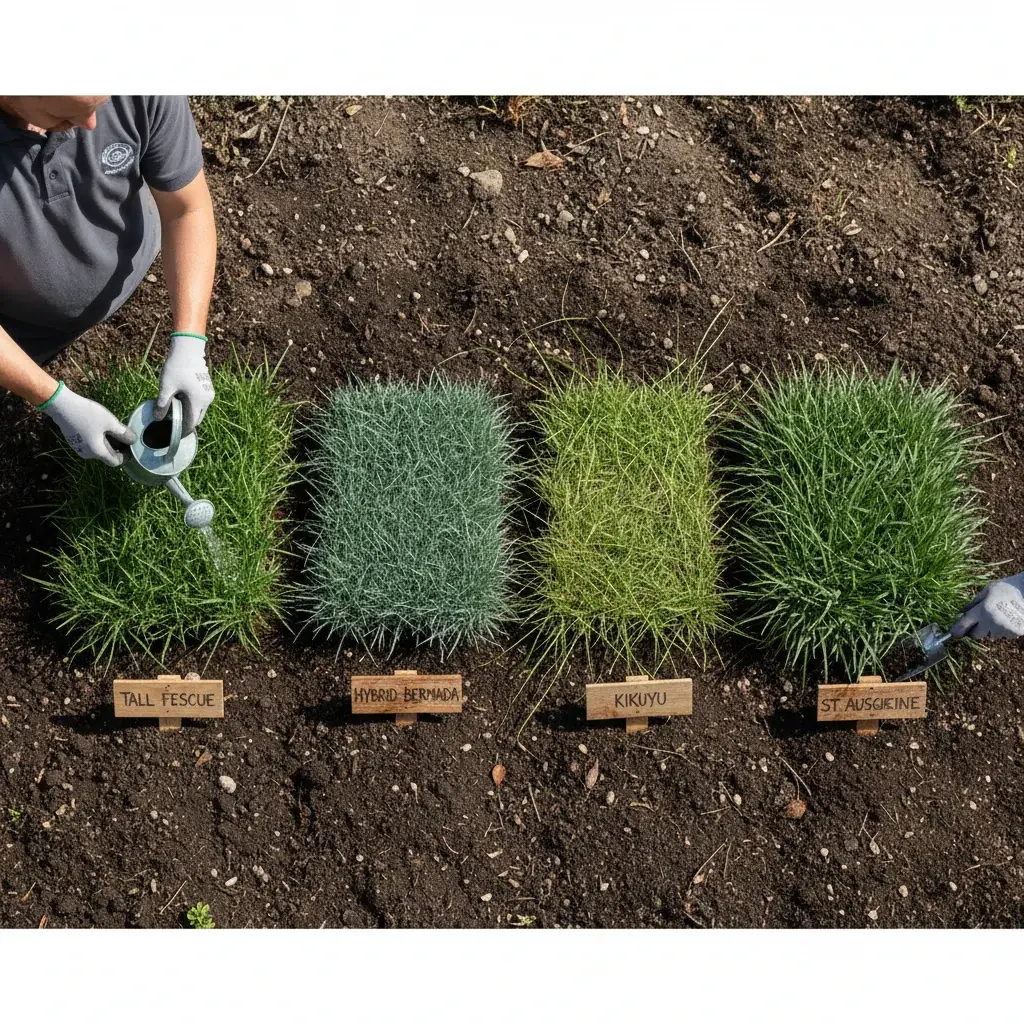
Five-grass comparison: season, sun, traffic, water, winter
| Grass type | Season | Sun / shade (label and UC, not a guarantee) | Traffic | Water tendency | Winter look |
|---|---|---|---|---|---|
| Tall fescue | Cool-season | Sunny or partial shade (UC) | Moderate | Highest of this set in dry summers | Stays green in cool weather |
| Hybrid bermuda | Warm-season | Full sun; thins in shade | Strong recovery when the cultivar is meant for wear | Lower than fescue once established, if irrigation matches the site | Often tan when it is dormant |
| Kikuyu | Warm-season | Sun to light shade in practice; confirm the stand | Aggressive spreader | Lower than fescue once established | Often greener on the coast than inland warm-season lawns |
| Zoysia | Warm-season | Better shade than bermuda on many labels; still check the cultivar | Dense; slower to fill gaps | Between bermuda and fescue in most yards | Can tan inland in winter |
| St. Augustine | Warm-season | The usual warm-season shade option | Moderate | Needs consistent moisture; not the drought champion | Can tan or thin inland in winter |
Sod and labor prices change by nursery, cultivar, access, and soil work. Ask for a written line-item quote. Do not use a blog table as a bid.
Coastal vs inland: what actually changes
A La Jolla or Carlsbad yard is cooler and foggier than El Cajon or Santee. That gap changes heat stress and how often you irrigate. Tall fescue can stay green along the coast with a tuned system. Inland heat makes cool-season lawns harder unless irrigation, soil, and the cultivar are a match.
Warm-season grasses grow in heat and can go tan in winter. Some coastal homeowners dislike that color change. Inland, dormancy can be the trade for a lawn that is not watered like a cool-season stand all summer.
Do not treat zip code folklore as a soil test. Walk the yard: hours of sun, slope, compacted spots, and whether water runs off. Then match a labeled cultivar.
A few site checks still matter: salt air near the water, wind on mesa tops, and tree shade that bermuda will not fill. Those are observations, not a license to invent wind speeds.
Tall fescue: year-round green with a water bill
Tall fescue is the common “normal lawn” look. UC IPM describes it as a cool-season grass adapted to sun or partial shade, forming a uniform stand when densely sown, with good weed and disease resistance in a dense planting. It tolerates warm summer temperatures and stays green in cool weather.
The catch is summer water. Cool-season turf needs moisture through San Diego’s dry months if you want it green. UC IPM is explicit that species, location, and month change the requirement. Probe soil. Do not copy a neighbor’s controller.
Fescue still gets disease in humid pockets. Diagnosis belongs to a current UC IPM lawn-disease guide or a licensed pest applicator, not a symptom guess on this page. If you already have weekly lawn maintenance, put dethatching, feeding, and mowing height in the written scope. Remove no more than one-third of the blade at a mowing (UC IPM).
Fescue is a fit when you want winter color and can water it honestly. Inland, compare it to a warm-season conversion before you resod the same species again.
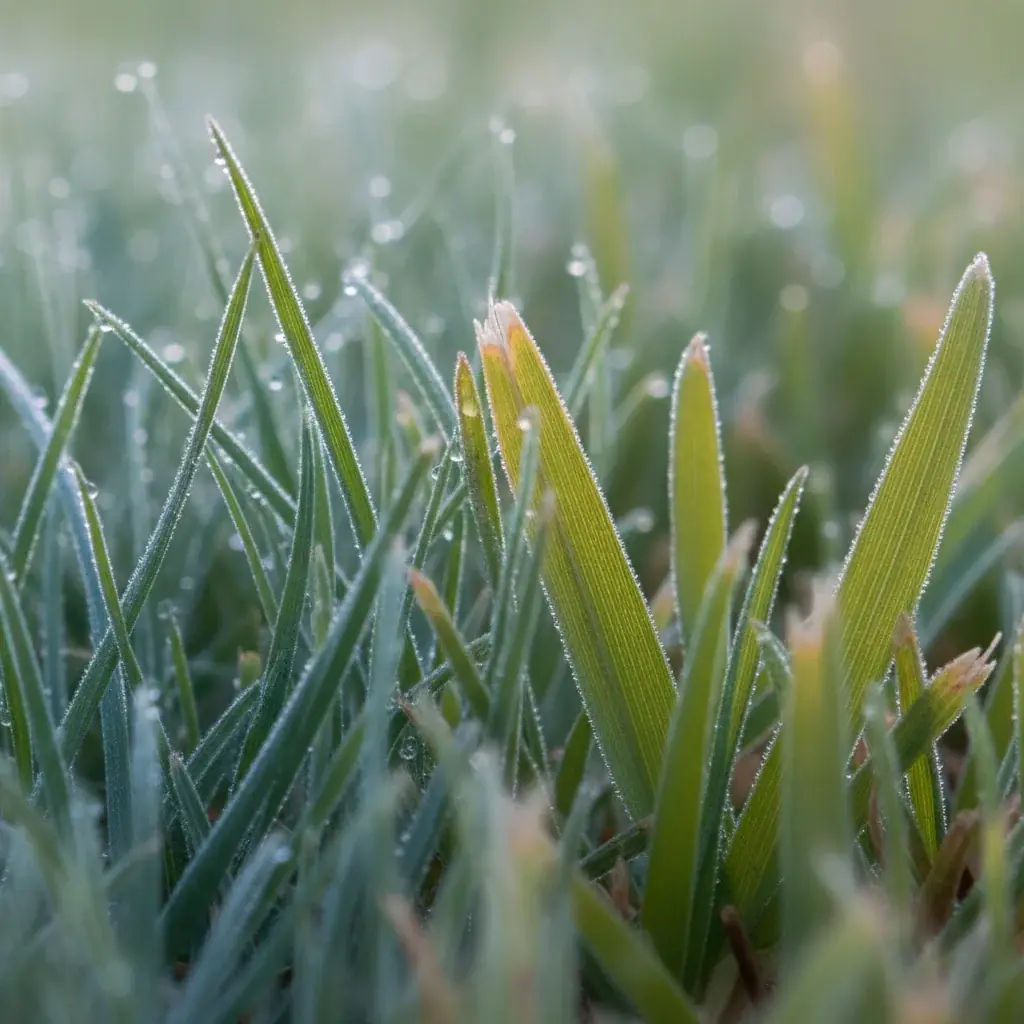
Hybrid bermuda: sun, traffic, and a tan winter
Hybrid bermuda cultivars such as Tifway 419 or TifTuf are sold for sports, golf, and sunny yards. They spread by stolons and rhizomes, so wear can fill if the stand is healthy. Water use is typically lower than tall fescue on the same site, but the exact inches and dollars depend on your meter, controller, and coverage. We do not publish a county water-bill average.
Drawbacks: it wants sun. Shade and large trees thin it. Winter dormancy turns many stands tan. It will invade beds and cracks if edges are ignored. Put a dedicated edging pass in the weekly lawn scope.
For sod installation, ask the contractor which hybrid they will lay, how they will prep soil, and how they will water the first weeks. Inland dead-fescue replacements often evaluate bermuda first. That is a site call, not a rule.
Kikuyu, St. Augustine, and zoysia
Kikuyu
Kikuyu (Pennisetum clandestinum) is a warm-season spreader. Once it is in, it is hard to contain. Check current Cal-IPC guidance and your HOA before you install more of it. If the lawn is already kikuyu, management (height, edges, irrigation) is usually the live question. Do not copy a mowing height from this page. Use the cultivar and the one-third rule.
St. Augustine
St. Augustine (Stenotaphrum secundatum) is the warm-season shade candidate. Cultivars such as Palmetto or Seville are sold for that use. Confirm the tag. It is coarser than bermuda. Pests such as chinch bugs need identification, not a spray default. Stock and lead time for sod vary. Plan the sod order around what the nursery actually has.
Zoysia
Zoysia is slower to establish and often sold as a denser, softer warm-season option with more shade tolerance than bermuda. Establishment still needs consistent irrigation and patience. Winter color can still tan inland. See zoysia grass in San Diego. Compare current quotes instead of assuming it is always the premium.
Water: rank the tendency, not a fake bill
Lowest typical irrigation demand among these five, on a comparable sunny site, is hybrid bermuda, then kikuyu, then zoysia, then St. Augustine, with tall fescue the thirstiest if you keep it green through summer. That order is a field tendency, not a gallon table.
UC IPM: water when the lawn needs it; most lawns when the top 2 inches have dried; deeper and less often; avoid runoff; early morning; shut the system in rainy weather. City of San Diego customers also have posted watering hours and runoff rules. Read the current water-use restrictions for City addresses. Other agencies set their own calendars.
For bill math that uses your actual usage, see San Diego water rates and lawn economics. Do not treat that article as a quote.
Switch grass, or drop turf?
Keep turf when the yard is actually used: play, dogs, or a written HOA lawn rule. Then match species to sun and water. A bermuda or zoysia conversion can cut irrigation if the system is rebuilt to match, not if you leave fescue-era runtimes.
If nobody uses the lawn (a parkway, a side strip, a steep slope), a different grass still leaves you mowing. Drought-tolerant landscaping may be the real job. Start with drought-tolerant plants in San Diego.
SoCal Water$mart turf replacement requires approval before removal. Live turf must exist. Dead turf and bare dirt do not qualify. Projects already started are ineligible. Minimum area is 250 square feet, or all turf if the site has less. At least three plants per 100 square feet. Synthetic turf is excluded. Amounts, caps, and funding change. Read the current eligibility page and your water agency before you count on a rebate.
If the lawn is patchy, the soil, grade, or heads may be the defect. Fix that diagnosis before you buy more sod.
Grass-by-grass comparison links
- Kikuyu vs bermuda in San Diego
- Kikuyu vs St. Augustine in San Diego
- Bermuda vs St. Augustine in San Diego
- St. Augustine vs fescue in San Diego
- Zoysia in San Diego
- Tall fescue vs bermuda in San Diego
- Sod installation
Frequently asked questions
What grass uses the least water in San Diego?
Hybrid bermuda is usually the lowest-water common lawn on a sunny San Diego site. The gap versus fescue depends on your controller, soil, and whether you keep fescue green all summer. TifTuf and similar drought-oriented hybrids are sold for heat. Confirm the tag. There is no published inch or dollar figure on this page.
What is the best grass for shade in San Diego?
St. Augustine is the usual warm-season shade choice. Zoysia can take more shade than bermuda on many labels. Tall fescue is the cool-season shade option, and UC lists it for partial shade. Bermuda is a poor shade grass. Walk the yard at noon before you order.
What is the best grass for dogs and heavy foot traffic?
Hybrid bermuda is the usual wear recommendation because it can fill through stolons and rhizomes when healthy. Kikuyu recovers aggressively and is harder to contain. Zoysia is dense but slower to close holes. Fescue and St. Augustine wear faster under regular dog traffic. No grass is urine-proof.
What’s the difference between warm-season and cool-season grass for San Diego?
Warm-season grasses (bermuda, kikuyu, zoysia, St. Augustine) grow in heat and can go dormant in winter. Cool-season tall fescue stays greener in cool weather and is harder to keep green in inland summer heat without more water. Coastal summers are milder. Match the stand to your address and sun, not a county slogan.
What is the cheapest grass to install in San Diego?
There is no stable county price on this page. Ask nurseries and independent landscapers for today’s sod and labor, with soil prep, disposal, and irrigation changes listed. Lifetime cost includes water and mowing, not just the pallet.
What is the best grass seed for San Diego?
For seed, labeled tall fescue blends are the practical San Diego choice in the right season. Hybrid bermuda, St. Augustine, and most zoysia are not a bag-of-seed project. See best grass seed for San Diego.
What is the best sod for San Diego?
For a sunny used lawn, hybrid bermuda sod is the usual first comparison. For winter color or partial shade, tall fescue sod is the usual cool-season pick. Zoysia and St. Augustine are cultivar- and shade-specific. Compare written quotes after you name the sun and the use.
Is Marathon grass good for San Diego?
Marathon is a branded tall fescue sold for Southern California. It is still fescue: winter color, shade usefulness, and higher summer water if you keep it green. See Marathon grass in San Diego for the product split. Ignore any old cost table that is not a current quote.
Can I grow kikuyu grass in San Diego legally?
Confirm current Cal-IPC and local rules before you plant more of it. It is a known aggressive spreader. If it is already in the lawn, get a containment plan in writing. Do not treat a blog as a legal opinion.
What is the best grass for San Diego?
None of the five wins every yard. Fescue for winter green and shade, with more summer water. Hybrid bermuda for sun, traffic, and lower irrigation once established. Kikuyu and St. Augustine for specific existing stands or shade. Zoysia when you want density and will wait. Pick by the site.
Is zoysia grass a good choice in San Diego?
It can be, when you want density and can wait through establishment. Compare current sod quotes and lead times. It is not practical from seed for most homeowners. See the zoysia article for the site checklist.
When to call us
Bloom Pro SD matches San Diego County homeowners with licensed independent landscapers. We do not install sod or set a price. Grading, soil, irrigation coverage, and timing decide whether new sod takes. Call (760) 400-6355 to seek a pro. You hire and pay the contractor directly.