For most San Diego yards, the pick is sun and winter color, not a water-use slogan. Tall fescue stays greener through winter and is the grass you can seed. St. Augustine is the stronger shade grass among common warm-season choices. Neither automatically beats hybrid bermuda if the only goal is the lowest water bill. Confirm cultivar water notes with the farm. The five-grass table is in best grass types for San Diego lawns.
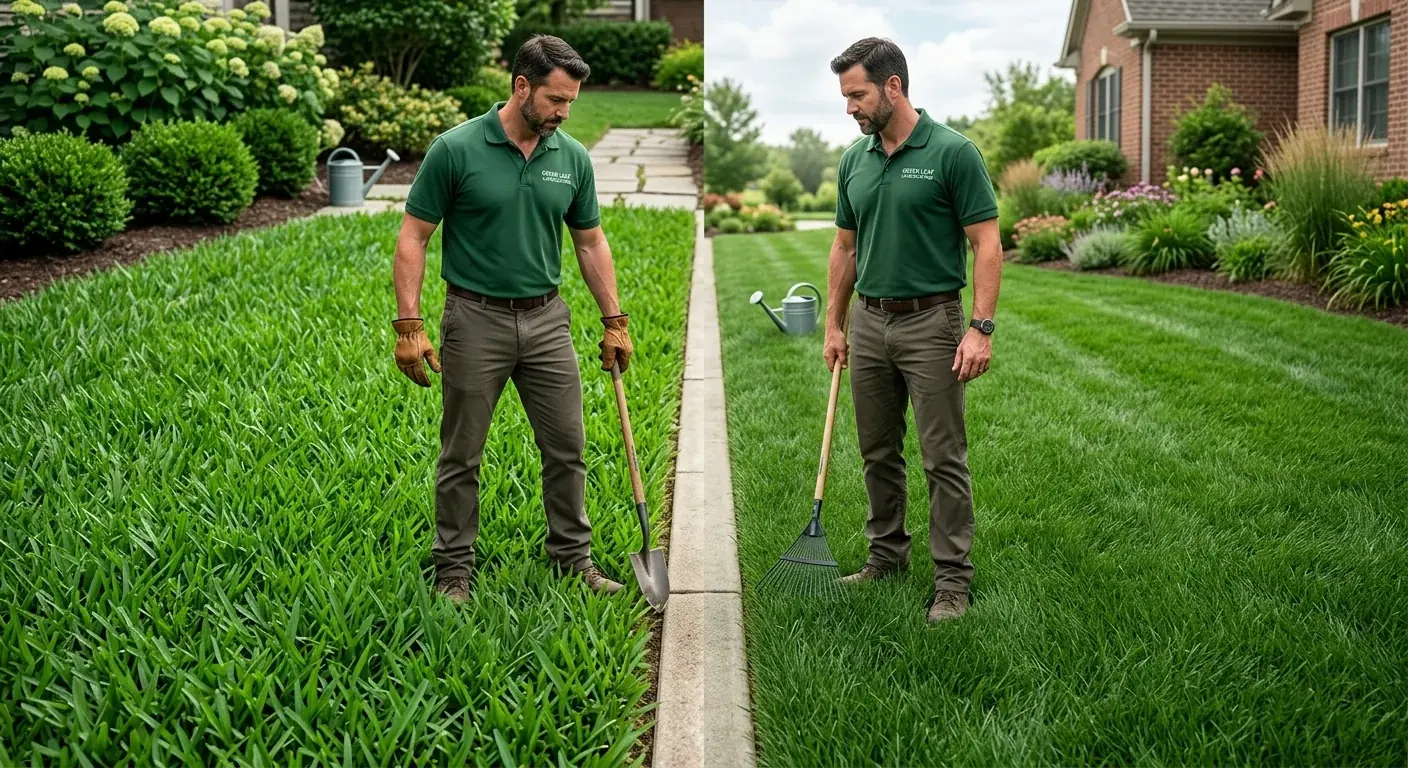
Side-by-side comparison for San Diego conditions
Pricing is set by the independent licensed contractor after they see the site. Bloom Pro SD does not publish installed rates. Compare itemized bids that name materials, quantities, access, demolition, and who handles permits or rebates.
| Quote field | Why it changes the number |
|---|---|
| Measured area or linear footage | Sets material and labor time |
| Access, slope, and demolition | Often larger than the visible finish |
| Product or material specified | Brand, size, and finish must match across bids |
| Base, drainage, and restoration | Frequently omitted from low totals |
| Permits, engineering, or rebate filing | Confirm who owns the paperwork |
Water estimates based on San Diego County Water Authority evapotranspiration data for San Diego coastal and inland climate zones. Sod costs are county ranges and vary by supplier.
Shade: where St. Augustine has no competition
St. Augustine is the only warm-season grass that reliably holds green in partial shade. In San Diego neighborhoods where mature eucalyptus, pepper trees, or west-facing fences cut afternoon sun, think Kensington, Mission Hills, or canyon-rim lots in Scripps Ranch, Fescue thins out and turns patchy within a season or two. St. Augustine’s broad blades and stolon-based spreading habit let it fill in and crowd out weeds even under a canopy that would starve other grasses.
The catch: St. Augustine’s shade tolerance doesn’t reduce its water needs. It still wants consistent moisture, and in areas with coastal morning fog, that can work in its favor, the marine layer adds humidity that eases evapotranspiration. But if you’re inland in El Cajon or Santee and dealing with shade from a block wall, St. Augustine’s water demand is harder to justify.
Water: St. Augustine uses less over a year
Tall fescue’s deeper roots, often 12–24 inches at maturity versus St. Augustine’s shallower mat, help it go longer between irrigations. That is not the same as a lower annual bill. Cool-season fescue is the higher-water lawn of this pair, about 35–40 inches a year versus 28–35 inches for St. Augustine, matching UC’s warm-season vs cool-season split and the county comparison table. If the job is the lowest water bill with a living lawn, hybrid bermuda still beats both. St. Augustine has never been the turf-replacement rebate winner either; those programs pay to remove lawn, not to swap fescue for St. Augustine.
Year-round color: fescue’s quiet advantage
St. Augustine is a warm-season grass, which means it slows down and can go tan or semi-dormant during San Diego’s cooler months, December through February in inland zip codes, and even in coastal areas during a cold snap. Tall fescue, being cool-season, actively grows in fall and winter and typically stays green year-round in San Diego’s mild climate. For front yards in HOA communities where brown dormant turf draws notices, or for homeowners who just don’t want a tan lawn in January, fescue’s year-round color is a real practical advantage.
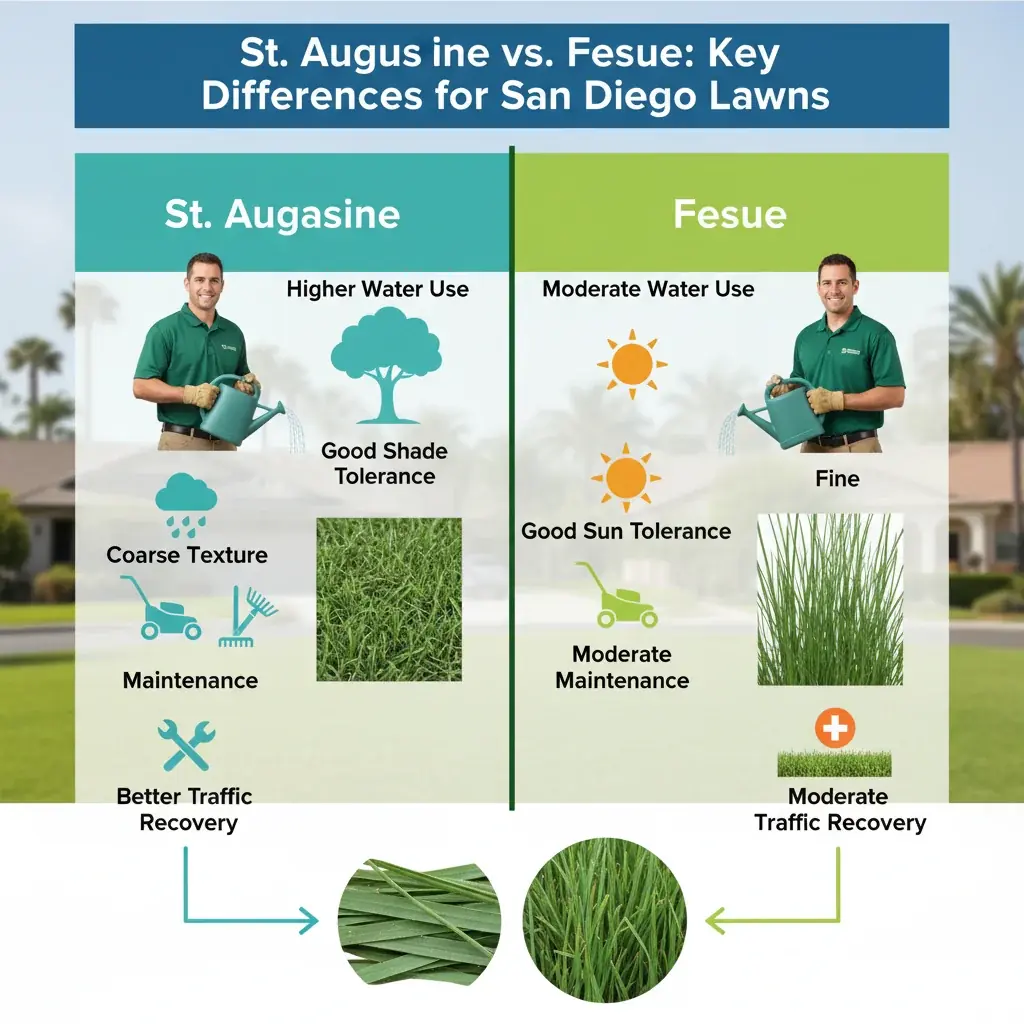
What about Marathon sod?
If you’ve shopped sod in San Diego, you’ve seen Marathon. It’s not a different species, Marathon is a brand of tall fescue blend grown by Southland Sod Farms in Oxnard, and it’s the dominant fescue sod sold in Southern California. Marathon I, II, and III are all tall fescue cultivars selected for this climate; they differ mainly in blade texture and growth rate (Marathon III is the finest-bladed and slowest-growing of the three).
So when you compare St. Augustine vs Marathon, you’re really comparing fescue vs St. Augustine, and everything in this guide applies. The one practical difference: Marathon’s cultivars are bred for SoCal heat, so they hold up better in inland zones than generic fescue seed blends. If you’re set on fescue and buying sod rather than seeding, Marathon (or a comparable SoCal-grown tall fescue blend) is usually what your installer will quote.
Which grass fits your San Diego yard
Pick St. Augustine when:
- Your yard gets fewer than six hours of direct sun daily
- You’re in a coastal microclimate (Pacific Beach, Oceanside, Encinitas, Coronado) where higher humidity makes its water needs more manageable
- You need a self-repairing lawn that handles kids and dogs in active yards
- Shade from trees or structures rules out cool-season options
Pick tall fescue when:
- Your yard gets six or more hours of full sun
- You’re in an inland valley (Escondido, El Cajon, Santee, Poway) with hot summers
- Year-round green is important to you or your HOA
- You want year-round green and you will pay for the extra water
If you’re also weighing other warm-season options, the guide to kikuyu vs. bermuda grass in San Diego covers two more alternatives worth comparing. Two more head-to-heads worth a look are bermuda vs. St. Augustine and kikuyu vs. St. Augustine. For a broader overview of the county’s most common turf choices, the best grass types for San Diego lawns post is the place to start. If you’re choosing between the two most common SD grasses, the tall fescue vs bermuda comparison covers that head-to-head.
Once you’ve picked a grass, the cost side of the equation matters too. The sod installation cost guide for San Diego breaks down what to expect per square foot and what drives the range. Our sod installation service page covers what the installation process looks like from site prep through the first watering schedule.
Frequently asked questions
Does St. Augustine grass grow well in San Diego? Yes, St. Augustine grows well across most of San Diego County, especially in coastal and semi-coastal zones where mild temperatures and marine-layer humidity reduce drought stress. It’s one of the most common warm-season grasses planted in coastal neighborhoods from La Jolla to Carlsbad. The main inland limit is heat plus shade: East County sun is bermuda’s job, and St. Augustine still drinks more than bermuda even when it uses less than fescue.
Is tall fescue or St. Augustine better for a shady San Diego yard? St. Augustine wins in shade. It can maintain healthy growth with four to six hours of sun per day, while tall fescue typically needs six or more hours to stay dense. In heavily shaded yards, canyon-facing lots, north-facing sides of homes, or areas under large tree canopies, St. Augustine is almost always the better choice over fescue.
Which uses less water in San Diego, fescue or St. Augustine? St. Augustine uses less water over a full year. It is a warm-season grass; tall fescue is cool-season. San Diego County Water Authority and UC ET work puts fescue around 35–40 inches of applied water per year and St. Augustine around 28–35 inches. Fescue’s deeper roots help between cycles, but the annual total still runs higher. Hybrid bermuda undercuts both if water is the only score.
Which grass stays green in winter in San Diego? Tall fescue stays green through winter in San Diego. As a cool-season grass, it actually grows most actively in fall and spring and holds color through the county’s mild winters. St. Augustine is a warm-season grass that slows down in cooler months and can go semi-dormant or turn tan during cold snaps, particularly in inland zip codes from December through February.
Can you mix tall fescue and St. Augustine in the same yard? Technically yes, but it doesn’t work well in practice. The two grasses have different mowing heights, watering schedules, and growth habits that conflict over time. St. Augustine spreads aggressively via stolons and will tend to crowd out fescue in the areas it favors. The result is usually an uneven, patchy lawn within a few seasons. A cleaner approach is to use St. Augustine in the shaded zones and fescue in the sunny sections, separated by a hardscape edge or mow border.
Which is cheaper to install in San Diego, fescue or St. Augustine? Sod material and install labor are quoted by the farm and the installer. Site prep, grading, soil work, and old-lawn removal often dwarf the pallet line. Bloom Pro SD does not publish sod rate cards.
Fescue vs St. Augustine: which suits a shaded San Diego yard?
St. Augustine is the shade answer, and that is its main advantage over fescue in this comparison. It is warm-season, so it browns in winter, but it tolerates shade better than the other warm-season options. Tall fescue stays green year-round and handles shade reasonably, at the cost of the highest water use of the common San Diego grasses. Shade plus a tight water budget points to St. Augustine; shade plus year-round green points to fescue.
When to call us
If you’re not sure which grass fits your specific yard, or you’re ready to install sod and want it done right from the first watering, the pros in our network cover all of San Diego County. They handle site prep, grading, sod selection, and installation so your new lawn establishes clean, and we serve every city in San Diego County. Call us at (760) 400-6355 to get matched. The independent professional quotes the work.