Choosing new landscaping for your San Diego home often comes down to two popular, water-saving options: artificial turf or drought-tolerant landscaping. Both promise lower water bills and less maintenance than traditional grass, but they offer very different long-term experiences. Deciding which is right for you means looking beyond initial impressions and considering the complete picture of costs, longevity, local rebates, and environmental factors.
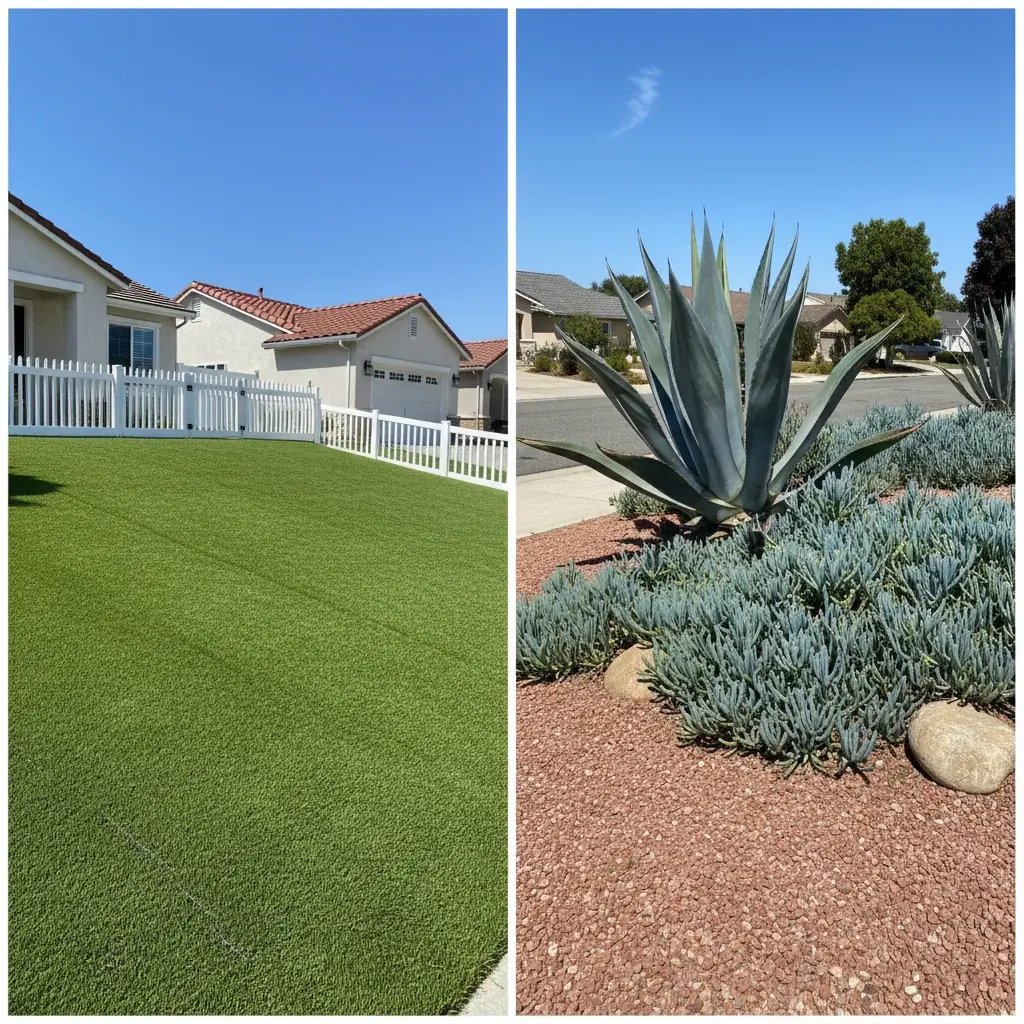
Compare the complete quote and long-term obligations
When comparing artificial turf vs drought-tolerant landscaping, the initial installation price is just one piece. For turf, request an itemized quote for removal, base preparation, drainage, product, infill, seams, edges, labor, and disposal. For a planted landscape, separate demolition, grading, stormwater features, irrigation changes, plants, mulch or other groundcover, and establishment care. Our artificial turf cost guide explains how to compare scopes.
The long-term obligations differ. Artificial turf can eventually need repair or replacement, with timing governed by the product, installation, drainage, UV exposure, traffic, and warranty. A planted landscape needs establishment irrigation and ongoing pruning, weeding, mulch care, and selective plant replacement. Compare both over the period you expect to own the home, using written warranty terms and realistic maintenance assumptions.
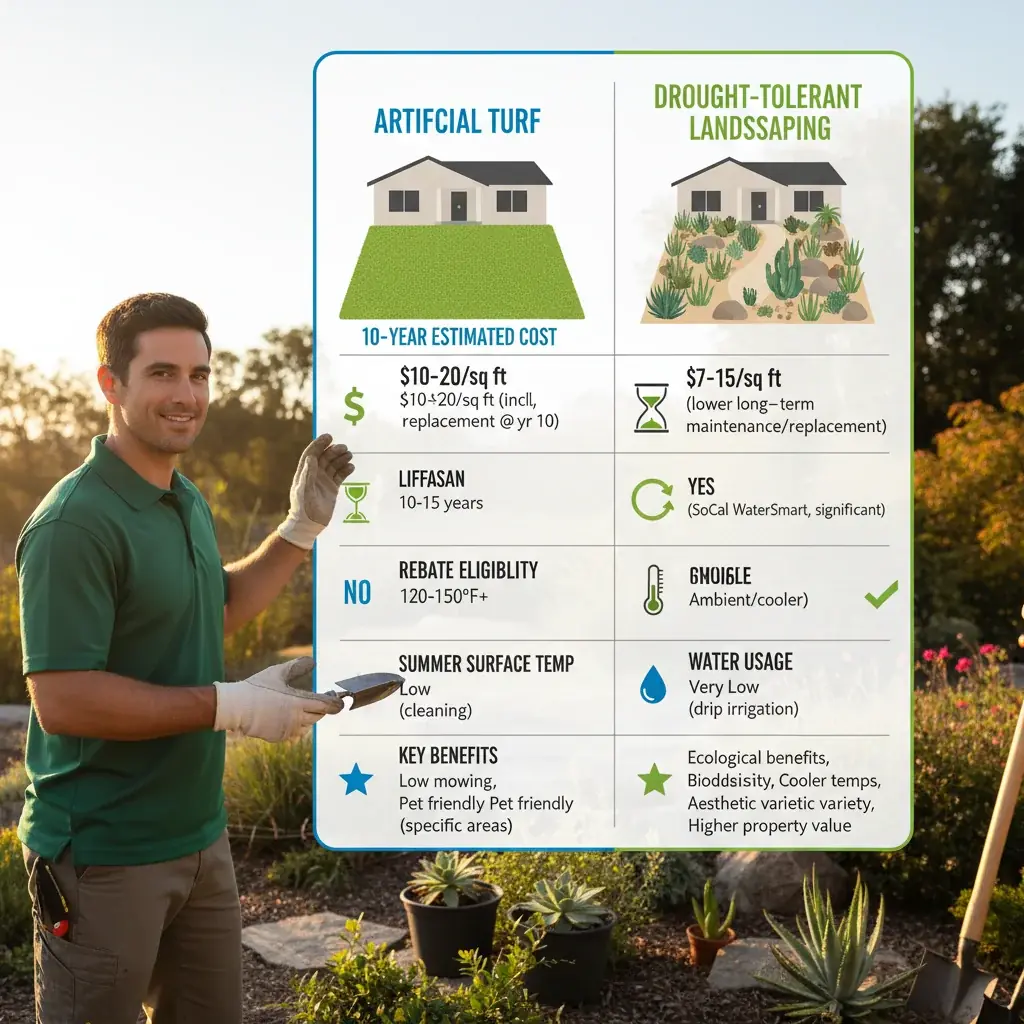
Both options drastically reduce water bills compared to a traditional lawn. San Diego’s rising water rates make this a major saving. However, drought-tolerant landscapes, especially those using native plants and efficient drip irrigation, typically use even less water than the minimal water required for cleaning artificial turf. While you might save on the water bill with either, the “turf vs drought tolerant cost” analysis becomes clearer when you factor in long-term durability and the potential for a full turf replacement down the line. For those considering traditional grass, understand that even a new sod installation will come with significantly higher ongoing water costs.
What the current regional turf-replacement rebate covers
The current SoCal Water$mart Turf Replacement Program does not allow synthetic turf in the rebated project area. Its published residential requirements include a minimum of three plants per 100 square feet, a stormwater-retention feature, and no bare soil or impermeable surfaces in the converted area. A project must be approved before work begins.
An artificial-turf proposal therefore should not count this regional rebate as a credit. A qualifying planted conversion may be eligible, but the amount, service-area participation, funding, and application status must be confirmed on the SoCal Water$mart website before demolition.
Before making a decision, it’s essential to research current offerings. We cover current programs and eligibility in more detail in our blog post on drought-tolerant rebates in San Diego. Understanding these rebate opportunities is a critical part of the “artificial turf rebate San Diego” question and can dramatically shift the effective cost comparison between the two landscaping styles. Embracing a truly water-wise garden through drought-tolerant landscaping often comes with both environmental and financial rewards.
Heat exposure: test the actual product and location
Sun-exposed artificial turf can become much hotter than shaded surfaces or living vegetation. The actual surface temperature varies with the product, infill, color, air temperature, wind, and sun exposure, so a universal temperature claim is not a sound basis for a purchase.
Ask for a product sample and compare it in the intended location on a warm, sunny day. For pet or play areas, check the surface with your hand before use and provide shade or another surface when it is hot. Do not assume a brief rinse solves the underlying sun exposure.
For comparison, a drought-tolerant garden with living plants maintains a much cooler surface temperature. Even when dormant, the soil and plant material don’t absorb and radiate heat in the same way. This makes drought-tolerant landscapes more comfortable and safer for outdoor activities during peak summer heat. Consider the location and sun exposure of your yard carefully when evaluating this factor.
Where artificial turf still makes sense (small dog runs, shaded patios)
Despite its drawbacks in larger, sunny areas, artificial turf still has legitimate applications in specific scenarios. It’s not about bashing turf entirely, but understanding its limitations and strengths. For instance, small dog runs are a common place where artificial turf shines. Dogs can be rough on natural grass, creating muddy patches and yellow spots. Artificial turf provides a durable, easy-to-clean surface that holds up to heavy pet traffic, and the heat issue is mitigated in very small, contained areas.
Similarly, artificial turf can be a practical choice for heavily shaded patios or side yards where natural grass struggles to grow due to lack of sunlight. In these areas, the heat island effect is significantly reduced, and turf offers a consistently green appearance without the need for constant maintenance that natural grass in shade would demand. It can also work well under play structures where natural grass would quickly turn to dirt.
The key is to use artificial turf thoughtfully and in moderation. It’s most effective in areas that are either small, heavily shaded, or subject to extreme wear where living plants would simply fail. For most of your main landscape, especially in sun-exposed zones, considering drought-tolerant landscaping offers more comprehensive benefits.
Maintenance reality check for both options
Many homeowners choose artificial turf believing it’s zero-maintenance. This isn’t entirely true. While you won’t mow or water, artificial turf still requires attention. It needs regular brushing to keep the fibers standing upright and to prevent matting. You’ll also need to rinse it periodically to remove dust, pollen, and pet odors. Infill material, which provides cushion and helps the blades stand, can shift or degrade over time and may need replenishment. Weeds can still sprout through the drainage holes or around the edges, requiring occasional removal. Plus, cleaning up pet waste is crucial to prevent odors and bacterial buildup.
Drought-tolerant landscaping also requires maintenance, but it’s a different kind. You won’t be pushing a lawnmower, but you’ll still need to perform tasks like occasional weeding, especially during establishment. Pruning plants to maintain their shape and health is important, as is monitoring your irrigation system for efficiency. Mulch layers need to be refreshed every few years to suppress weeds and retain moisture. The type and amount of maintenance depend heavily on the specific plants you choose and the design of your landscape. A well-designed, mature drought-tolerant garden often requires less intensive, but more thoughtful, care than a conventional lawn.
How to decide based on your lot, sun exposure, and use case
Making the right choice between artificial turf and drought-tolerant landscaping for your San Diego home hinges on a few critical factors unique to your property and lifestyle.
First, consider your lot size and sun exposure. For large, sunny areas, the heat island effect of artificial turf becomes a significant concern for comfort, safety, and energy efficiency. In these spaces, a well-planned drought-tolerant design with a variety of native and adapted plants will provide cooler temperatures, beauty, and ecological benefits. However, if you have a small, heavily shaded courtyard or a specific high-traffic zone where nothing else thrives, artificial turf might be a practical solution.
Next, think about your intended use case. Do you need a durable, consistently green surface for children to play on regularly, or pets to run without turning your yard into a mud pit? Artificial turf handles heavy foot traffic exceptionally well. If your priority is a beautiful, living garden that attracts local wildlife, offers sensory experiences, and contributes to the local ecosystem, then a diverse drought-tolerant landscape is the clear winner.
Finally, evaluate your long-term budget and environmental goals. While artificial turf offers water savings, its overall 10-year cost picture includes a likely full replacement. Drought-tolerant landscapes may have a comparable initial cost (especially with rebates) but offer ongoing savings with little to no major replacement costs. If water conservation, supporting pollinators, and reducing your carbon footprint are top priorities, then committing to drought-tolerant landscaping aligns best with those values. We can match you with an independent professional who designs to the actual lot.
Frequently asked questions
Is artificial turf or drought-tolerant landscaping better in San Diego?
For a large sunny area, compare surface comfort, drainage, maintenance, warranty, replacement, and ecological goals. Turf can be practical in some compact or heavily used zones; a planted landscape provides living shade and habitat but needs establishment and plant care.
Does artificial turf qualify for San Diego water rebates?
No, not under the current SoCal Water$mart Turf Replacement Program. Synthetic turf is prohibited in the rebated project area. Verify eligibility and receive approval before starting a planted conversion.
How hot does artificial turf get in San Diego?
Sun-exposed turf can become uncomfortably hot, but the temperature depends on the product and site conditions. Test a sample in the intended location and check the surface before children or pets use it on hot days.
Is artificial turf really maintenance-free?
No. You skip mowing and watering, but turf needs regular brushing to keep fibers upright and prevent matting, plus periodic rinsing. Drought-tolerant landscaping needs a different kind of attention: occasional weeding especially during establishment, seasonal pruning, and monitoring the drip system. Neither is zero work.
When to call us
Deciding between artificial turf and drought-tolerant landscaping requires careful consideration of your specific property, budget, and lifestyle. Call (760) 400-6355 to get matched. The independent professional quotes the conversion.