How to water your SD lawn the right way
Established lawns generally benefit from deep watering with time between sessions. Set the schedule for your grass, soil, weather, and sprinkler output.

City of San Diego watering rules
If the City of San Diego Public Utilities Department serves the property, current published restrictions include: water landscapes only before 10 a.m. or after 6 p.m.; do not irrigate in a way that causes runoff onto pavement, neighboring property, or structures; repair or stop leaks upon discovery or within 72 hours of City notification; and do not apply potable water to outdoor landscapes during or within 48 hours after measurable rainfall. These rules apply inside that service area. If another agency bills the address, confirm that agency's current restrictions before setting a schedule.
Source: City of San Diego water-use restrictions, checked September 13, 2026. Seasonal shortage stages can add day-of-week limits; recheck the live page.
What you'll learn
- How watering established turf differs from keeping new seed or sod moist
- How to calculate your runtime (measure output with a tuna can)
- Why early morning is useful, subject to your local watering rules
- How to tell over-watering vs. under-watering from the lawn itself
Step by step
- Place several identical straight-sided containers across one sprinkler zone to check coverage.
- Run that zone for 15 minutes.
- Measure the depth in each container. Multiply the average by 4 for inches per hour; large differences mean coverage needs attention.
- Choose a weekly water target for your grass and current weather using local irrigation guidance, subtract useful rainfall, then divide inches needed by inches per hour to calculate hours of runtime.
- Spread that runtime across permitted watering days. Use shorter cycles with soak breaks if water runs off; check moisture below the surface and adjust as weather changes.
New seed, newly laid sod, sandy soil, shade, and established turf need different schedules. Check coverage and soil moisture before adding water to a brown patch.
Further guidance
Need help diagnosing a zone?
Bring catch-can depths, the watering days your agency allows, and photos of runoff or dry spots. We match you with an independent irrigation pro who can quote against that record.
Keep learning.
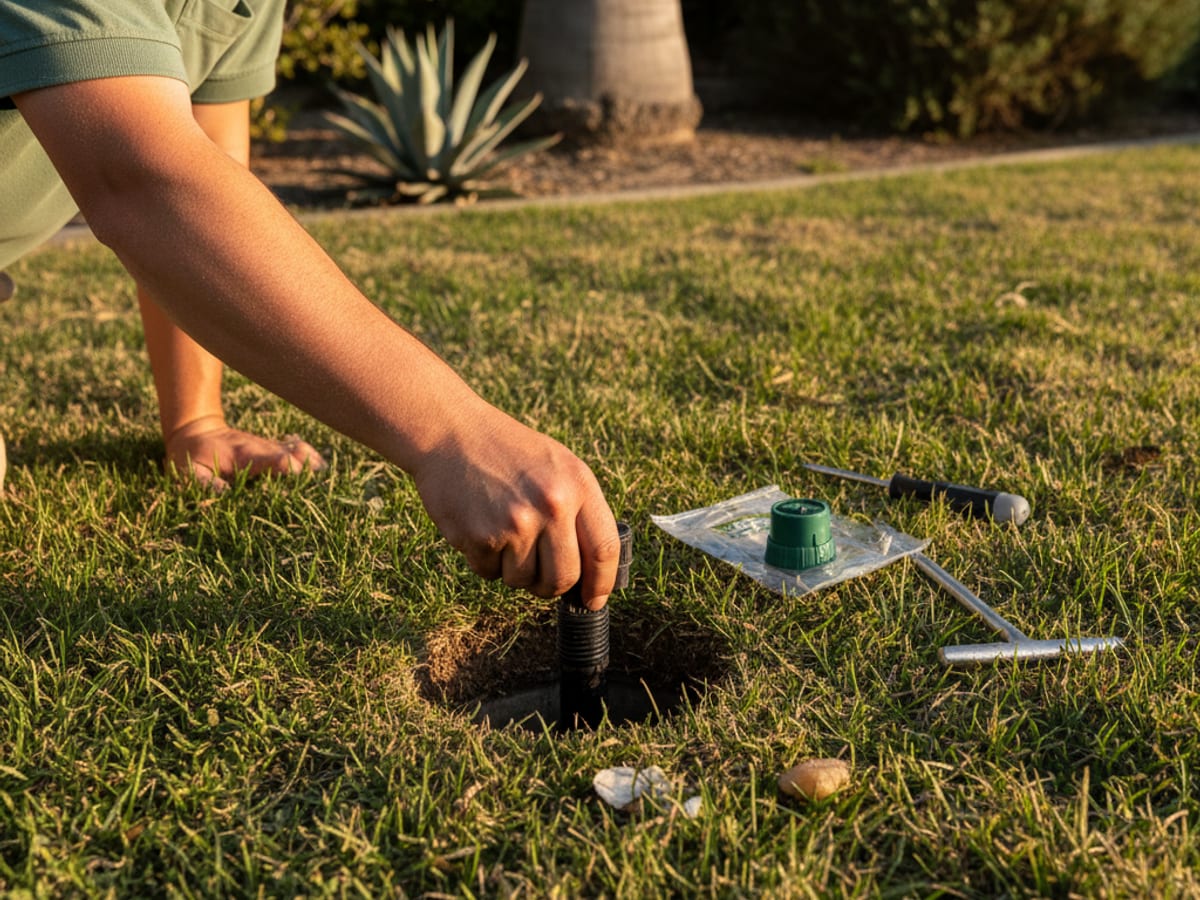
How to fix a broken sprinkler head
An accessible broken pop-up head can be a DIY repair. Identify the damaged part and match its connection, height, pressure requirements, and spray coverage.
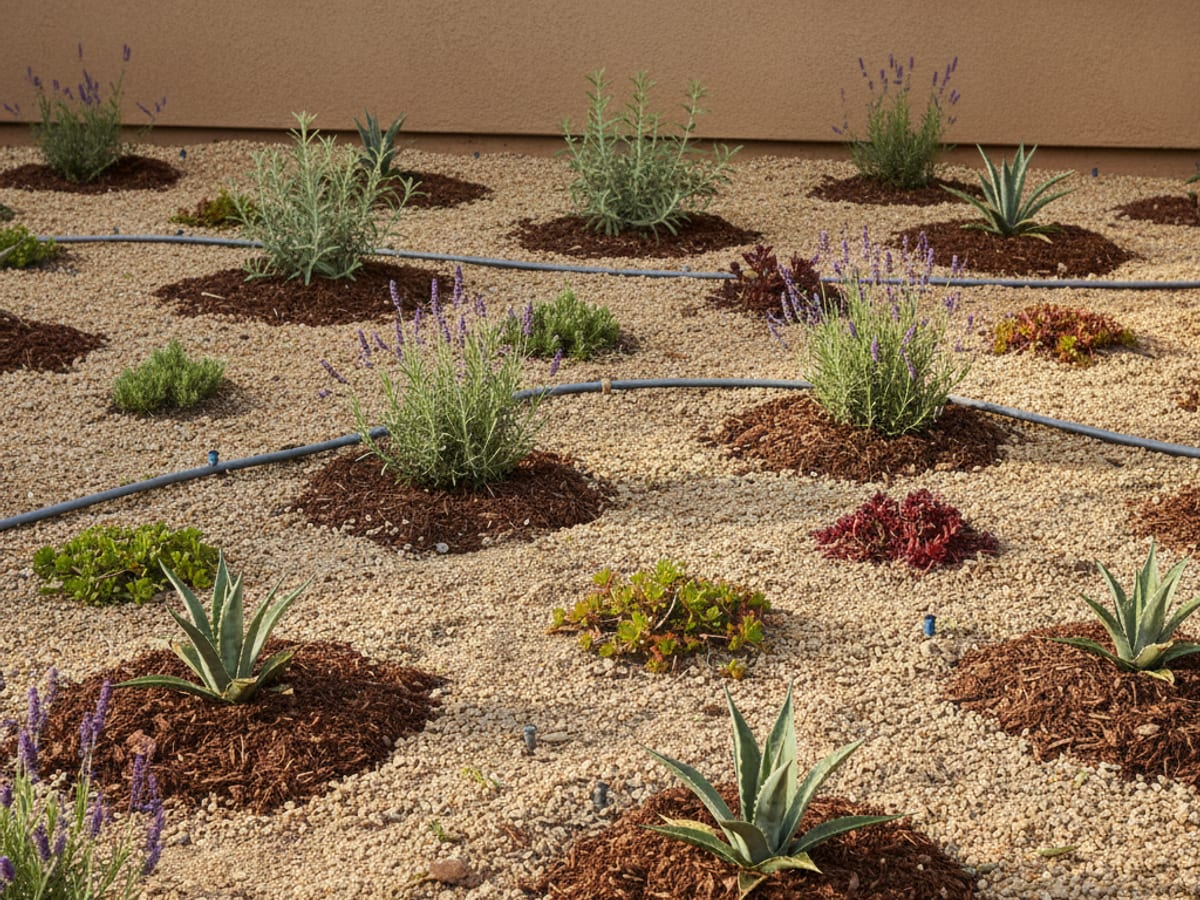
How to plant a drought-tolerant bed
Plan a drought-tolerant bed around the sun, soil drainage, and mature size of the plants. Site preparation and establishment watering matter as much as the plant list.
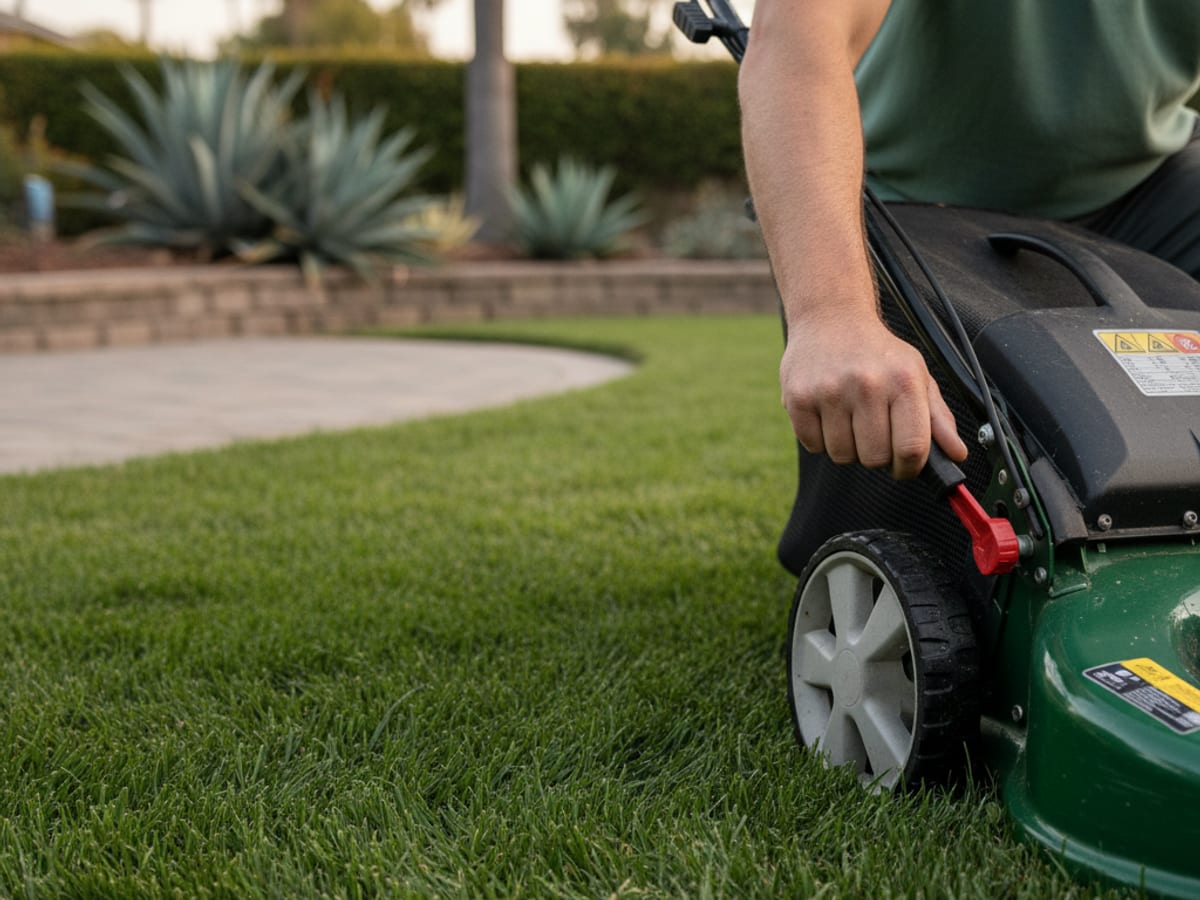
How to set the right mowing height
Set mowing height for your grass species and cultivar. Cutting too low or removing too much growth at once can thin the lawn and slow recovery.