River rock can cut irrigation on a bed, slow erosion, or finish a dry creek. It is not automatically rebate-eligible. SoCal Water$mart turf replacement needs live turf removed and plant coverage rules met. Synthetic turf is not eligible. Bloom Pro SD does not publish per-square-foot or per-ton menus. Compare delivered material plus install as separate lines.
What changes a river rock quote
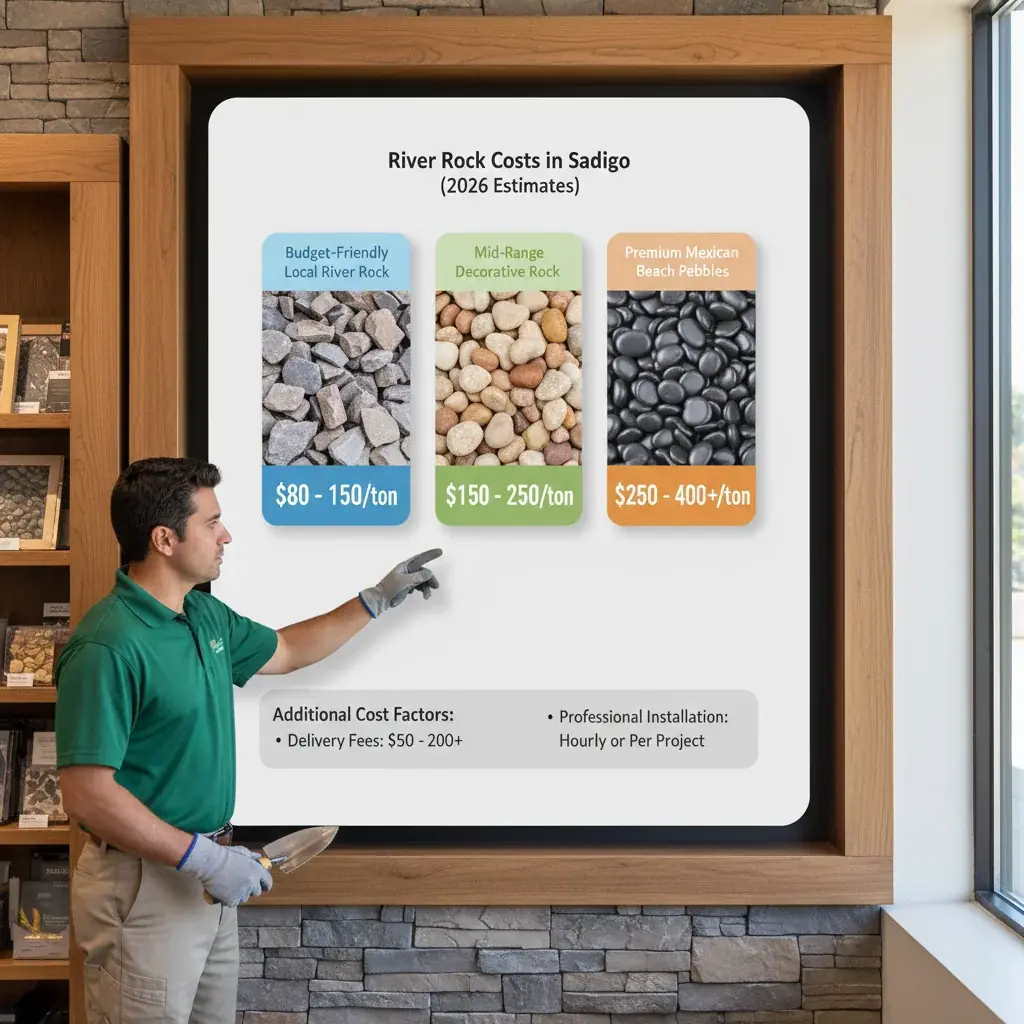
Prices vary by size, color, and whether you’re buying delivered bulk or hiring labor. Ask the independent professional for a written tonnage and haul quote. This page does not hold a 2026 yard price list.
Pricing is set by the independent licensed contractor after they see the site. Bloom Pro SD does not publish installed rates. Compare itemized bids that name materials, quantities, access, demolition, and who handles permits or rebates.
| Quote field | Why it changes the number |
|---|---|
| Measured area or linear footage | Sets material and labor time |
| Access, slope, and demolition | Often larger than the visible finish |
| Product or material specified | Brand, size, and finish must match across bids |
| Base, drainage, and restoration | Frequently omitted from low totals |
| Permits, engineering, or rebate filing | Confirm who owns the paperwork |
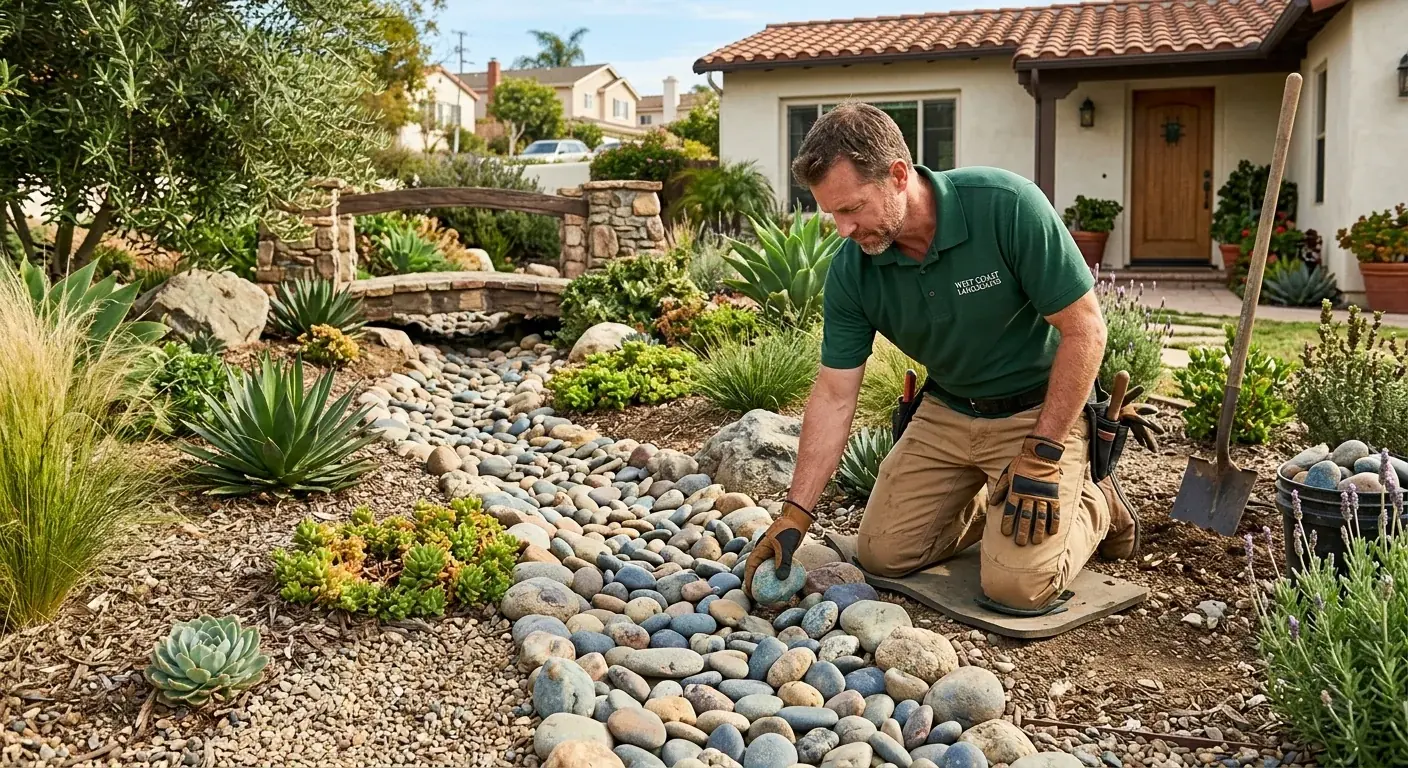
What drives the installed cost up: access, slope grading, depth, weed barrier, and steel edging. A designed dry creek with drainage is a different job from a decorative accent bed. Delivery is its own line.
Why river rock works for San Diego drainage and slopes
San Diego’s drainage problems come from the soil. Much of the county sits on heavy clay or a compacted hardpan layer that water can’t move through quickly. After a winter storm, that means standing water, soggy beds, mud tracked into the house, and water pooling against foundations.
River rock solves this without a complicated drainage system. A rock-lined dry creek bed or swale gives runoff a clear path to follow instead of sitting on top of slow-draining soil. The smooth, rounded stones move water faster than crushed gravel and stay put because of their weight, so they don’t scatter in heavy flow. On slopes, larger rock breaks the force of running water and keeps the soil underneath from washing away.
The function-and-form combination is the reason river rock shows up in so many San Diego yards. A dry creek bed reads as a design feature when it’s dry most of the year, then quietly does its job the handful of times we get serious rain. For lots with chronic wet spots, low areas, or runoff coming off a neighbor’s property, river rock is usually the simplest fix that also looks good. For bigger jobs that need grading and a real drainage plan, it pairs with hardscaping work like French drains and retaining walls.
Inland San Diego caution: in Escondido, El Cajon, Santee, and other inland areas where summer highs push 100°F, dark or large river rock can radiate enough heat to stress nearby plants. Keep rock mulch away from the drip zone of heat-sensitive plants in those microclimates, and stick to lighter-colored granite or mixed earth-tone rock when you want both heat tolerance and plant health.
Popular uses: dry creek beds, mulch replacement, borders, and HOA yards
River rock’s adaptability makes it suitable for a wide range of applications. Its smooth, rounded edges and varied color palettes work in both naturalistic and modern designs.
Dry creek beds are the most popular and visually impactful use. They mimic natural stream beds, guide rainwater away from structures, and still read as a design feature on dry days.
River rock also works well as a mulch replacement in low-water beds. Unlike organic mulches that break down and need replenishment, rock mulch is permanent. It suppresses weeds and stabilizes soil temperatures. For how rock and mulch compare side-by-side, see our guide to mulch types for San Diego beds.
A few more uses come up constantly on San Diego properties:
- Drainage swales. A shallow, rock-lined channel carries roof and patio runoff to the street or a planted area instead of letting it pool against your foundation.
- Slope and hillside cover. Canyon-edge and graded lots all over the county struggle with erosion. Larger river rock holds the soil, slows runoff, and looks intentional where bark or gravel would wash out in the first hard rain.
- Side yards and tight spaces. The narrow strip between a house and a fence is usually a mud-and-weed problem. River rock over a weed barrier turns it into a clean, no-maintenance utility zone.
- Around fire pits and seating areas. A ring of river rock gives an outdoor gathering spot a finished, fire-safe base, a real consideration in San Diego’s higher-fire-risk neighborhoods.
- HOA-approved front yards. Many San Diego HOAs have approved plant lists and restrict turf removal. River rock in a drought-tolerant design typically passes HOA review more easily than DG or bark, because it reads as a finished, permanent material. Check your CC&Rs and submit a landscape plan with your request.
When you’re weighing different ways to bring stone into your yard, our broader guide to rock landscaping ideas in San Diego covers gravel, boulders, flagstone, and more.
How river rock compares to decomposed granite and bark mulch
The three materials San Diego homeowners weigh most often are river rock, decomposed granite (DG), and bark mulch.
| River rock | Decomposed granite | Bark mulch | |
|---|---|---|---|
| Lifespan | Permanent, never breaks down | Several years, needs occasional top-up | 1 to 2 years, decomposes |
| Best for | Drainage, slopes, borders, accents | Pathways, patios, casual seating areas | Plant beds, around trees and shrubs |
| Maintenance | Rinse and pull stray weeds | Re-grade and refresh fines | Replace as it breaks down |
| Drainage | Excellent, water moves through | Good, compacts to a firm surface | Holds moisture in the soil |
| Soil & plants | Radiates heat, doesn’t feed soil | Neutral, walkable | Feeds soil, keeps roots cool and moist |
| Up-front cost | Higher | Moderate | Lowest |
| Long-term cost | Lowest (one-time install) | Low-moderate | Highest (annual replacement) |
The short version: bark is cheapest up front but you keep buying it. Over five years, rock usually costs less per year because you install it once. Bark is still the better pick directly around thirsty plants and trees because it holds moisture and cools the soil while rock radiates heat. DG is the choice for walkable surfaces. River rock wins anywhere water needs to move, where erosion is a concern, and for clean borders that should look the same in ten years as they do on day one.
Pairing river rock with drought-tolerant plants and turf rebates
River rock looks and performs best as part of a planted, low-water design, not as a bare field of stone. A yard that’s all rock radiates heat and reads as harsh. Mixed with native plants, succulents, ornamental grasses, and a few boulders, the rock becomes the connective tissue that ties everything together.
That pairing also matters for rebates. Live-turf conversion can go through SoCal Water$mart. A rock-only conversion typically fails plant-coverage rules. Synthetic turf is not eligible on the regional path. Use the current estimator. Reservation before turf removal.
Rebate programs require living plants and permeable surfaces, not a rock-only yard. A design that combines river rock with drought-tolerant planting is both the better-looking choice and the one that qualifies. For the full rebate breakdown, amounts, and application steps, see our guide to drought-tolerant rebates in San Diego for 2026.
Designing the rock and the planting together from the beginning is the difference between a yard that looks installed and one that looks intentional. A referred drought-tolerant landscaping professional quotes that planted-and-rock balance.
Installation tips for a professional look
1. Prepare the site thoroughly. Clear all weeds, grass, and debris. Grade the area for drainage: a gentle slope for dry creek beds, a slight pitch away from structures for flat areas. Proper grading is critical for both function and longevity.
2. Install a high-quality weed barrier. Lay durable landscape fabric with seams overlapping at least 6–12 inches, secured with landscape staples. This blocks weeds while letting water drain, and keeps the stones from sinking into the soil over time.
3. Define your edges. Install permanent edging, metal, plastic, or concrete, before spreading rock. This prevents migration into adjacent beds or lawns and maintains a clean appearance.
4. Spread the rock evenly. Dump small piles across the area, then rake to an even 2–3 inch depth for decorative applications. Too shallow and the fabric shows through; too deep and you’re paying for rock you don’t need.
5. Rinse the rock. A hose rinse after install washes off dust and sediment and reveals the rock’s true colors.
Keeping river rock looking good over time
River rock is close to maintenance-free. A few stray weeds will eventually find their way in through gaps. Pull them by hand or spot-treat as they appear. Over a few seasons, leaves and dirt can dull the surface, especially under trees. A pass with a leaf blower clears debris, and an occasional hose rinse brings the color back. In high-traffic or high-flow areas, rake the rock back into place once or twice a year and top up any thin spots. That’s the whole routine: no mowing, no fertilizing, no annual replacement.
Frequently asked questions
How much does river rock cost per square foot in San Diego?
Installed river rock is quoted by size, access, depth, and grading. Specialty rock and a designed dry creek with drainage are different jobs from a small accent bed. Bloom Pro SD does not publish per-square-foot menus.
How much river rock do I need for my yard?
Coverage per ton depends on rock size and depth. Measure the area, pick a depth, and ask the independent professional to write the tonnage plus waste. This page does not freeze a coverage recipe.
Does river rock qualify for San Diego drought rebates?
River rock alone does not qualify. Mapped SoCal Water$mart planting is at least three plants per 100 square feet of project area, plus live-turf removal, permeability, stormwater, mulch, and irrigation rules. Mixing rock with natives does not finish the checklist. Read the current SoCal Water$mart eligibility page before you start.
River rock vs. mulch: which is better for San Diego yards?
It depends on what’s in the bed. River rock is the better pick for drainage areas, slopes, borders, and spaces that need a permanent, zero-maintenance solution. Bark mulch is the better pick directly around thirsty plants and trees, because it holds moisture and cools root zones while rock radiates heat. Many San Diego yards use both: bark in the planting beds, river rock for the dry creek bed and edges.
Does river rock help with drainage on a sloped San Diego lot?
Yes, it’s one of the best drainage materials for slopes. Smooth river rock channels runoff rather than shedding it in sheets, which slows erosion and reduces the velocity of water reaching downhill structures. On steeper slopes, larger 3–6” rock holds position under heavy flow. Combined with proper grading and a weed barrier, a rock-lined swale or dry creek bed handles most residential drainage situations without a French drain.
What are the pros and cons of river rock landscaping?
Pros: permanent (no annual replacement), zero irrigation needed in covered areas, excellent drainage and erosion control, heat-tolerant, works with drought rebates when paired with plants, HOA-friendly. Cons: higher up-front cost than mulch or DG, radiates heat so it’s a poor fit near moisture-loving plants, heavy to move or reconfigure, and a rock-only yard can look stark without planted accents. It’s the right material for the right spots, not a whole-yard solution.
When to call us
River rock is one of the few landscaping materials where the DIY line is pretty clear: a small accent bed is manageable. Anything involving grading, drainage, a slope, or more than a few hundred square feet is worth getting done right the first time. Bad grading means water goes the wrong direction; skipped weed barrier means weeds push through in year two.
The crews we match you with handle design, material selection, grading, weed barrier, edging, and installation across San Diego County. Call us at (760) 400-6355 to get matched. The independent professional quotes the work.