Stamped concrete is a poured, textured slab. It often bids between plain concrete and true pavers, but Bloom Pro SD does not publish installed per-square-foot rates. The real tradeoff is repair: a crack in a single slab is harder to hide than a replaced paver. For broom-finish comparison, see concrete patio cost in San Diego.
What stamped concrete actually is
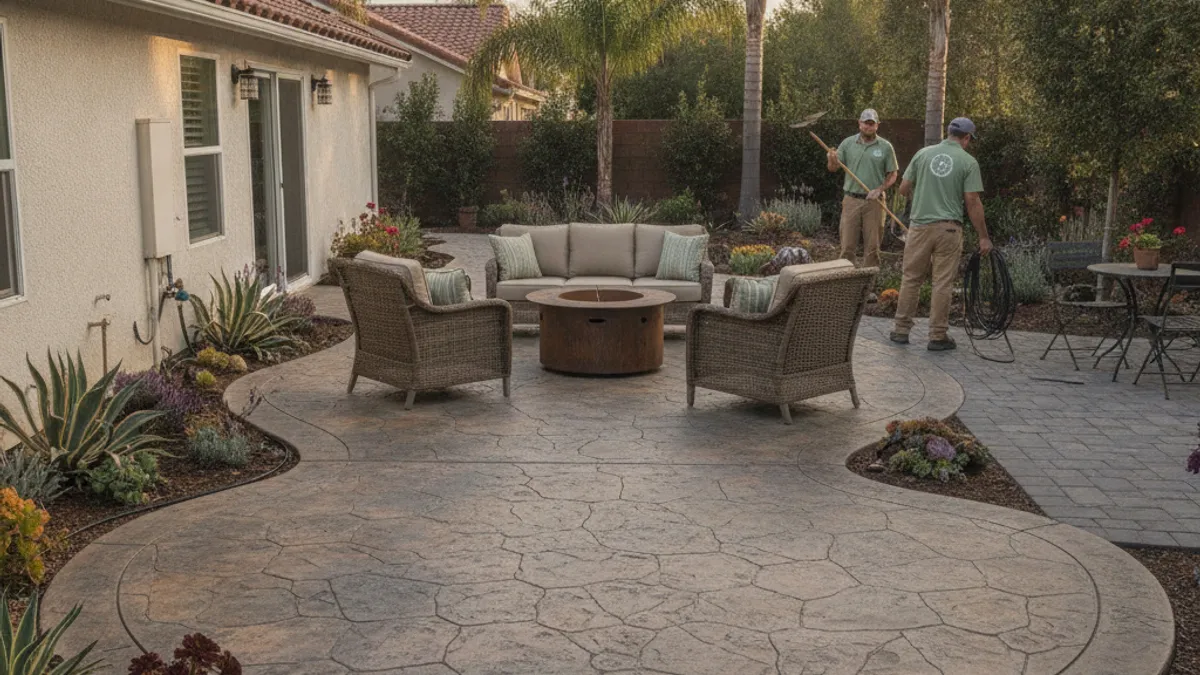
Stamped concrete is a poured concrete slab pressed with textured molds while it’s still curing, then colored to mimic flagstone, slate, brick, or cobblestone. The appeal is real: you get a custom-looking surface for meaningfully less than true stone or paver material would cost, and the pattern options are broad enough to match almost any design direction.
Cost comparison: stamped concrete vs. pavers vs. plain concrete
Pricing is set by the independent licensed contractor after they see the site. Bloom Pro SD does not publish installed rates. Compare itemized bids that name materials, quantities, access, demolition, and who handles permits or rebates.
| Quote field | Why it changes the number |
|---|---|
| Measured area or linear footage | Sets material and labor time |
| Access, slope, and demolition | Often larger than the visible finish |
| Product or material specified | Brand, size, and finish must match across bids |
| Base, drainage, and restoration | Frequently omitted from low totals |
| Permits, engineering, or rebate filing | Confirm who owns the paperwork |
Stamped concrete sits between plain concrete and pavers on cost, which makes it a common choice for homeowners who want a designed look without the paver price tag. For a full breakdown of paver pricing by material, see our paver patio cost guide.
The real tradeoff: repair and long-term durability
This is where the decision actually gets made, and it’s less about the upfront number than most homeowners expect.
Stamped concrete is a single poured slab. When it cracks, and San Diego’s expansive clay soil and seasonal ground movement mean it eventually will somewhere on a large patio, that crack is difficult to repair invisibly. Concrete color and texture batches vary over time, so a patch job on a stamped patio installed years ago rarely matches perfectly, and the crack itself often stays visible even after a repair.
Pavers are individual units set on a compacted base. If one paver cracks or a section settles unevenly, you pull the affected pieces and replace them for a fraction of the cost of a full-patio repair, and the color match is far less of an issue since you’re not trying to blend new material into an old poured slab. Pavers also handle San Diego’s clay soil heave better as a system, since individual units can shift slightly with the ground without transmitting stress across the whole surface the way a rigid poured slab does.
For a homeowner planning to stay 15-plus years, pavers generally win on total cost of ownership despite the higher install price, mainly because of how much cheaper and cleaner repairs are over that timeframe.
Where stamped concrete makes the most sense
Stamped concrete is the stronger choice when budget is the primary constraint and you want a more finished look than plain concrete without stretching to paver pricing. It also works well on larger patio areas where paver material cost would push the project well outside budget, since the per-square-foot gap widens fast on bigger footprints.
It’s a weaker choice directly against a building foundation on unstable or poorly compacted soil, or on a patio you expect to modify later (adding a fire pit, extending the footprint), since cutting into an existing stamped slab for a modification is messier and more visible than removing and replacing a section of pavers.
Heat, sealer, and pool-adjacent considerations
Dark stamped concrete colors absorb more heat than lighter pavers or natural stone, which matters directly around a San Diego pool deck or any patio that gets bare feet in July. Lighter color-release agents and a lighter base color keep surface temperatures more manageable, and it’s worth asking about this specifically if the patio will see direct summer sun most of the day.
Stamped concrete also needs a sealer reapplied every 2 to 3 years to protect the color and texture and to keep the surface from becoming slick when wet, which is a real slip hazard right at a pool edge if the sealer wears thin and isn’t reapplied on schedule. Pavers don’t carry this same maintenance requirement, since their color is baked into the material itself rather than a surface-applied coating, which is part of the long-term cost tradeoff worth weighing alongside the repair-cost difference.
Getting the base prep right either way
Whichever material you choose, the base underneath matters more than the surface material itself. San Diego’s clay soils need proper excavation and a compacted crushed-rock base (typically Class II or three-quarter inch minus material) before either concrete or pavers go down. Skipping proper base compaction to save on labor cost is the single biggest reason either material fails early, cracking, settling, or heaving regardless of which surface you picked.
A referred hardscaping professional can quote grading and base prep for both paver and poured-concrete patios, along with retaining walls and walkways if your project needs a broader hardscape plan. See our retaining wall cost guide if your patio project also involves managing a slope.
Frequently asked questions
How much does a stamped concrete patio cost in San Diego? Bloom Pro SD does not publish a stamped-concrete rate card. Pattern, color, access, demolition, and base prep change the bid more than a county average.
Is stamped concrete cheaper than pavers? Stamped concrete often bids below pavers and above a plain slab, but only matching itemized quotes prove that on your lot. Repair cost over time is a separate comparison.
Does stamped concrete crack in San Diego’s clay soil? It can, since it’s a single rigid slab and San Diego’s expansive clay soils do shift seasonally. Proper base compaction before pouring significantly reduces the risk, but pavers handle ground movement better as a system since individual units can shift slightly without transmitting stress across the whole surface.
Can a cracked stamped concrete patio be repaired invisibly? Rarely. Concrete color and texture batches vary over time, so a patch on an existing stamped slab is difficult to match exactly, and the crack line often remains visible even after a professional repair.
When to call us
For an honest read on stamped concrete versus pavers for your specific yard and soil conditions, call us at (760) 400-6355 to get matched. The independent professional quotes the work.