Lawn care in Spring Valley is quoted after a walkthrough. East County inland heat, clay soil, and hillside lots mean the playbook here is different from coastal San Diego. A lawn service or landscaper in Spring Valley needs to account for all three. Call (760) 400-6355 to get matched. The independent professional quotes and sets the start date.
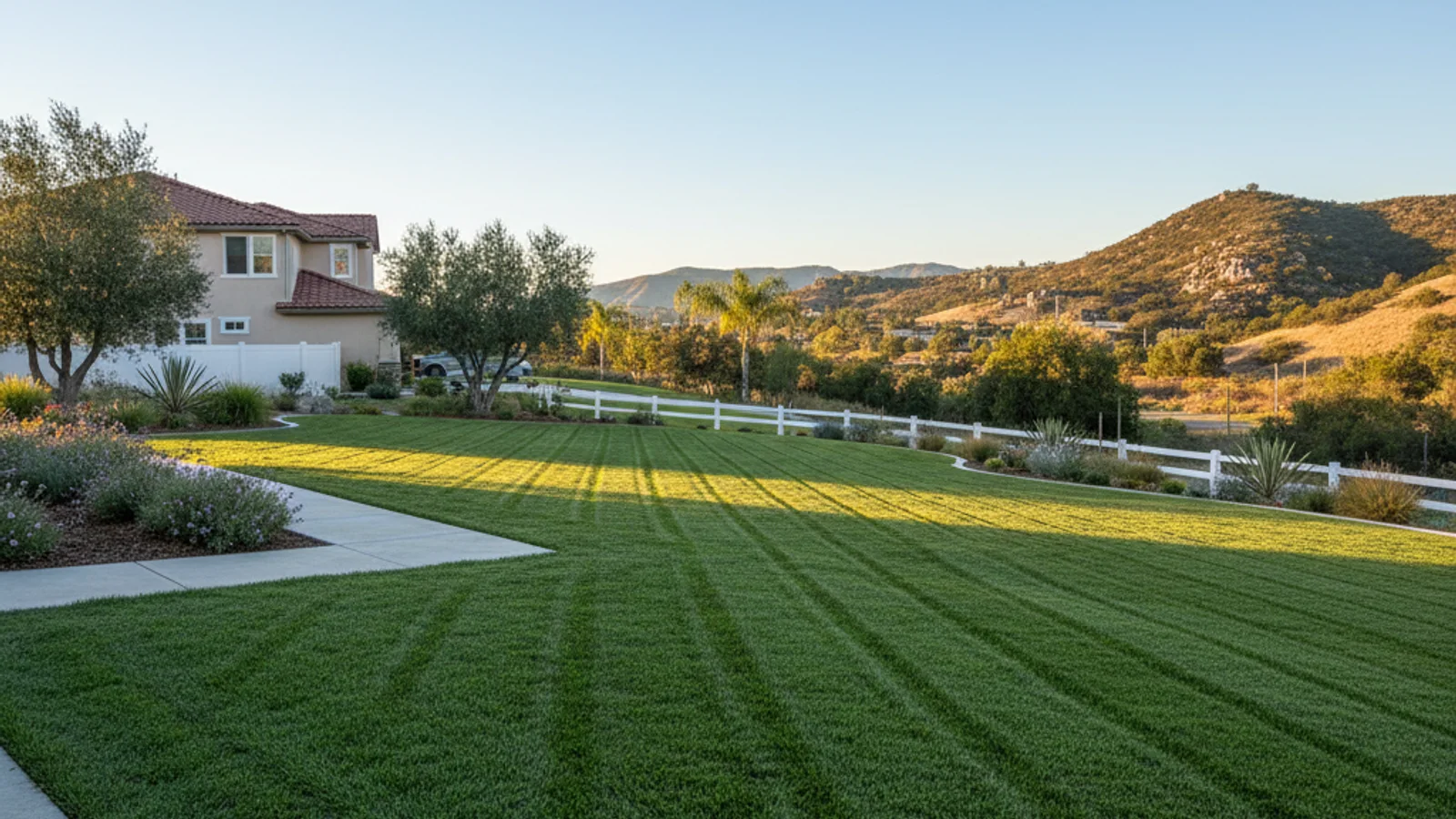
What Spring Valley lawns need
Spring Valley’s climate is hot and dry through the summer. Inland East County regularly runs ten to fifteen degrees warmer than the coast on a July afternoon, and the marine layer that cools Chula Vista or National City most mornings burns off fast here, if it shows up at all. That means higher evapotranspiration, which is just a technical way of saying your lawn loses water to the air and the soil much faster than a coastal yard does. Grass works harder to stay hydrated, and a watering schedule that keeps a Coronado lawn green will leave a Spring Valley lawn crispy by August.
The soil is the second half of the story. A lot of Spring Valley yards sit on heavy clay. Clay holds water and nutrients well once it’s wet, which is a real advantage in this heat, but it also compacts hard and drains slowly. Water it too fast and most of it runs off the surface before it soaks in. Compacted clay also chokes off air and root growth, so a lawn that looks fine in spring can thin out and struggle once the heat sets in. The fix is deep, slower watering and annual aeration to break up compaction, not more frequent shallow sprinkling.
Put those two factors together and the right grass for Spring Valley is almost always a warm-season variety. Bermuda is the workhorse here. It loves heat, recovers fast from foot traffic and stress, and uses far less water than a cool-season lawn once it’s established. It does go dormant and tan in winter, which is normal and not a sign of a dying lawn. Zoysia is the other strong option, denser and softer underfoot, slower to establish but very drought-tolerant once mature. St. Augustine works in yards with some afternoon shade but wants more water than Bermuda. Cool-season Tall Fescue can stay green year-round, but in this heat it drinks water and tends to thin out, so we usually steer people away from it unless a yard is heavily shaded. For a full breakdown, see our guide to the best grass types for San Diego lawns.
Weekly vs. bi-weekly service, and what’s included
Most Spring Valley yards do best on a weekly schedule from roughly April through October. Warm-season grass grows fast in the heat, and skipping a week in peak season means you’re cutting off more than a third of the blade at once, which stresses the lawn and leaves it looking ragged. From late fall through winter, when Bermuda slows down or goes dormant, bi-weekly is usually plenty.
Bi-weekly service makes sense year-round for smaller lawns, slower-growing Zoysia, or budget-conscious homeowners who are fine with a slightly longer cut between visits. The tradeoff is that every other visit involves taking off more growth, so the lawn never looks quite as crisp as it does on a weekly route. If you’re weighing the two, our breakdown of weekly vs. bi-weekly lawn service in San Diego walks through it in detail.
A standard recurring lawn maintenance visit includes mowing at the right height for your grass, edging along walks, driveways, and beds, line-trimming where the mower can’t reach, and blowing clippings off hard surfaces so the yard looks finished. Add-ons that matter in this climate are seasonal fertilization timed to the growth cycle, irrigation checks to catch broken heads before they cook a section of lawn, and aeration once a year to fight clay compaction. Those aren’t usually part of the base mow-and-go price, but they’re what keeps a Spring Valley lawn actually healthy through the summer rather than just trimmed.
Lawn care cost ranges in Spring Valley
Pricing comes down to lot size, how often the crew visits, slope and obstacles, and whether you want extras like fertilization rolled in. Spring Valley has a real mix of yard sizes, from compact tract lots to larger parcels up in the hills, so the range is wide. Ask the independent professional for a written recurring quote for your lot rather than a blog ballpark.
Pricing is set by the independent contractor after a walkthrough. Bloom Pro SD does not publish local rate sheets. Ask for a written scope that names turf area, visit frequency, slope, access, and which add-ons are included.
| Quote field | Why it changes the number |
|---|---|
| Measured turf and bed area | Sets mow and trim time |
| Weekly vs bi-weekly | Changes monthly total and how tall the grass is at each visit |
| Slope, gates, and obstacles | Adds labor beyond a flat rectangle |
| Edging, string trim, blow-off, haul-off | Often the difference between two similar totals |
| Fertilization, aeration, weed control | Separate programs, not a free weekly extra |
| Irrigation diagnosis | Broken heads and coverage gaps are extra work |
For county-wide comparison questions, see our lawn care cost guide. A neglected lawn may need a separate cleanup before it goes on a route.
If a lawn has been neglected and needs a reset, like clearing overgrowth, fixing bare patches, or correcting heat damage, the first visit or a one-time cleanup is quoted separately from the ongoing rate. For broader context on what drives these numbers across the county, see our San Diego lawn care cost guide for 2026.
Common Spring Valley lawn problems
Heat stress is the big one. By midsummer, lawns that aren’t watered deeply enough turn a dull grayish-green and develop brown, crispy patches that don’t bounce back from a quick sprinkle. That’s almost always a watering-depth problem, not a watering-frequency problem. The answer is fewer, longer sessions in the early morning so the water has time to soak past the clay surface and reach the roots, instead of evaporating or running off in the afternoon sun. For a month-by-month guide, see our summer lawn watering schedule for San Diego.
Compaction is the quiet problem underneath a lot of struggling Spring Valley lawns. Clay packs down over a season of foot traffic and dry weather, and once it’s compacted, water and fertilizer can’t get to the roots no matter how much you apply. That shows up as thinning turf and runoff. Annual aeration is the single most effective fix, and it’s cheap relative to re-sodding a dead lawn.
Weeds and pests round out the list. Stressed, thin turf is an open invitation for crabgrass and spurge to move in, and grubs or chinch bugs tend to attack lawns that are already weak from heat. The pattern is consistent: a healthy, properly watered, properly fed lawn crowds most of this out on its own, so the long-term fix is usually getting the basics right rather than chasing each problem with a separate treatment.
How to get on a route
Getting recurring service set up is straightforward. The pros we match you with come out, look at the yard, confirm lot size, grass type, slope, and any access details like gates or dogs, and quote a per-visit and monthly rate. From there you pick weekly or bi-weekly. Visit day is theirs to set. You hire them directly.
Being on a fixed route is what keeps the price reasonable and the quality consistent. A local crew is already working Spring Valley that day, and the lawn gets cut on a rhythm that matches how fast it’s actually growing. You can book lawn care in Spring Valley on that page, or call (760) 400-6355 to get matched. The independent professional quotes and sets the start date.
Frequently asked questions
How much does lawn care cost in Spring Valley?
The contractor quotes per yard after seeing it, so the price reflects your actual lot, slope, and included tasks, not a zip-code average. Bigger or sloped yards and add-ons like fertilization raise that number.
How often should you mow in East County heat?
Weekly from April through October, when warm-season grass grows fast in the inland heat. Bermuda can put on several inches a week at peak summer, and cutting off more than a third of the blade at once stresses the lawn. Bi-weekly is fine in winter when growth slows or dormancy kicks in.
What’s the best low-water grass for a Spring Valley lawn?
Bermuda is the top choice for drought tolerance and East County heat. It uses far less water than a cool-season lawn once it’s established and recovers fast from stress. Zoysia is a denser, softer option with similar drought tolerance but a slower establishment timeline. Both are far better fits here than fescue.
How do you handle lawn care on a hillside or sloped yard?
Slopes add time and complexity. A crew needs to work safely on the grade and often can’t run a standard rider, so a sloped Spring Valley lot typically costs more per visit than a flat one of the same size. The crew also checks for runoff patterns, since clay on a slope sheds water fast if the irrigation isn’t dialed in right.
Can I get a one-time lawn cleanup instead of recurring service?
Yes. A one-time cleanup is quoted separately and covers clearing overgrowth, edging neglected borders, and getting the yard to a maintainable baseline. Most homeowners who start with a cleanup end up on a recurring schedule after that first visit because the difference is easy to see. Ask the independent professional for a written number on the initial cleanup and, separately, the recurring rate.
What lawn service is included in a standard visit?
A standard lawn service visit covers mow at the correct height for your grass type, edge along walks and driveways, line-trim where the mower can’t reach, and blow clippings off hard surfaces. Fertilization, irrigation checks, and annual aeration are add-ons. Those extras matter more in Spring Valley than in a coastal yard because the heat and clay put more stress on the turf.
When to call us
If your Spring Valley lawn is fighting the summer heat, thinning out over compacted clay, or you just want a reliable crew on a fixed weekly route, call to get matched. The independent professional tailors the schedule and care to your lot. Call us at (760) 400-6355.