A useful San Diego lawn-care budget starts with a written scope, not a county-wide average. Recurring mowing, a seasonal cleanup, irrigation diagnosis, sod, and a drought-tolerant conversion are different jobs. Bloom Pro SD matches homeowners with licensed independent landscapers. Those contractors set their own prices after they see the property. This page is a comparison checklist, not a rate sheet.
City-specific guides for lawn care in Spring Valley, Lemon Grove, Vista, and La Mesa cover local heat, salt, and soil questions. For neighborhood remodel scope, see San Diego landscaping cost by neighborhood.
Landscaping cost vs lawn care cost
“Landscaping cost in San Diego” is a remodel question. Lawn care is the repeating visit. A full backyard with plants, irrigation, and hardscape is a different bid. Keep those quotes separate so you are not comparing a mow route to a rebuild.
Weekly lawn maintenance: what the quote should name
The biggest variables are measured turf area, edge complexity, slope, and access, not zip code. Ask the contractor to put these items in writing.
| Quote field | Why it changes the number |
|---|---|
| Turf square footage and bed footage | Sets mow and trim time |
| Weekly vs bi-weekly | Changes monthly total and how tall the grass is at each visit |
| Edging, string trim, and blow-off | Often the difference between two similar-looking totals |
| Clipping handling | Mulch-in-place vs bag-and-haul |
| Hedge or bed work | Usually a separate program, not a free extra |
| Fertilization and weed control | Scheduled programs, not a weekly drop-in |
| Irrigation flagging | Whether broken heads get reported or ignored |
A complete base visit typically names mow, edge, string trim around trees and posts, and a full blow-off of hardscape. If haul-off is included, the quote should say so. Leaving wet clippings on concrete can stain it.
Usually not in the base visit: deep hedge shaping, fertilization, weed control, and bed mulching. Those belong on their own lines.
Bi-weekly. Cooler months often support a longer interval because growth slows. In peak warm-season growth, a two-week gap can leave more than one-third of the blade to cut, which UC IPM warns against. Ask the contractor how they will adjust height rather than assuming a cheaper interval is equivalent.
Base lawn maintenance covers the mow-edge-blow cycle. Work that keeps plants healthy rather than tidy is its own line.
Seasonal cleanup: compare the work, not the visit name
Seasonal cleanups are one-time, fixed-scope visits, often booked before spring growth or before fall rain. Pricing depends on how overgrown the property is and whether the visit includes pruning, weed removal, mulch, irrigation checks, or debris haul-off.
Ask for:
- Which plants get cut, and to what standard
- Whether weeds are pulled, treated, or both
- Mulch type and depth, if any
- Irrigation inspection vs repair
- Debris volume and dump fees
- Whether fertilizer or pre-emergent is included, and under whose license
A neglected yard, a fire-risk lot, and a regularly maintained suburban lot are not the same job.
Irrigation repair: diagnose before you compare totals
A single broken head is a different visit from a leaking lateral, a failed valve, or a controller replacement. Compare:
- The diagnosed cause, not the symptom
- Parts listed by model, not “heads as needed”
- Whether trenching, restoration, and controller programming are included
- Who tests the zone after the repair
Smart controllers can reduce waste when they are programmed to the actual plant, soil, and weather. They do not produce a guaranteed monthly water-bill reduction. Check current watering rules with your water agency, and confirm any rebate with the agency before counting it.
Sod installation: itemize removal, grade, and product
Installed sod cost is mostly preparation: removing the old lawn, grading, soil work, the sod product, and irrigation setup for establishment. Ask the quote to name the variety, pallet coverage, soil work, and who is responsible for watering during establishment. Variety-specific care belongs on the product sheet, not a county average. See sod installation cost in San Diego.
Drought-tolerant conversion: rebate rules, not a net-price promise
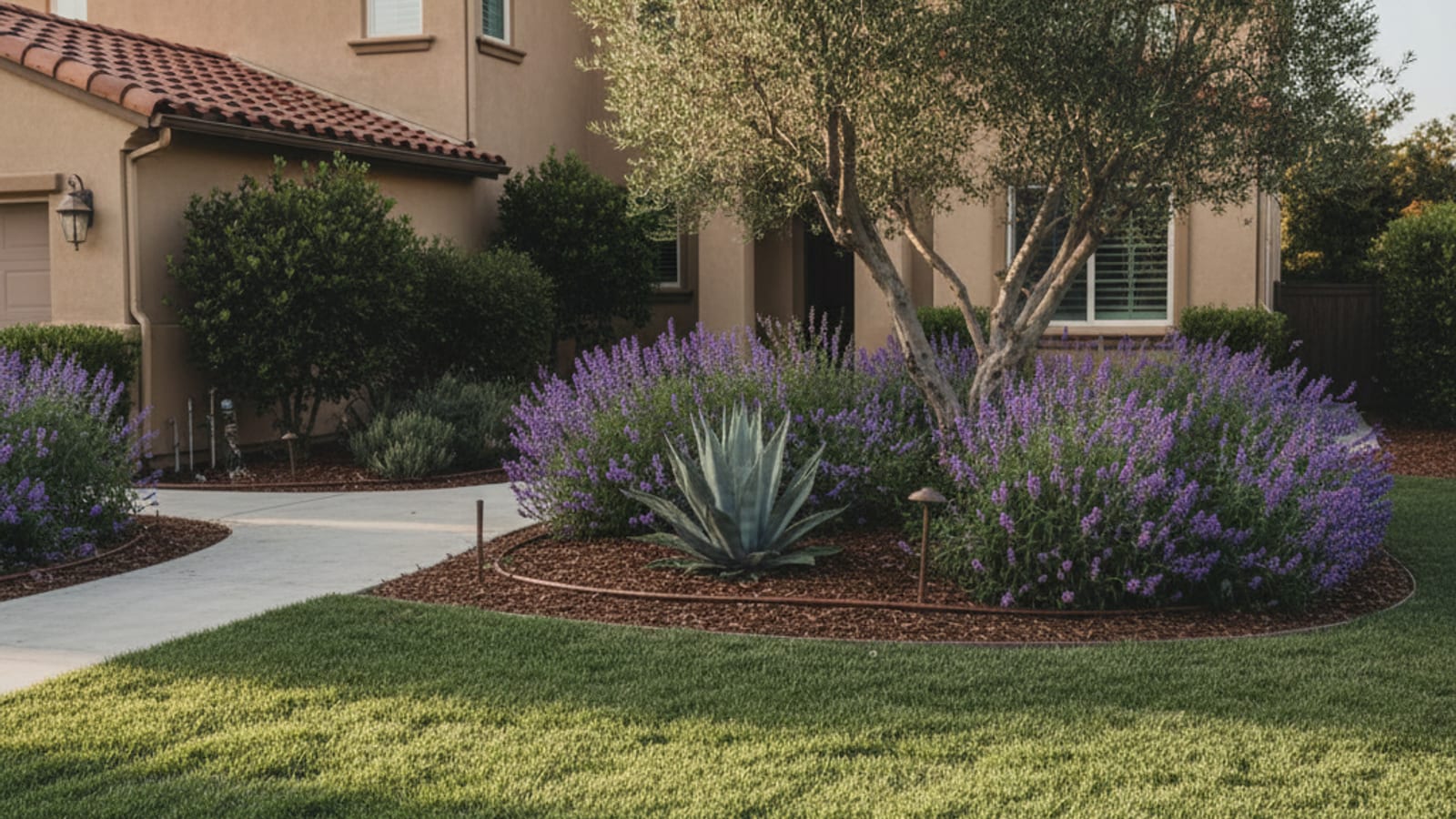
Lawn-to-drought-tolerant conversions price out from demolition, soil, plants, mulch, stormwater features, and irrigation conversion. The SoCal Water$mart turf replacement program currently requires existing live turf, a reservation before work starts, a minimum project area (250 square feet, or all turf if the site has less), at least three plants per 100 square feet, a permeable finished surface, a stormwater feature, mulch rules, and irrigation converted off overhead spray. Synthetic turf is not eligible. Amounts and funding change. Use the current SoCal Water$mart estimator for your agency rather than subtracting a remembered per-square-foot rebate.
Bloom Pro SD does not process rebate paperwork. The independent contractor you hire may offer that help, or you may file it yourself. Confirm who owns the application before work starts.
Full landscape redesign: scope the trades first
“Full redesign” can mean planting and drip only, or grading, walls, lighting, and hardscape. Compare line items:
- Design documents, if any, and whether the fee is credited
- Grading and drainage
- Plant list with sizes
- Irrigation work
- Hardscape materials and base
- Lighting and other trades
- Permits and inspections, when the jurisdiction requires them
What affects the final number
- Property size and complexity. Measured turf area plus bed footage. Curved beds and multi-tier slopes add labor.
- Access. Front-only is easiest. A backyard reached through a narrow side yard takes longer to stage.
- Existing conditions. A neglected yard needs more prep than a regularly maintained one.
- Plant palette. Nursery stock, sizes, and availability change the material line.
- Hardscape. Pavers, walls, and lighting are separate trades from mowing.
How to compare quotes
When you get multiple quotes, compare line items, not totals:
- What grass type or plant list is specified? “Sod” is too vague.
- What’s the irrigation scope? Cap and abandon, retrofit drip, or new zones?
- What’s the soil prep? Amendment depth should be written, not implied.
- Is haul-off included? Some quotes add dump fees later.
- Who handles rebate paperwork, if any? If nobody does, you do it.
- What plant or workmanship terms are in writing? Ask for the contractor’s actual terms, not a promise from this site.
Frequently asked questions
What does lawn care cost in San Diego in 2026?
There is no reliable county-wide number. Recurring maintenance, cleanup, irrigation, sod, and conversions are priced separately after a site visit. Compare written scopes that list turf area, visit frequency, included tasks, and add-on programs.
What drives the final number more than anything?
Measured area, access, slope, and what’s included. Zip code is a weak substitute. A small, simple front lawn is a different visit from a sloped, gated backyard with hedges.
How should I compare landscaping quotes?
Line by line. Confirm grass or plant identity, site prep, irrigation, haul-away, and who owns permits or rebate filings. Two matching totals can describe different jobs.
How much does a drought-tolerant conversion cost after rebates?
Net cost depends on the actual bid and whatever amount your water agency approves. SoCal Water$mart requires a reservation before turf is removed, excludes synthetic turf, and pays only for completed, eligible work. Check the current program and your agency’s estimator rather than using a remembered rate.
Getting a quote
Call (760) 400-6355 or use the contact form. Bloom Pro SD matches you with a licensed independent landscaper. That contractor measures the property and confirms scope and price with you directly before work starts. There is no guaranteed phone-quote turnaround or in-person window.
We cover San Diego County.