The best time depends on the exact turfgrass or plant. UC IPM says cool-season sod generally does best in early fall or early spring, while warm-season sod generally does best in mid-to-late spring. UC Master Gardeners of San Diego County recommend the rainy season for local native planting. Artificial turf has no biological planting window, but weather and wet soil can affect excavation and base work.
Best install window by approach
| Season | Sod | Drought-tolerant / native plants | Artificial turf |
|---|---|---|---|
| Early spring | Favored for cool-season sod; confirm species | Within the broader rainy-season window | Weather and soil conditions control |
| Mid-to-late spring | Favored for warm-season sod | Later planting may need more supplemental water | Weather and soil conditions control |
| Summer | UC says avoid very hot weather when possible | Higher establishment burden; use plant-specific guidance | Heat and dry soil affect crew and base planning |
| Fall through rainy season | Early fall favors cool-season sod | UC San Diego guidance favors the rainy season | Rain and wet soil can delay base work |
Sod: spring and fall are your two real windows
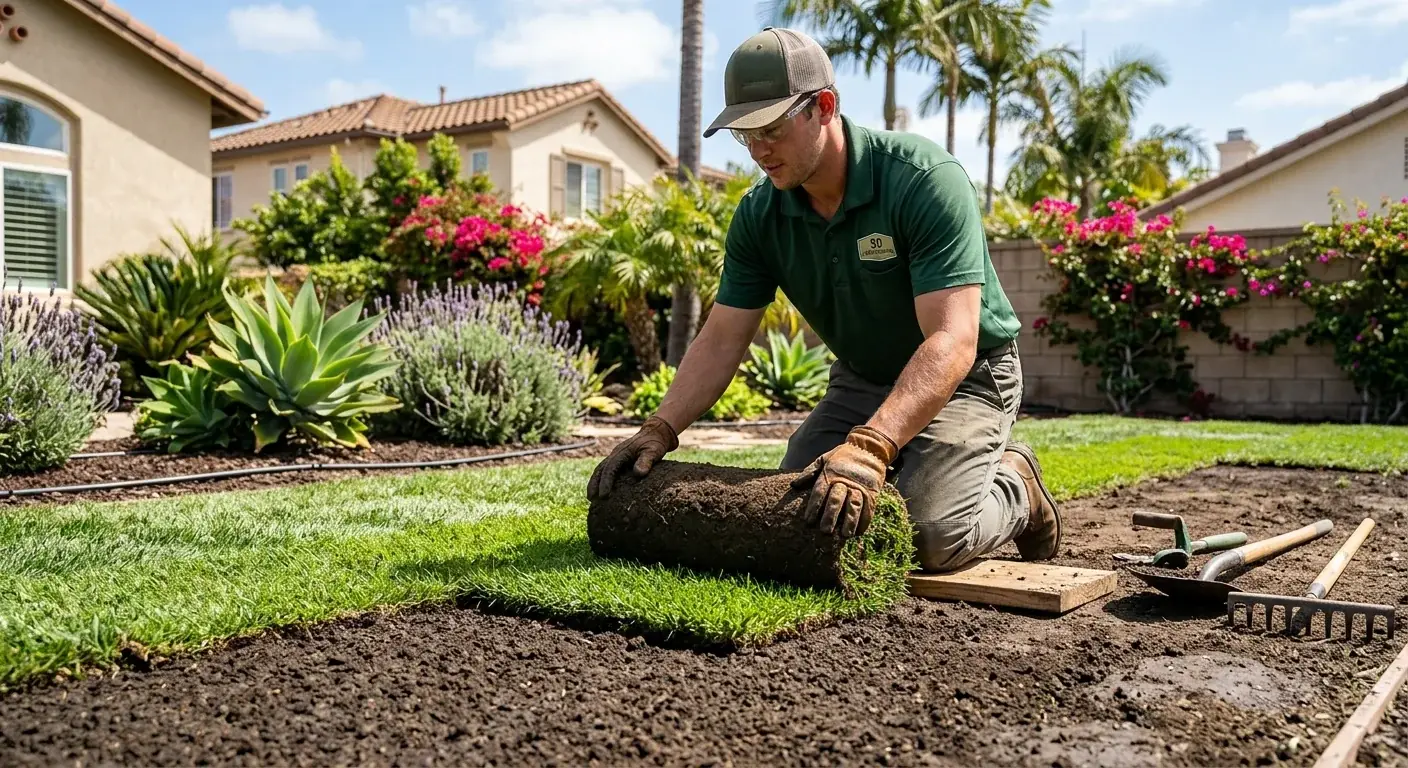
Sod is best installed during the active growth period of the selected species. UC IPM generally favors early fall or early spring for cool-season grasses and mid-to-late spring for warm-season grasses. It says sod can be laid year-round but very hot or very cold weather should be avoided when possible.
Where you live changes the site conditions, but the turf species and current weather still control the planting decision. If timing forces installation during hot weather, require product-specific watering and access instructions and confirm they comply with the water provider’s rules. A matched sod installation contractor can assess the site before you commit to a date.
Drought-tolerant and native plants: fall is the best window of the year, full stop
If you’re converting to drought-tolerant or California native landscaping, fall, roughly October through December, is the single best time to plant in San Diego County. Cooler air reduces transplant shock, and San Diego’s winter rains do a lot of the establishment watering for you, letting new natives root deeply before they face their first dry summer. A plant that goes in the ground in October with a full wet winter behind it needs far less supplemental water the following summer than one planted in June.
This timing also lines up well with the water-rebate calendar. If you’re removing a lawn that’s already summer-stressed, a fall conversion means you’re replacing dying turf with plants that get free establishment help from the rain, instead of fighting the heat on both ends. See our drought-tolerant plants guide for species that specifically thrive on this fall-planting timeline.
Artificial turf: the most flexible of the three
Artificial turf doesn’t root or grow, so it doesn’t have a biological establishment window the way sod or live plants do. You can install it any month of the year. The only real limiter is rain, since a muddy base makes grading and compaction harder to get right. Dry months make the base work faster and cleaner, but that’s a convenience factor, not a requirement.
One thing worth knowing: turf install crews across San Diego often have more open scheduling in winter, when sod and planting jobs slow down seasonally. If your calendar is flexible, a winter turf install can mean a shorter wait to get on a crew’s schedule.
Why the approach matters more than the season alone
San Diego’s lack of a hard winter freeze means every one of these projects is technically possible in any month. But “possible” and “best” aren’t the same thing. A summer sod install inland can survive with enough water, but it costs more in irrigation and carries real failure risk. A summer native-plant install skips the free establishment help that fall rain provides, so the plants need far more hand-watering to make it through their first year. Matching your project type to its ideal window isn’t about rigid rules, it’s about not paying extra, in water or in plant loss, for timing you didn’t have to fight.
If you’re comparing sod against artificial turf as a bigger decision than just timing, our artificial turf vs. drought-tolerant landscaping comparison breaks down cost, water use, and maintenance side by side.
What to do if your timing doesn’t line up
Life doesn’t always sync with the ideal planting calendar. If you need a lawn in for a summer event, an inland sod install with a solid watering plan can still work, it just costs more in water for the first month. If you’re doing a fall drought-tolerant conversion but a permit or design delay pushes you into winter, that’s still a good window, just watch for the first hard rain to avoid working muddy soil. Artificial turf remains the safest choice if your timeline is rigid and you can’t control the season at all.
Frequently asked questions
What’s the best month to install sod in San Diego?
Choose by turf species rather than one countywide month. UC generally favors early fall or early spring for cool-season sod and mid-to-late spring for warm-season sod.
When should I plant drought-tolerant or native plants?
Fall, from October through December, is the best window. Cooler weather and San Diego’s winter rains help new plants establish with far less supplemental watering.
Can artificial turf be installed year-round in San Diego?
Yes. Turf doesn’t need a growing season, so the only real limiter is rain making base work muddy. Dry months make installation faster, not more successful.
Is it risky to lay sod in summer?
It depends on location. Coastal areas with mild marine-layer summers handle it fine. Inland areas like El Cajon or Escondido need heavy, consistent watering to keep new sod alive through peak heat.
Does timing affect my water rebate application?
Not the rebate itself, but a fall drought-tolerant conversion often means less supplemental watering during establishment, which is exactly the outcome the rebate programs are designed to reward.
When to call us
Whether you’re timing a sod install, a fall native-plant conversion, or scheduling turf for whenever works for your calendar, we can tell you what’s realistic for your yard and your part of the county.
Call us at (760) 400-6355 to talk through timing before you commit to a date.