If your dog has turned the backyard into a patch of mud, dead grass, and yellow spots, artificial grass is the fix most San Diego dog owners land on. But the turf that works for dogs is not the same product a builder rolls out for a plain lawn. Pet turf is built to drain urine fast, resist odor, and stand up to digging and daily traffic. Get those three things right and you get a clean, green yard that survives your dog. Get them wrong and you get a smell you can’t rinse away.
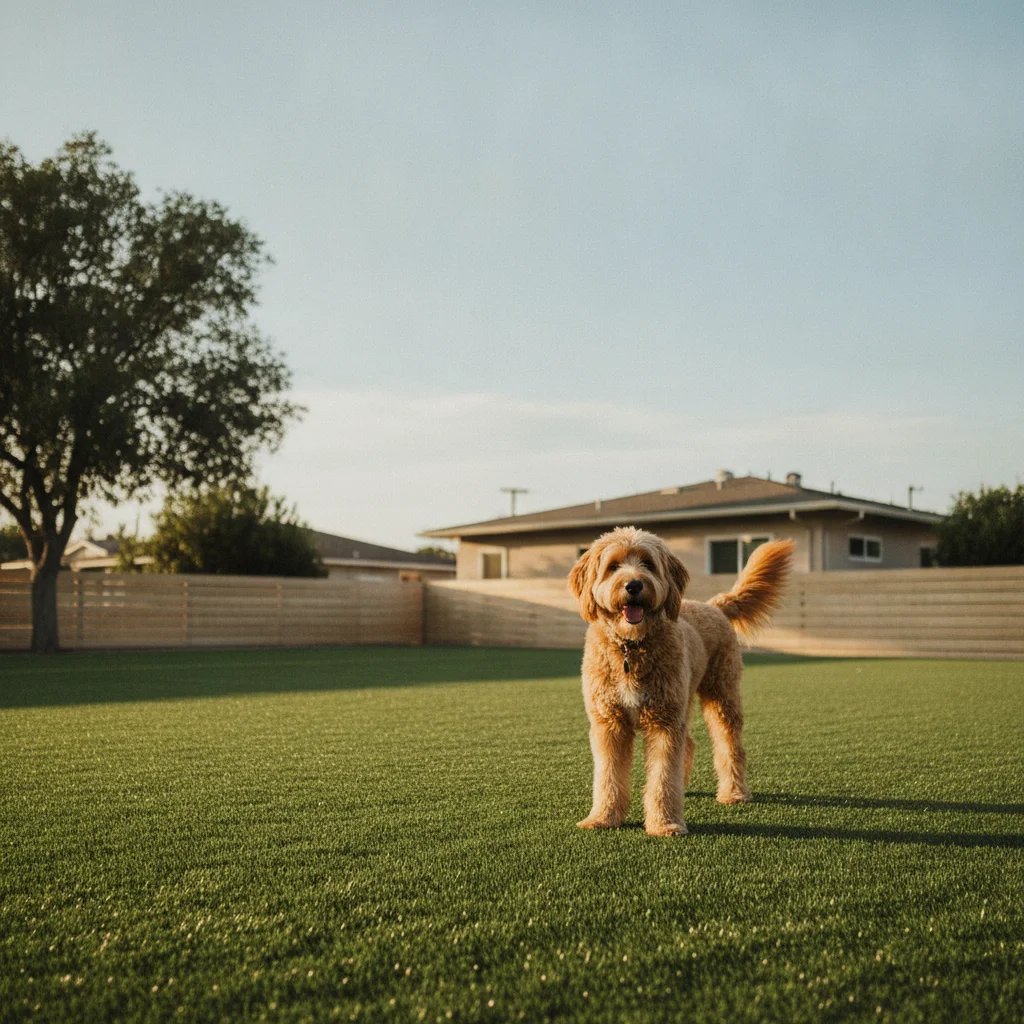
This guide covers what makes turf dog-friendly, how to control odor, how summer heat affects paws, and what to ask an installer before choosing a system.
Is artificial grass good for dogs in San Diego?
Yes, artificial grass is a strong choice for dogs in San Diego, as long as it’s installed as a real pet system and not a plain lawn with turf laid on top. Dogs can’t kill it, dig it into mud, or burn it with urine the way they do a live lawn, and it stays green through our dry summers with no watering. For a play area or a small dog run, it solves the exact problems a natural lawn creates.
The catch is the install. Pet turf depends on what’s under it. A free-draining base helps urine and rinse water pass through instead of pooling against the backing. Ask the installer to explain the base, drainage path, seams, and infill in the written scope before comparing bids.
What makes pet turf different from regular artificial grass?
Pet turf is regular artificial grass with three upgrades that matter for dogs: a free-draining base, odor-control infill, and a tougher backing. Each one solves a specific problem a dog creates.
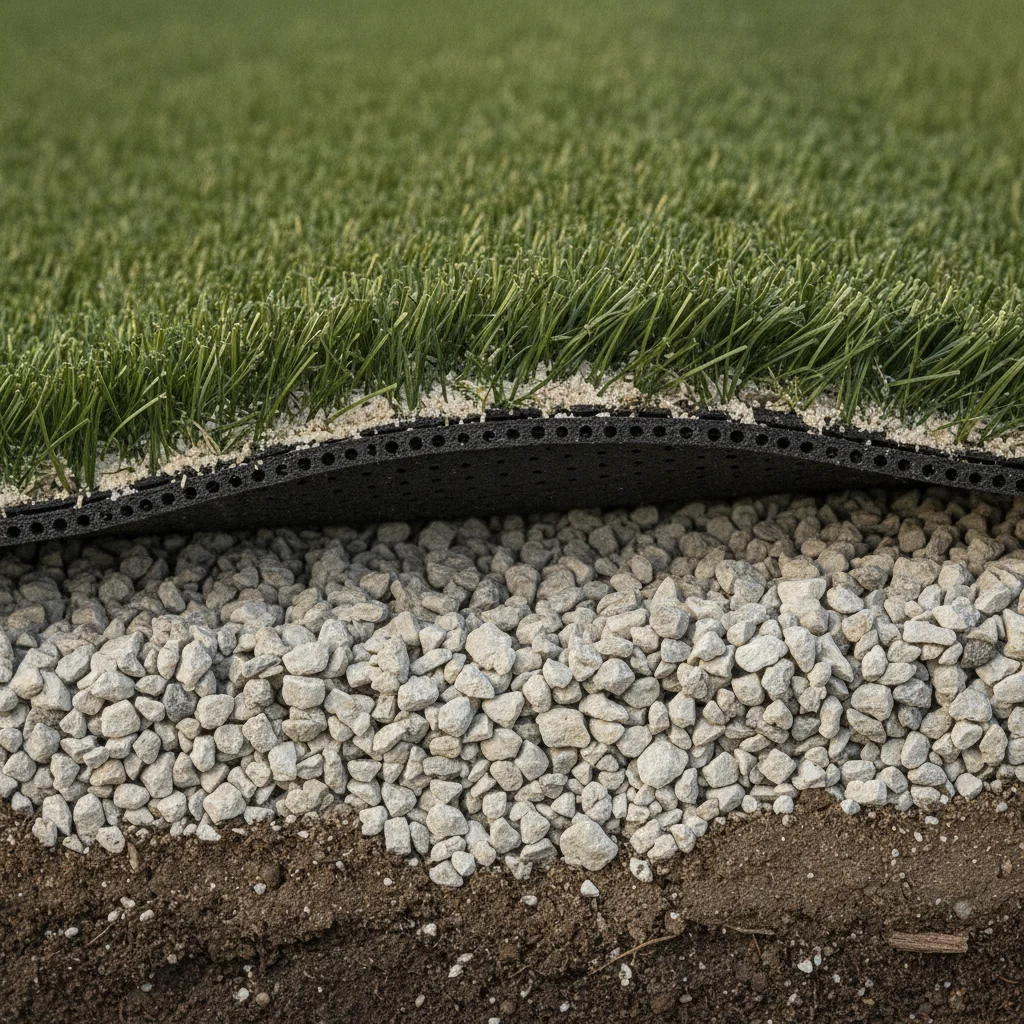
The base is the biggest difference. Under a standard lawn, installers use a compacted decomposed-granite base that drains slowly. Under pet turf, they build a more open base, often with a layer of clean gravel or a drainage grid, so urine flows through in seconds instead of sitting in the pad. Fast drainage is the single thing that keeps a dog yard from smelling.
The infill is the second upgrade. Infill is the granular material brushed down into the turf blades to keep them standing and add cushion. For dogs, installers use an antimicrobial or coated infill that resists the bacteria that turn urine into that sharp ammonia odor. Plain silica sand, the cheap default, holds odor instead of fighting it.
The backing is the third. Pet turf uses a heavier, more perforated backing that drains better and resists a dog digging or tugging at a seam. Combined with a higher face weight, it holds up to paws and claws far better than a bargain turf meant to be looked at, not lived on.
How do you keep dog artificial grass from smelling?
You keep pet turf from smelling with three things working together: a base that drains fast, antimicrobial infill, and a quick rinse routine. The drainage and infill do most of the work, and a weekly hose-down handles the rest.
Urine is only a problem when it lingers. On a properly built pet system, liquid drains through the turf and base in seconds and washes into the soil below, so there’s nothing left to break down and smell. Solid waste you pick up the same as you would on grass, then rinse the spot.
For upkeep, remove solid waste promptly and rinse the areas your dog uses most. Follow the turf manufacturer’s cleaning instructions before applying any cleaner, because products and backing materials vary. Persistent odor can come from drainage, infill, trapped debris, or the cleaning routine, so have the system inspected instead of trying to mask it with stronger chemicals.
Does artificial grass get too hot for dogs in San Diego?
Artificial grass does heat up in direct sun, and on a hot inland afternoon in a town like El Cajon, Santee, or Poway it can get too warm for comfortable paws. Near the coast, where the marine layer keeps temperatures down, it’s much less of an issue.
The heat is real but manageable. Turf in shade stays fine, so a yard with tree cover, a patio umbrella, or afternoon shade from the house rarely gets uncomfortable. A quick spray with the hose drops the surface temperature right away on the hottest days. Some newer pet turfs use heat-reflective or lighter-colored blades that run cooler than older products. If your dog run sits in full inland sun with no shade, that’s worth asking your installer about before you pick a turf.
Plan the layout so the dog always has a shaded alternative. Test the surface with your hand before play and cool it with water when needed.
What changes the price of pet turf?
Pet installations can cost more than a simple decorative lawn because drainage work, pet-compatible infill, seams, access, demolition, and disposal all affect the scope. Small runs may also carry a higher unit cost because setup and hauling do not shrink with the lawn.
Ask each contractor to separate turf material, removal, base preparation, drainage, infill, edging, and disposal in the estimate. Our artificial turf cost guide explains how to compare those items. Synthetic turf is not allowed in the current SoCal Water$mart turf-replacement program, so do not subtract that rebate from a pet-turf quote.
Is artificial grass safe for dogs?
Pet turf products vary. Ask for the product sheet and the manufacturer’s guidance for animal use, surface heat, cleaning, and infill. Confirm what is in the turf and infill rather than relying on a generic “pet-safe” label.
Two things are worth watching. First, on a very hot day in full sun the surface can get warm enough to bother sensitive paws, so shade and a rinse matter, as covered above. Second, buy from an installer who uses pet-rated turf and infill rather than the cheapest generic roll, because bargain products are where cut corners show up. A properly built pet system takes away more risks than it adds, which is a big reason dog owners choose it.
Artificial grass versus a real grass lawn for dogs
Artificial grass isn’t the only dog-friendly option. A tough real lawn can work if you’re willing to maintain it, and some owners prefer the feel of living grass underfoot.
If you want a natural lawn, the most durable warm-season grasses hold up to dogs far better than delicate fescues. Our guide to the best grass types for San Diego lawns walks through the trade-offs, and Marathon grass is a soft, kid-and-dog-friendly fescue if water use isn’t a concern. The honest downside is that any live lawn takes water, patches from urine, and wears thin in a small yard with an active dog.
Artificial turf trades that maintenance for a higher upfront cost and a surface that never grows or dies. Our comparison of artificial turf versus a drought-tolerant yard lays out the water and cost math if you’re weighing turf against a lower-water planted yard. There’s no single right answer. It comes down to how hard your dog is on the space and how much upkeep you want.
Frequently asked questions
Is artificial grass good for dogs?
Yes, when it’s installed as a real pet system. Pet turf uses a free-draining base, antimicrobial infill, and a tougher backing so it handles urine, digging, and daily traffic without turning to mud or dead grass. A plain lawn turf laid without the drainage base is what causes odor problems, so the install matters more than the brand.
Does artificial grass for dogs smell?
It can if liquid or debris remains in the system. Drainage, infill, cleaning, dog size, and how concentrated the use is all matter. Remove waste promptly, rinse used areas, and follow the manufacturer’s cleaning instructions. Persistent odor deserves an inspection of the base and drainage path.
How do you clean dog pee off artificial grass?
Remove solid waste promptly and rinse the areas your dog uses. Use only cleaners the turf manufacturer approves for that backing and infill. If odor persists, ask an installer to inspect drainage and infill instead of applying a stronger cleaner blindly.
Does artificial grass get too hot for dogs?
It can in direct inland sun on a hot day. In shade, or near the cooler coast, it stays comfortable. A quick spray from the hose drops the surface temperature right away, and lighter heat-reflective turf runs cooler. Plan the layout so your dog has a shaded spot and heat rarely becomes a problem.
Can dogs dig up artificial grass?
A properly installed pet turf resists digging. It’s secured at the edges, filled with infill that adds weight, and built on a compacted base, so there’s nothing loose for a dog to pull up. Determined diggers may test a seam, which is why pet installs use a heavier backing and tight, well-anchored seams rather than a bargain turf.
Why can pet turf cost more than standard turf?
The price can include added drainage work, pet-compatible infill, tighter seam work, and more demanding cleanup requirements. Compare itemized written estimates because the base, access, removal, and drainage scope can matter more than the turf roll itself.
When to call us
Pet turf depends on the base and drainage path, which are hard to judge after the surface is covered. Ask the contractor we match you with to document those parts of the scope and identify the exact turf and infill before work begins.
Call us at (760) 400-6355 to discuss the yard and connect with an independent local contractor. If you’d rather keep a real lawn, compare sod installation and lawn maintenance as well.