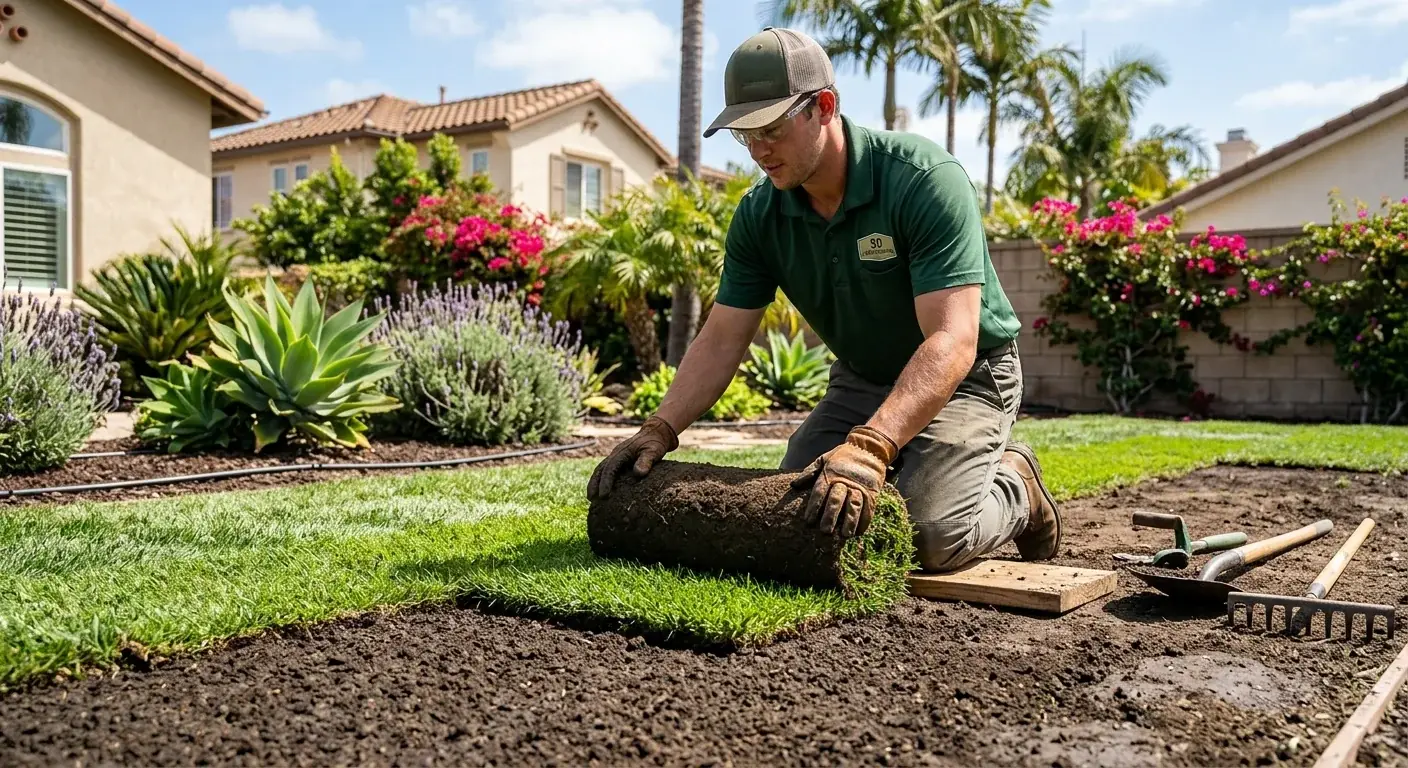
The UC Guide to Healthy Lawns says sod can be laid any time of year, but it is best to avoid very hot or very cold weather. Cool-season grasses generally do best when planted in early fall or early spring. Warm-season grasses generally do best when planted mid to late spring. San Diego still has coastal vs inland heat differences, so the installer should time the job to the species and the actual weather, not a county slogan.
UC timing by grass type, then adjust for your lot
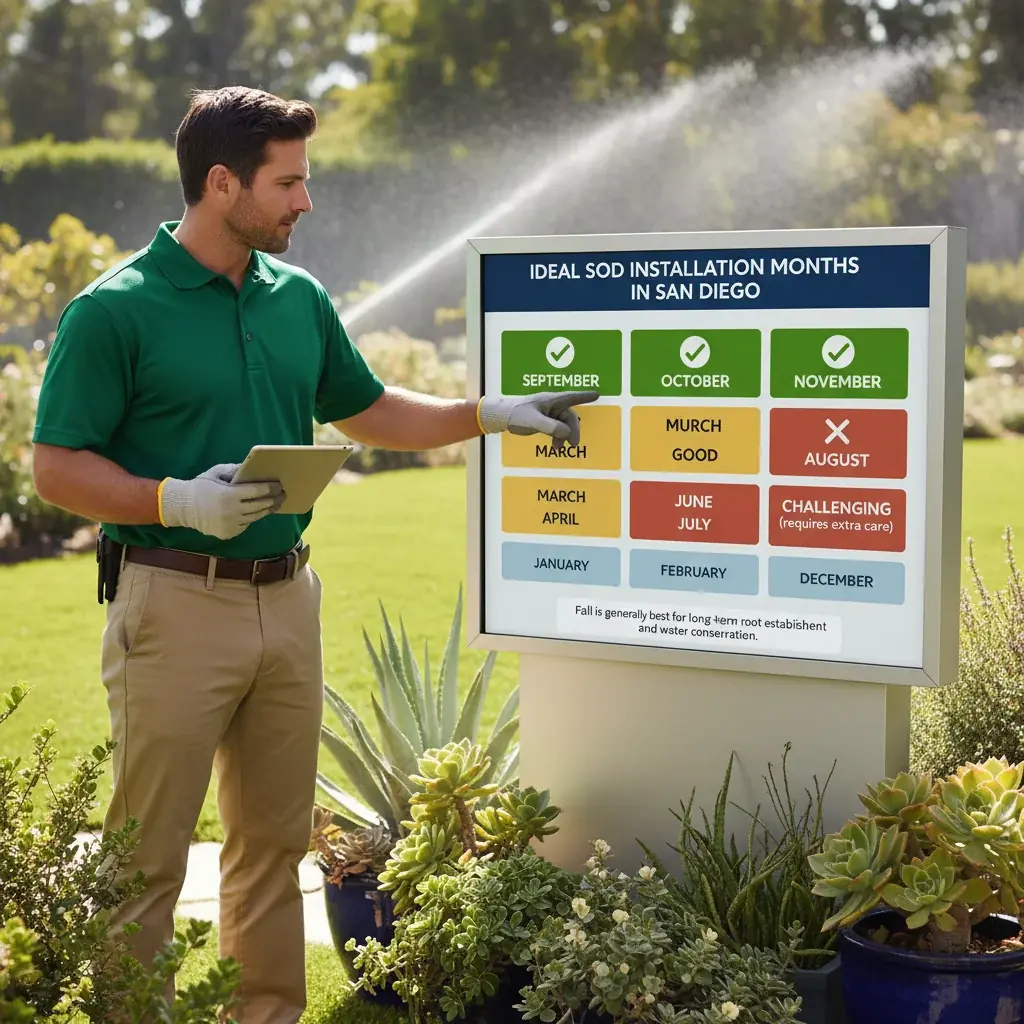
UC IPM’s controlling rule is the grass’s active growing period, not a San Diego-only calendar:
- Cool-season sod (including tall fescue): generally early fall or early spring.
- Warm-season sod (bermuda, kikuyu, zoysia, St. Augustine, and related): generally mid to late spring.
- Avoid very hot or very cold weather when you can.
Coastal lots often stay milder than inland East County lots. That can change how risky a summer install is. It does not rewrite UC’s species windows. Ask the installer to time the job to the species, soil, irrigation, and the week’s forecast.
Coastal vs inland: A marine-layer lot can be more forgiving in summer heat than El Cajon or Santee. Still treat July and August inland installs as high-risk because the mat dries fast. Do not use invented soil-temperature bands as a substitute for the species window.
Warm-season vs. cool-season: picking the right grass for your timing
Your grass type shapes your timing window more than anything else.
Warm-season grasses (bermuda, kikuyu, zoysia, St. Augustine) grow actively in warm weather. UC IPM generally prefers mid to late spring for those sods. A winter install can look slow because growth is not at its peak.
Tall fescue is cool-season. UC IPM generally prefers early fall or early spring. A midsummer fescue install fights heat and watering limits. For species tradeoffs, see the best grass types for San Diego lawns.
If you’re not sure which grass your yard needs, our guide on the best grass types for San Diego lawns covers the tradeoffs in detail.
Heat, rain, and inland vs coast
UC IPM still owns the species windows. Early fall can help cool-season sod. Mid to late spring is the usual warm-season window. Invented soil-temperature bands and county rainfall averages do not replace those rules.
Summer inland installs dry fast. If summer is the only window, a marine-layer lot is often less harsh than El Cajon or Santee, but it is still a high-risk job. Keep the sod-to-soil contact moist per the installer and the water agency, not a three-times-a-day county recipe. For established-lawn watering, see summer lawn watering schedule for San Diego.
Curious what all of this costs? See our detailed sod installation cost guide for San Diego, it covers material, prep, and labor separately so you can budget accurately.
Soil prep: the work that happens before timing matters
Timing sets up the conditions; soil prep determines whether the sod survives them.
- Clear the area. Remove existing turf, weeds, rocks, and debris. A sod cutter works faster than manual removal for large areas.
- Test the soil. San Diego soils range from sandy loam near the coast to heavy clay inland. A basic soil test reveals pH and nutrient gaps. Target pH 6.0–7.0 for most grasses.
- Amend with compost. Work 2–4 inches of compost into the top 6 inches. Compost improves drainage in clay soils and water retention in sandy ones.
- Grade for drainage. Create a gentle slope away from foundations. Standing water after irrigation is a root rot setup.
- Verify irrigation coverage. Install or adjust sprinklers before sod goes down, retrofitting later means cutting into established turf.
- Level and firm the surface. Roll lightly so boots don’t sink. Good sod-to-soil contact in the first 24 hours is the biggest single factor in root establishment speed.
The first 30 days after installation
Follow the installer’s written plan and your water agency’s establishment rules. Keep sod-to-soil contact moist until a gentle tug shows resistance. UC IPM’s one-third mowing rule applies on the first cut. There is no verified 10-15 minute, two-to-three-times-daily county recipe.
For ongoing care after sod is established, our sod installation service page outlines what a professional installation typically includes.
Frequently asked questions
What is the best month to lay sod in San Diego?
There is no single best month for every San Diego lawn. UC IPM times the job to the grass: cool-season sod in early fall or early spring, warm-season sod in mid to late spring, and avoid extremes of heat or cold when you can. Ask the installer which window fits the product on the pallet.
Can you install sod in San Diego in summer?
Yes, but it is more demanding. UC IPM prefers avoiding very hot weather. Coastal lots can be more forgiving than inland East County lots. Choose a warm-season product for a summer window, and get the watering plan in writing before the pallets arrive.
How long until you can walk on new sod in San Diego?
Use a gentle tug test, not a calendar promise. When a corner resists, roots have started to grip. Cool-season sod in cool weather is often slower. Warm-season sod in its active season is often faster. Your installer should write the walk-on window.
How much water does new sod need in San Diego?
Keep the sod-to-soil contact moist until a gentle tug shows resistance. There is no verified 20-30 minute county recipe. Fall weather often evaporates less than midsummer, but your water agency’s rules still apply. After the sod holds, move toward deeper, less frequent watering as the installer directs.
Should I use sod or seed for a new San Diego lawn?
Sod for most homeowners. Seed is cheaper upfront but takes 2–4 months to reach usable coverage and requires consistent moisture during that entire window, which is harder to maintain in San Diego’s dry climate. Sod gives you an established lawn in 3–4 weeks and has a much lower failure rate. Seed makes sense for large areas where budget is the primary constraint and you can control foot traffic for several months.
Does San Diego’s coastal vs. inland location affect sod timing?
Yes. Inland lots are hotter in summer and can frost in winter. That changes risk, not UC’s species windows. Cool-season: early fall or early spring. Warm-season: mid to late spring. Avoid very hot or very cold weather when you can.
When to call us
Soil prep, irrigation setup, and the first 14 days of watering all affect whether new sod thrives or fails. When the timing, prep work, or ongoing irrigation is more than you want to manage yourself, professional installation takes the guesswork out of it. Call us at (760) 400-6355 to get matched. The independent professional quotes the work.