Weekly lawn maintenance in San Diego is priced by the independent contractor after they see turf area, slope, access, and what’s included. San Diego grass often grows year-round, so weekly visits are common, but they are not automatic. Bloom Pro SD matches homeowners with licensed landscapers. Those crews set their own rates. Use this page to align scope before you compare totals.
What’s included in a weekly visit (and what isn’t)
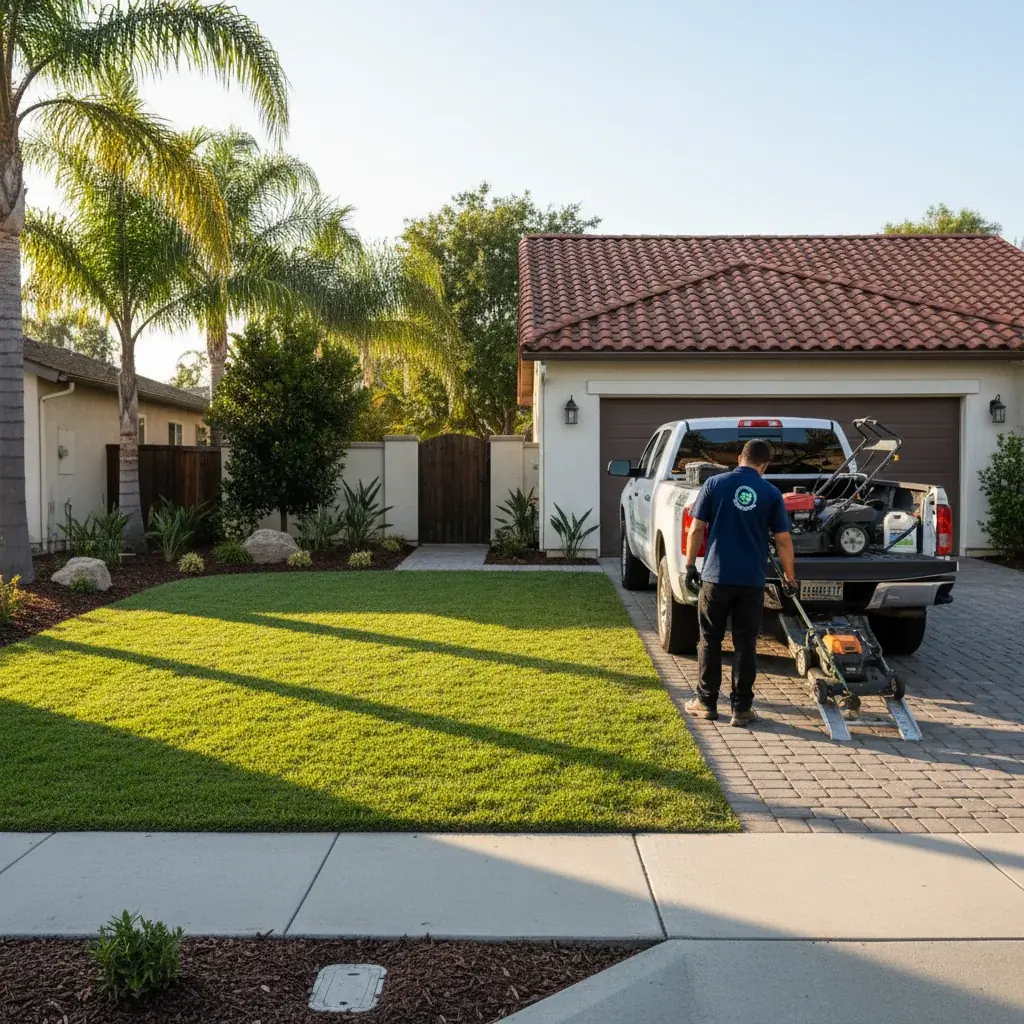
A standard weekly lawn maintenance visit usually covers three things: mowing, edging along hardscapes, and blowing clippings off walkways and driveways. Confirm that in writing. Many quotes stop there.
What’s typically not included in a base quote:
- Fertilization
- Weed pulling or herbicide application
- Hedge and shrub trimming
- Sprinkler head checks or adjustments
- Leaf or debris removal beyond what the mower throws
- Hauling away clippings (some companies bag and remove; others mulch in place; ask which)
Two quotes can look identical on paper and deliver different service. One company might edge every visit; another might edge every other week. One might glance at sprinklers; most will not touch them without a separate work order.
Weekly lawn maintenance spells out what happens every visit, so you are not guessing mid-season why your edges look ragged.
The takeaway: align scope before you compare prices. A visit without edging is not the same product as a visit that includes it.
What lot size and grass type change
San Diego’s most common turf varieties, tall fescue, St. Augustine, Bermuda, and kikuyu, grow at different rates. Bermuda and kikuyu can need more frequent trimming in summer. Tall fescue is slower-growing but can thin without overseeding. None of those habits produce a universal monthly rate.
Ask the contractor to measure turf area rather than guessing from the street. Then ask how grass type changes mow time in peak growth versus winter. If you’re not sure what you have, UC Master Gardeners of San Diego County has identification resources. You can also check our guide on the best grass types for San Diego lawns before you call.
Estate, rural, and steep lots add drive time, equipment, and slope work. Those are quote inputs, not zip-code multipliers.
Coastal vs inland vs East County: what to tell the contractor
San Diego County spans different microclimates. That changes grass growth and watering, which can change visit frequency. It does not create a published coastal surcharge.
Coastal zones (La Jolla, Encinitas, Pacific Beach, Coronado). Mild temperatures often mean more consistent growth. Many coastal yards also have tighter planting around the lawn, which adds trim time. Describe salt exposure, marine-layer dampness, and bed complexity.
Inland valleys (El Cajon, Santee, Lakeside, Escondido). Hotter summers push Bermuda and St. Augustine into faster growth from late spring through early fall. Ask whether the contractor changes interval or height in peak heat rather than assuming a flat annual rate covers it.
East County and foothill areas (Alpine, Ramona, Jamul). Drive time and access often matter more than turf square footage. Ask about visit minimums, gate codes, and whether winter growth is slow enough to justify a longer interval.
Add-ons that belong on their own lines
Once you’re past the base mow, each add-on has its own logic.
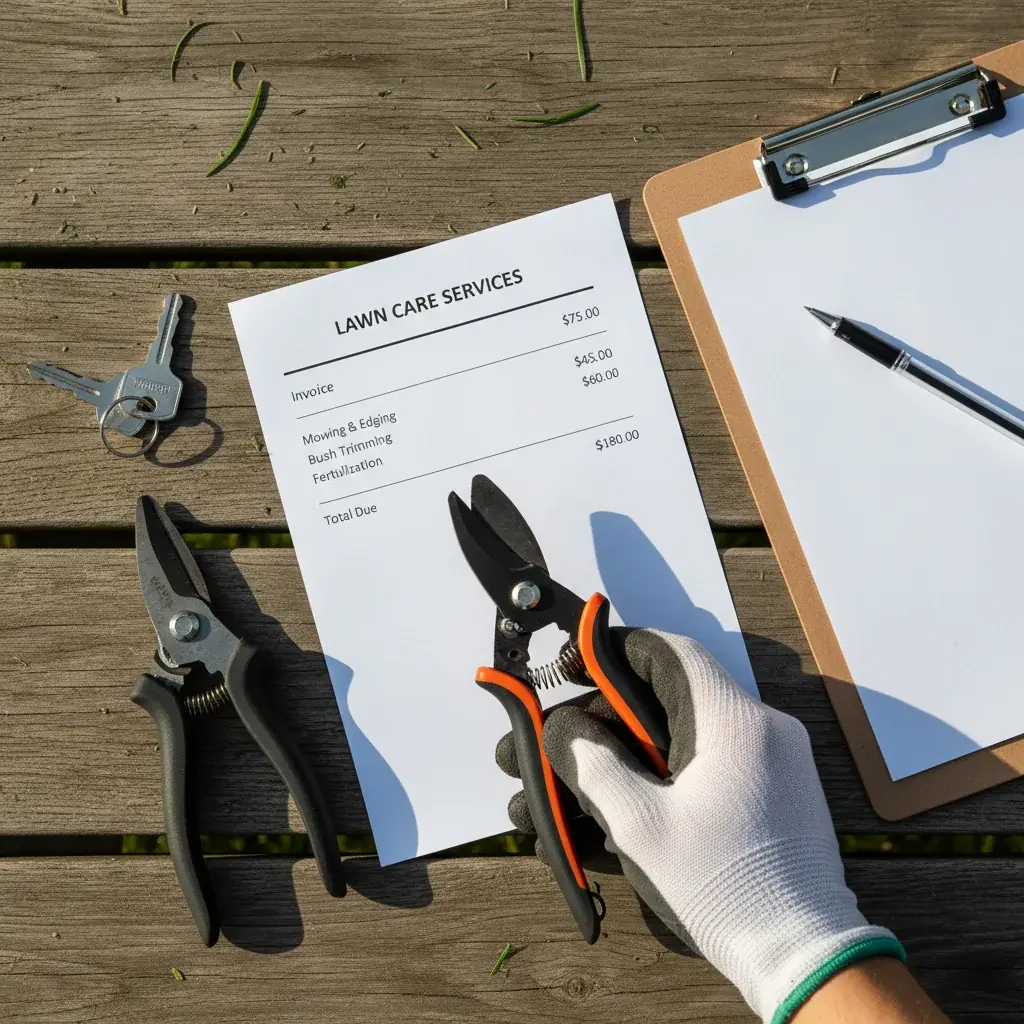
String edging along beds and borders. Some companies include this; others bill it separately. Clean bed lines are most of what makes a lawn look professionally maintained versus just mowed.
Blowing and cleanup. Usually bundled in San Diego, but verify. On large properties with mature trees, blowing can take as long as mowing.
Fertilization. Frequency, product, and license requirements belong in the written program. Lawn fertilization should be timed to the grass species and a soil test, not a generic calendar. For the wider quote checklist, see our lawn care cost guide.
Weed control. Spot treatment versus a season-long program are different bids. San Diego’s warm soil keeps weed pressure high in many months, but the label and the identified weed control the product, not a default spray.
Hedge and shrub trimming. This is almost always billed separately, often quarterly or as needed. See our hedge trimming cost breakdown for the comparison questions.
Weekly vs bi-weekly: when each makes sense
Weekly service isn’t always necessary, and a careful contractor will say so.
Weekly often makes sense when:
- Your lawn is Bermuda, kikuyu, or St. Augustine during active warm-season growth
- Your HOA requires a maintained appearance at all times
- Growth is consistent enough that a week of clippings stays within the one-third rule
- You have a tightly kept sports-style lawn
Bi-weekly often makes sense when:
- Your turf is tall fescue or a slower mix
- Growth has slowed in the cooler months
- Drought stress has slowed growth (though that usually means irrigation or soil needs attention first)
- You want a longer interval and will accept a less manicured look
UC IPM’s one-third rule still applies: do not cut more than one-third of blade height at once. If a two-week interval in July would force a scalp, raise the height, add a visit, or accept a staged step-down. That is a site decision, not a percentage-off formula.
Red flags in a lawn maintenance quote
A low quote isn’t always a deal. Here’s what to watch for.
No written scope of work. If a crew shows up and there’s nothing in writing about what “weekly maintenance” means, you have no recourse when edging gets skipped.
Unlicensed contractor. In California, landscaping work of $1,000 or more, including recurring contracts added together, generally needs a C-27 landscaping contractor’s license (Business and Professions Code Section 7048). Verify at the CSLB license check tool before you sign anything.
Flat rate with no lot-size measurement. A company quoting you sight-unseen, without measuring or at least asking square footage, is guessing.
No mention of irrigation. San Diego lawns run on sprinkler systems, and mowers often damage heads. A company that has no protocol for flagging broken heads will cost you more in water waste over time. The San Diego County Water Authority publishes current conservation rules and links to member agencies. A leaking head on a high-tier rate adds up, but the dollar amount is on your bill, not a published average.
Month-to-month with no cancellation terms. You want flexibility and a clear description of each party’s obligations.
No proof of insurance. General liability and workers’ compensation are worth confirming. An injury on your property without coverage can become your problem.
Frequently asked questions
How much does lawn maintenance cost in San Diego per year?
Annual cost is the contractor’s monthly rate times the months you actually run the route, plus any separate fertilization, hedge, or cleanup work. There is no reliable county average. Compare written scopes that include turf area, frequency, and add-ons.
What does biweekly lawn care cost in San Diego compared to weekly?
There is no fixed percentage. Routing and setup time do not scale perfectly, so a longer interval is rarely half the weekly total. Ask for both frequencies on the same scope. In peak warm-season growth, confirm the contractor will still follow the one-third mowing rule.
How much does it cost to mow a lawn in San Diego?
Per-visit pricing is driven by measured area, drive time, slope, and access rather than zip code. East County and foothill properties often carry higher visit minimums because of travel. Coastal lots with tight beds can take more trim time. The contractor should measure before quoting.
What is included in a weekly lawn service visit?
A standard weekly visit often covers mowing, edging along hardscapes, and blowing clippings off walkways and driveways. Fertilization, weed pulling, hedge trimming, sprinkler repairs, and extra debris removal are typically separate. Align those lines before you compare prices.
Do I need a licensed contractor for recurring lawn maintenance in California?
Yes, once the work meets California’s contractor-license threshold, including recurring contracts added together. Verify the C-27 on the CSLB license check tool, and ask for proof of general liability and workers’ compensation.
When to call us
If your lawn is growing faster than you can manage, your current service is inconsistent, or quotes don’t describe the same work, we can match you with a licensed local pro. Ask that pro to measure the lawn and put the per-visit scope in writing before you sign. Call us at (760) 400-6355.