The weeds San Diego lawns see most often include crabgrass, nutsedge, dandelion, and spurge. Identify the plant first. UC IPM is explicit: different weeds need different management, and many species signal an underlying lawn problem such as irrigation, compaction, or mowing. Total eradication is not a realistic goal. A healthy stand with few weeds is.
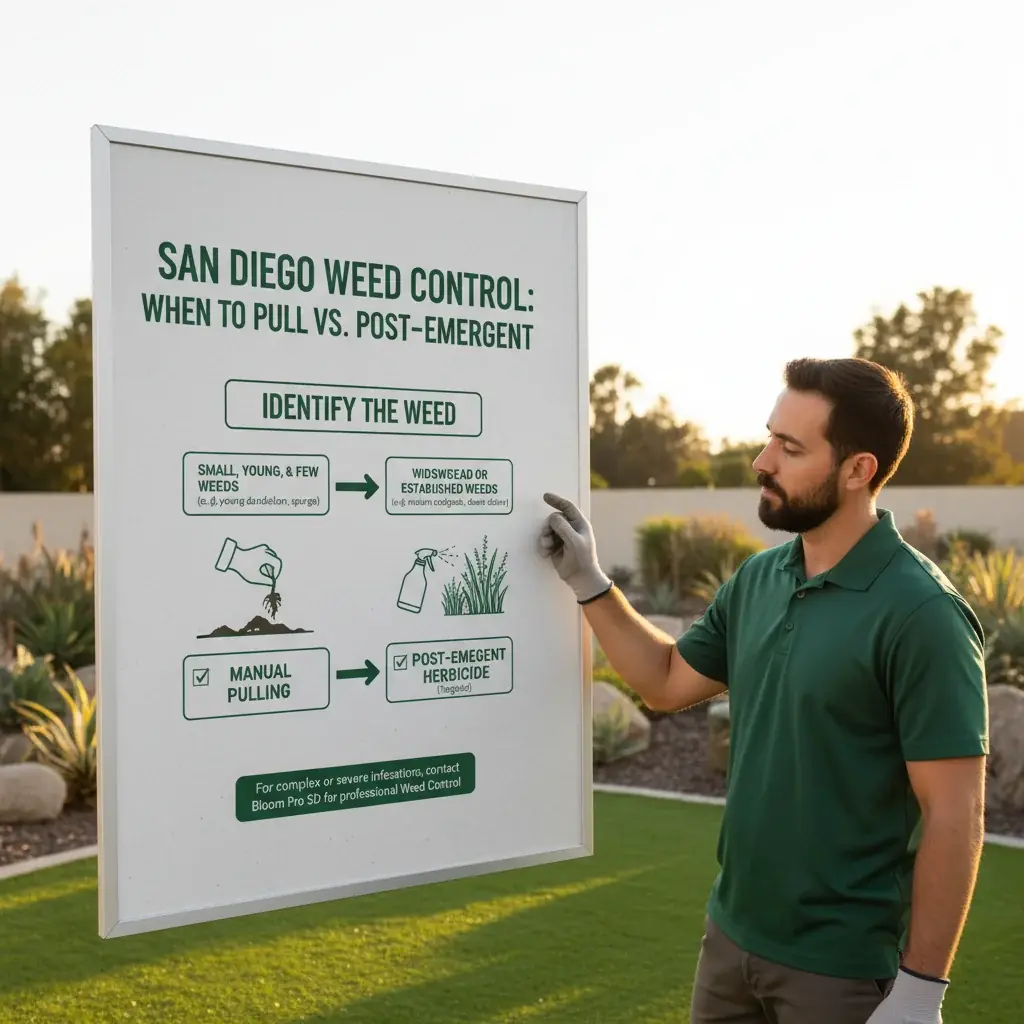
The infographic on this page is a visual aid. It is not a product recommendation. Herbicides, if used, must match the weed, the turf species, and the label. Bloom Pro SD does not apply pesticides. Independent licensed applicators do.
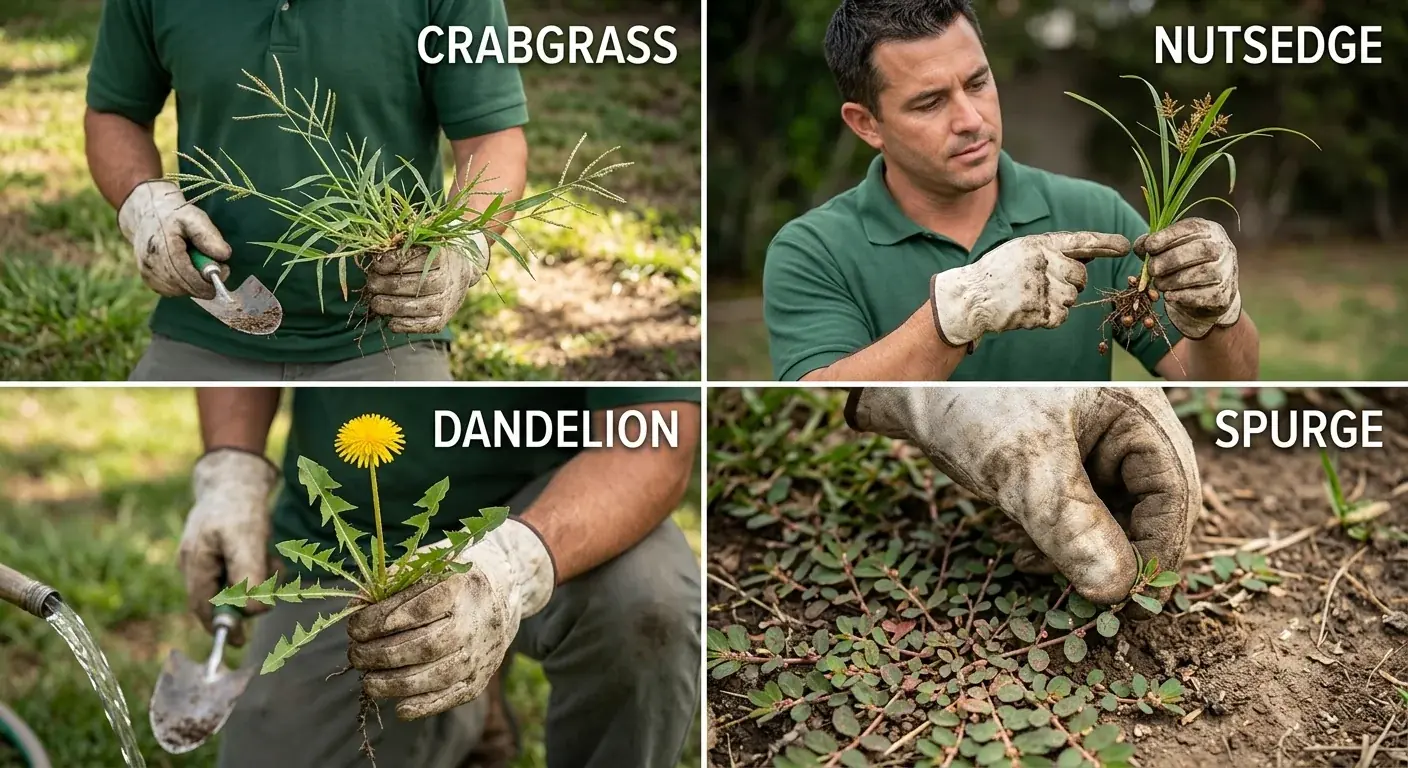
Crabgrass: a summer annual grass
Crabgrass (Digitaria spp.) is a warm-season annual grass. It completes a life cycle in one season and returns from seed. UC IPM lists crabgrass among lawn weeds favored by poor irrigation, including light, frequent watering that keeps the surface wet and roots shallow.
What it looks like: a low, spreading clump with coarser, lighter-green blades than many turfgrasses, then finger-like seed heads.
Where it shows: thin turf, compacted spots, drought-stressed patches, and sunny openings.
How it spreads: by seed. This page does not publish seed counts or soil-temperature germination triggers. Those vary by species and year. For prevention timing, use a current UC or product label and our pre-emergent timing guide as a planning companion, not as a calendar law.
UC IPM: water deeply and infrequently once the lawn is established; check sprinkler coverage; mow with the one-third rule. Hand-pull young plants before they set seed.
Nutsedge: a sedge, not a grass
Nutsedge (often called nutgrass) is a sedge. Stems feel triangular when rolled between your fingers. Leaves are often thicker and more upright than the surrounding turf and can outgrow a mowing quickly. Underground tubers (nutlets) and rhizomes make it a perennial problem.
UC IPM: nutsedge is associated with poorly irrigated or overly wet lawns and is harder to control once established. Hand weeding matters, but pulling can leave tubers. Some perennial sedges are not cleaned up by cultivation the way annuals are. A licensed applicator may use products labeled for nutsedge in your turf species. This page does not name rates or promise a kill.
Where it shows: leaky heads, low spots, overwatered zones. Once established it can persist even as the surface dries.
Broadleaf weeds: dandelion and clover
Broadleaf weeds have wider leaves and visible veins, unlike grasses and sedges.
Dandelion: basal rosette of toothed leaves, yellow flowers, then puffball seed heads. A taproot remains if you snap the top. UC IPM includes hand weeding of dandelion among practices that prevent patches. A post-emergent broadleaf product is a label decision for large patches, not a default.
White clover: three leaflets, white flower heads, spreading stolons. It can indicate thin turf or low nitrogen, but that is a clue, not a soil-test result. Fix the lawn conditions. Herbicides labeled for clover and safe on your grass are a last step after identification.
Spurge in heat
Spurge (Euphorbia spp.) forms low mats. Leaves are small; stems often show milky sap when broken. Wear gloves. Sap can irritate skin. This is a handling caution, not a medical diagnosis.
UC IPM lists spurge among weeds to catch by hand and among species some landscape herbicides can address. It likes heat, thin turf, cracks, and compacted edges. It spreads by seed. Pull young plants before they flower. Pre-emergent and post-emergent choices belong on a current UC pest note and the product label.
Pull vs treat: UC IPM order of operations
- Identify the weed (grass, sedge, or broadleaf; annual vs perennial).
- Fix irrigation, mowing, compaction, and thin turf. Deep, infrequent watering. Even coverage. Mow correctly.
- Remove young weeds by hand before they flower or form tubers and patches.
- Overseed or patch bare spots so the lawn can compete.
- Use an herbicide only when the population justifies it. Choose a product labeled for that weed and that turf. Nonselective products kill grass too. Contact products may miss roots. Systemic products have their own risks. Follow the label. Licensed applicators exist for a reason.
For nutsedge and other stubborn perennials, pulling alone is often incomplete. That is a reason to diagnose, not to spray the whole lawn on a guess.
If the infestation is widespread, Bloom Pro SD can match you with weed control from independent licensed contractors. Call (760) 400-6355.
Frequently asked questions
What are the most common weeds in San Diego yards?
Crabgrass, nutsedge, spurge, and dandelion are the set this page walks through. Winter annuals such as annual bluegrass also appear. Identification comes first because timing and tools differ.
Why do the same weeds keep coming back every year?
Seed in the soil, leftover tubers, and the same lawn stresses. Pulling this year’s plant does not empty the seed bank. UC IPM: prevent with healthy turf, then treat what remains.
Is spot spraying or hand pulling better?
Hand-pulling young, sparse weeds, especially dandelion with the taproot, is UC IPM’s first mechanical step. Spot treatment is a labeled decision for larger or perennial problems. Treating after seed-set is weaker than catching plants early.
When to call us
Widespread patches, nutsedge that returns from tubers, or any pesticide you are not licensed and equipped to use: match with a licensed independent pro. Bloom Pro SD does not employ crews and does not guarantee a weed-free lawn.
Call (760) 400-6355.