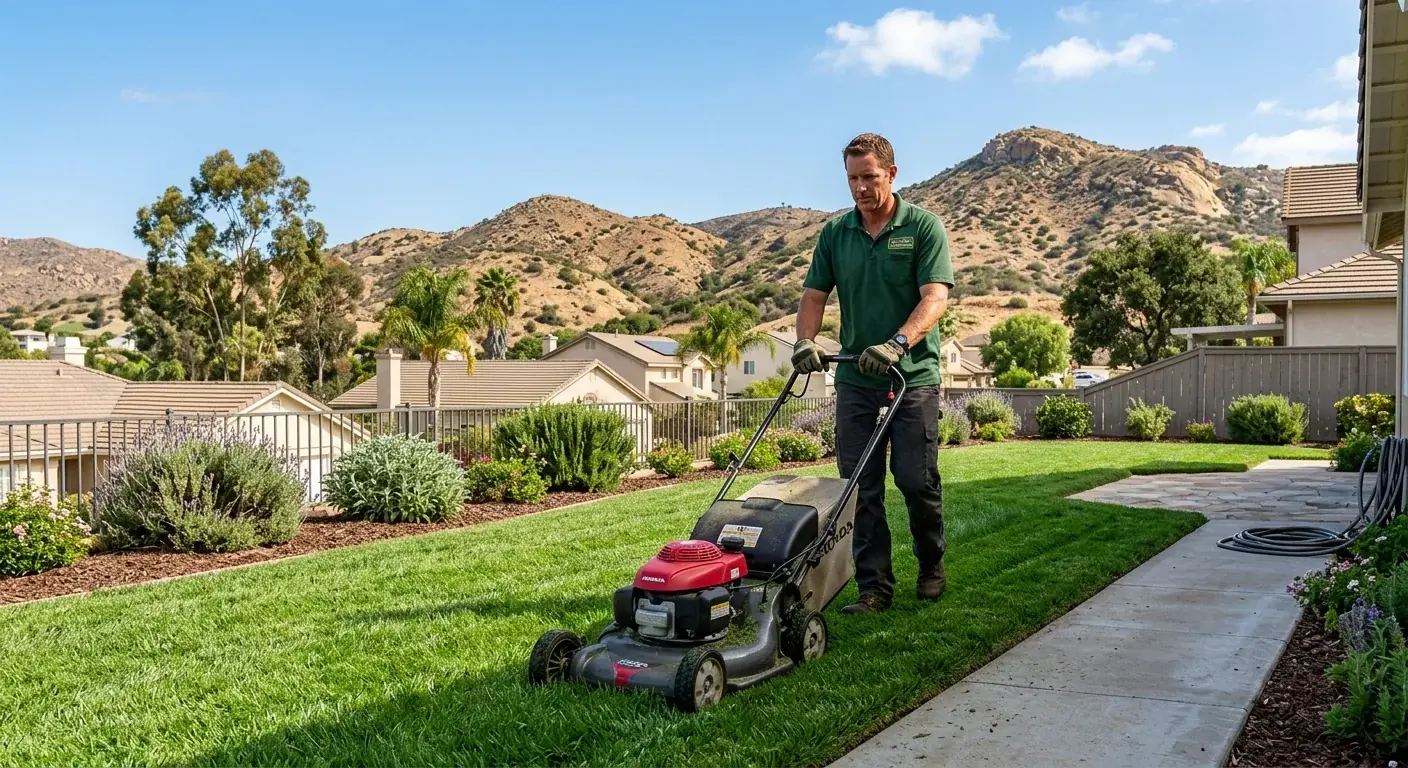
El Cajon sits inland of the marine layer, so lawns see hotter, drier summers than coastal neighborhoods. Watering, grass selection, and visit frequency should follow the lot, not a coastal calendar.
Why El Cajon’s inland heat changes lawn care needs
El Cajon sits further east from the coast than many other San Diego communities, resulting in a distinct microclimate. Summer temperatures run higher inland, often without the marine layer that keeps coastal areas cooler and more humid. This intense heat, combined with lower humidity and the occasional Santa Ana winds, creates a much tougher environment for traditional lawns.
Your lawn in El Cajon faces increased evapotranspiration rates. This means moisture evaporates from the soil and plants at a much faster pace. Grasses work harder to stay hydrated, putting them under considerable stress if not properly cared for. These conditions also make lawns more susceptible to heat stress, drought damage, and certain pest infestations. Effective El Cajon lawn care absolutely must prioritize water conservation and heat resilience. It’s not just about keeping your grass green; it’s about making smart choices that conserve our precious resources and create a sustainable landscape.
Best grass types that thrive in warmer, drier climates
Choosing the right grass type is the most critical decision for a successful El Cajon lawn. Cool-season grasses like Tall Fescue, common in cooler climates, will struggle immensely here. They require excessive water to stay green and often succumb to heat stress and disease. Instead, we recommend warm-season grasses that are naturally adapted to high temperatures and drought conditions.
Bermuda grass is often the top choice for El Cajon. It’s incredibly resilient, has excellent heat and drought tolerance, and recovers quickly from stress. While it goes dormant and browns in winter, it bounces back vibrantly in spring. Zoysia grass is another fantastic option, offering even better drought tolerance and a denser, softer blade. It establishes more slowly but creates a beautiful, low-maintenance turf once mature. St. Augustine grass also tolerates heat well, though it generally needs slightly more water than Bermuda or Zoysia and prefers some partial shade in the hottest spots. Selecting one of these grass types will significantly reduce your lawn’s water demands and improve its health in El Cajon’s climate. Tailoring your grass choice also influences your lawn fertilization schedule, ensuring nutrients support the right growth cycles.
Watering schedules to follow for El Cajon lawns
Efficient watering is not just about conserving water; it’s about keeping your El Cajon lawn healthy. Over-watering can be just as damaging as under-watering, leading to fungal diseases and shallow root systems. The key is to water deeply and infrequently. This encourages grass roots to grow deeper into the soil, making them more resilient to heat and drought.
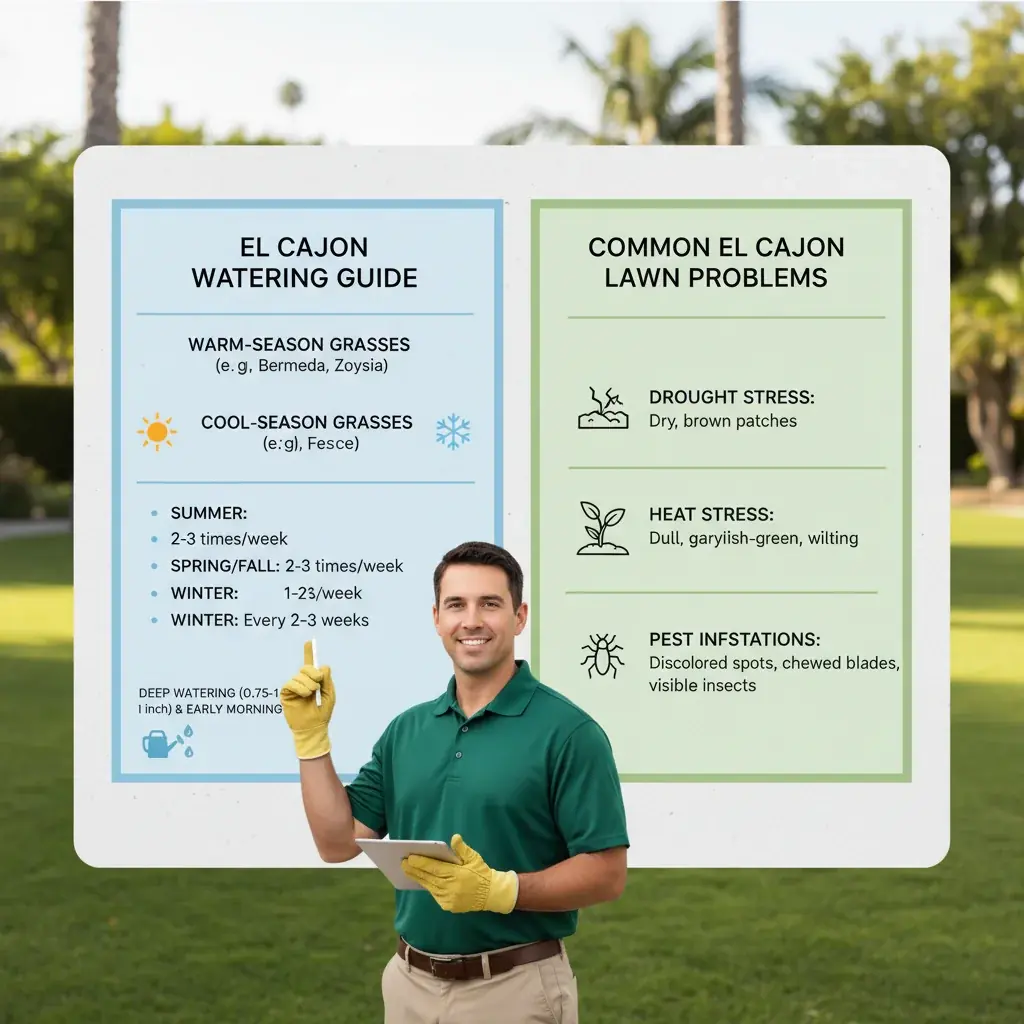
For warm-season grasses like Bermuda or Zoysia, aim for 2-3 watering sessions per week during the peak summer months. Each session should wet the root zone. Measure with a rain gauge rather than trusting the timer. This page does not freeze a county inch count. You can measure this with a rain gauge or by placing empty tuna cans in your yard. Adjust this frequency in spring and fall, reducing it as temperatures cool. In winter, your dormant lawn will need very little water, perhaps once every 2-3 weeks, depending on rainfall. Always water in the early morning when the agency allows it. Confirm the legal watering window with the agency named on your bill rather than treating 4 AM to 8 AM as a county rule. Considering a smart irrigation controller can make these adjustments effortless and significantly cut down on water waste. The San Diego County Water Authority and EPA WaterSense provide excellent resources for efficient irrigation.
Common East County lawn problems
Even with the right grass and watering, El Cajon lawns face specific challenges due to their environment. Drought stress and dry patches are perhaps the most common issues. These often appear as brown, crispy areas that don’t respond to light watering. It’s usually a sign of insufficient deep watering, or possibly an inefficient irrigation system. Heat stress can also manifest as a dull, grayish-green color, signaling that your lawn is struggling.
Pest infestations are another frequent problem. Grubs, chinch bugs, and armyworms can thrive in stressed lawns, feeding on roots or blades and causing significant damage. Fungal diseases like brown patch or dollar spot can emerge if there’s too much moisture on the grass blades, especially in areas with poor air circulation or compacted soil. Homeowners also see stubborn weeds that take advantage of weakened turf. The pros in our network are familiar with the specific varieties of weeds and pests that target East County lawns and develop targeted solutions. Addressing these problems effectively requires local knowledge and a proactive approach, often involving soil amendments, targeted treatments, or irrigation adjustments.
What weekly lawn maintenance should cover in El Cajon
Effective weekly lawn maintenance in El Cajon demands more than basic mowing, which is why the match should be a pro who actually works inland San Diego yards. They should start with careful mowing at the correct height, which is crucial for heat-stressed lawns; they typically recommend a higher cut to provide more shade for the soil and retain moisture.
Beyond regular mowing, a useful El Cajon visit includes detailed edging and trimming plus irrigation monitoring. They should check for leaks, adjust sprinkler heads for optimal coverage, and fine-tune watering schedules. Any lawn fertilization program should be seasonally adjusted and tailored to your specific grass type. Ask the independent professional to write pest, disease, and nutrient checks into the visit if you want those included.
Frequently asked questions
Why is lawn care different in El Cajon than near the coast?
El Cajon sits well inland with little marine layer moderation, so summer temperatures run significantly higher and evapotranspiration climbs with them. Moisture leaves soil and plants faster, and grass that would coast along in Encinitas works much harder here. A coastal watering schedule applied in El Cajon underwaters the lawn.
What grass type is best for El Cajon?
Bermuda is usually the top pick, with excellent heat and drought tolerance and fast recovery from stress. It browns and goes dormant in winter, then greens up strongly in spring. Zoysia is the other strong option. Cool-season tall fescue struggles here, needing excessive water to stay green through inland summers.
How often should I water a lawn in El Cajon?
For warm-season grasses like Bermuda or zoysia, two to three sessions a week through peak summer is a common starting point. Measure depth with a rain gauge or straight-sided cans rather than trusting the timer. Deep and infrequent beats daily and shallow, which produces shallow roots and fungal problems.
What lawn problems are most common in East County?
Drought stress and dry patches first, appearing as brown crispy areas that do not respond to light watering. Pests are the second cluster, with grubs, chinch bugs and armyworms all thriving in already-stressed lawns. Fungal disease like brown patch and dollar spot shows up where moisture sits too long.
When to call us
Managing a healthy lawn in El Cajon’s unique climate can be a complex task. If you’re struggling with persistent dry patches, unidentified pests, or simply want to ensure your lawn receives expert, water-efficient care, it’s time to bring in the pros. We match you with pros who tailor lawn care in El Cajon to the specific challenges of your inland San Diego yard. Call us at (760) 400-6355 to get matched. The independent professional quotes the work.