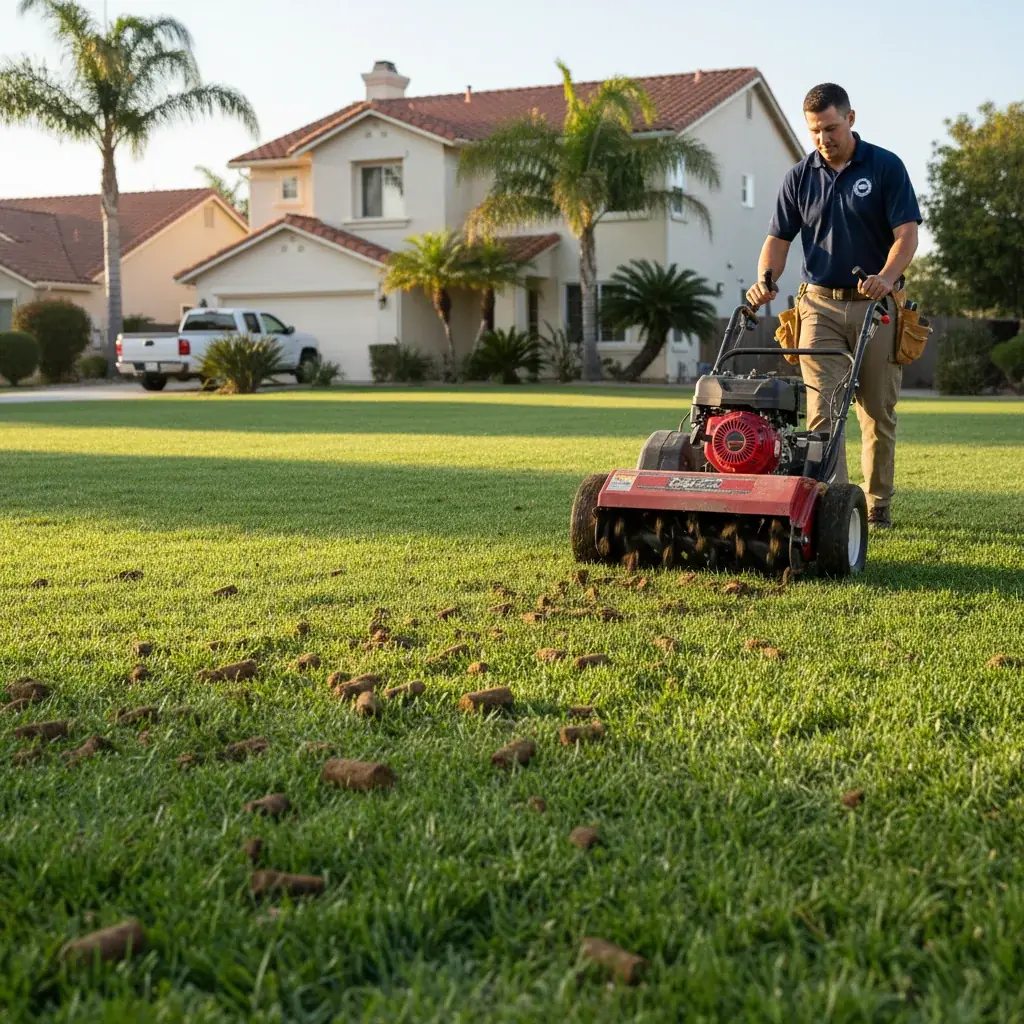
Lawn aeration in San Diego is core aeration: a machine pulls soil plugs so water, air, and fertilizer can reach roots on compacted clay and decomposed granite. For bermuda, St. Augustine, and zoysia, late spring through early summer is the window. For tall fescue, time it with fall overseeding. Most national calendars were written for the Midwest or the Southeast. Follow those here and you aerate at the wrong time. This page is the county calendar. The pros we match fold aeration into lawn maintenance or a seasonal visit.
Why SD’s aeration window doesn’t match the rest of the country
The national guidance, aerate in fall for cool-season grass, aerate in late spring for warm-season grass, is roughly correct. But San Diego’s Mediterranean climate compresses and shifts those windows in ways that trip up a lot of homeowners.
We don’t get the hard freezes that slow warm-season grasses to dormancy in January. We rarely see the prolonged cool springs that give fescue a long recovery runway in the Pacific Northwest. What we do get is a dry season that runs roughly May through October, marine layer that keeps coastal lawns cooler than inland ones, and soil that’s often either dense clay (think Clairemont, Chula Vista, parts of El Cajon) or compacted decomposed granite (DG) in hillside neighborhoods like Rancho Peñasquitos or Jamul.
Both clay and DG compact hard. Clay binds together under foot traffic and irrigation, blocking oxygen from reaching roots. DG packs like concrete when it dries out. Either way, water beads off the surface instead of soaking in, your grass thins, and no amount of fertilizer fully compensates.
Aeration breaks that cycle. It pulls finger-sized soil cores out of the ground every few inches, opening channels for water, air, and nutrients to reach the root zone. But those channels only help if the grass can actively grow to fill them. Aerate at the wrong time and you’ve stressed a lawn that can’t recover before heat or drought arrive.
The good news: once you know your grass type, the window in San Diego is predictable.
Cool-season fescue: the September-October sweet spot
Tall fescue is the most common lawn grass in inland San Diego, neighborhoods like Santee, La Mesa, Escondido, and most of North County. It grows actively in fall and spring, goes semi-dormant in summer heat, and tolerates our dry conditions better than Kentucky bluegrass.
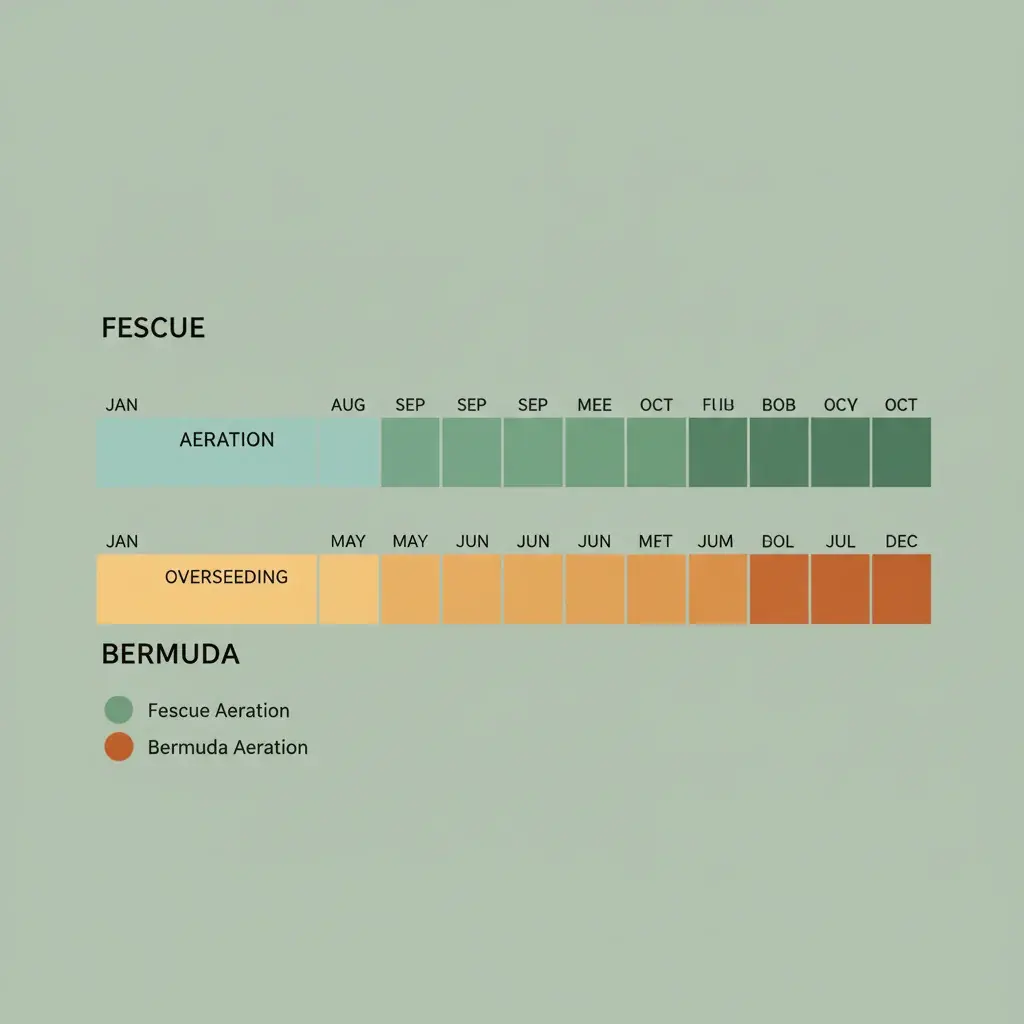
For fescue, aerate between mid-September and mid-October. Here’s why that window works:
- Soil is still warm enough for the labeled fescue blend to germinate, and the worst inland heat is past
- The worst heat stress is over, so a freshly aerated lawn isn’t fighting 90°F days inland
- You have 8-10 weeks of moderate weather before winter slows growth
Pair aeration with overseeding in the same visit. Spread tall fescue seed immediately after aeration, the open cores act as perfect seed beds. Fall overseeding lines up with cooler, wetter months. Confirm current UC Master Gardener of San Diego County guidance at mastergardenersd.org rather than treating this page as their published schedule.
Water according to the seed label and current water-agency rules. New seed is not an established lawn. UC IPM’s general rule for established turf is deeper, less frequent irrigation in the early morning. Check SDCWA conservation.
Avoid aerating fescue in spring. Yes, fescue grows in spring, but you’re also heading into summer heat. A stressed lawn opening in March or April doesn’t have enough recovery time before July. Spring is better used for a fertilizer application when a matched lawn fertilization professional writes that timing for the grass.
Warm-season bermuda and kikuyu: the May-June window
Bermuda and kikuyu are the workhorses of coastal and lower-elevation San Diego yards. You’ll find bermuda all over Mission Valley, Coronado, Ocean Beach, and Chula Vista. Kikuyu is common in older neighborhoods, it spreads aggressively and survives drought better than most homeowners expect.
Both are warm-season grasses. They slow in winter and green up once soil is warm enough for that cultivar. On many San Diego lots that is late spring. Confirm with the sod or seed label rather than a county-wide soil temperature.
Aerate warm-season grasses in May or June, after active growth resumes but before peak summer heat locks in. Aerating in April when the soil is still cool means slow recovery. Aerating in August means you’re opening a heat-stressed lawn to more stress.
Overseeding bermuda in summer is usually unnecessary unless you have significant thin or bare patches. Kikuyu fills in so aggressively that overseeding is almost never needed, aeration alone opens the canopy and lets it thicken. If you do want to overseed bermuda for coverage, use hulled bermudagrass seed right after aeration in May, water frequently, and keep off the lawn for two to three weeks.
One note on kikuyu: because it spreads by both stolons and rhizomes, aeration can occasionally drag runners into new areas. That’s not a problem if you want dense coverage, but worth knowing if you’re trying to contain it to a specific zone.
Core aeration vs liquid aeration: what works in our soil
You’ll see liquid aeration products at Home Depot, concentrated solutions of humic acid or soil conditioners marketed as a no-mess alternative to machine aeration. They’re worth understanding honestly.
Core aeration uses a machine to pull soil plugs on a grid. You can see the plugs and the holes. For compacted clay or DG, that mechanical action is the usual choice. Liquid products do not create the same pores.
Liquid aeration improves water penetration in mildly compacted soils and can be a useful supplement. But it doesn’t replace core aeration in heavy clay or packed DG. The chemistry helps water move through pore spaces, it can’t create pore spaces that don’t exist.
If a probe slides into moist soil easily, liquid aeration might be a between-year supplement. If the soil stops the probe near the surface, core aeration is the usual mechanical fix.
Core aeration machines are heavy and usually need a truck or trailer. They are available at rental yards, but slopes and tight gates are a real handling risk.
Overseeding: what to expect after, without invented prices
San Diego overseeding cost depends on lawn size, grass type, and whether aeration is bundled. Independent contractors set the number. Bloom Pro SD does not publish aeration or seed rates.
Ask the quote to show:
- Core aeration vs liquid product (they are not the same job)
- Seed variety, pounds, and who supplies it
- Whether herbicide hold-off and first mows are in the maintenance scope
After aeration and overseeding, cores on the surface and visible seed are normal. New germination timing follows the seed label. Do not mow until the contractor or label says the seedlings can take it. Pause heavy equipment on new seed. Many pre-emergents kill germinating grass. Follow the product label and the maintenance contractor. See lawn maintenance.
DIY vs hiring out: where the line actually is
Core aeration on a flat, open lawn can be a homeowner rental if you can handle the machine safely. Budget time and rental from the yard, not from this page.
The math changes in a few situations:
Slopes. A heavy aerator on a hillside is a safety issue. Hire it out.
Access. Many rental machines will not fit a narrow side gate. A contractor with compact equipment may be the only option.
Large lawns. Commercial equipment and same-visit seeding change the hours.
Timing. The fall fescue window is short. Missing it can mean waiting a year. That is a reason to book, not a price.
Verify any contractor at CSLB.
Frequently asked questions
When is the best time to aerate and overseed a lawn in San Diego?
It depends on grass type. Aerate tall fescue in fall (commonly mid-September into October on many inland lots). Aerate warm-season bermuda and kikuyu after spring green-up, often May or June. Confirm with the cultivar and the contractor, not a soil-temperature rule from this page.
Why doesn’t national aeration advice work here?
Because our Mediterranean climate compresses and shifts the windows. We do not get the hard freezes that push warm-season grasses fully dormant in January, and we rarely get the long cool spring that gives fescue an extended recovery runway elsewhere. What we do get is a dry season running roughly May through October, which changes when a lawn can recover from the stress of aeration.
Is liquid aeration as good as core aeration?
No, not as a replacement on compacted clay or DG. Core aeration pulls soil plugs you can see. Liquid products are soil conditioners. They do not do the same job.
What does aeration and overseeding cost in San Diego?
Get a written quote that lists aeration, seed, and any same-visit bundle. Rental DIY on a small, flat, open lawn is a separate path. There is no published San Diego aeration price on this page.
When to call us
If your lawn is on a slope, access is tight, or you are inside a short seasonal window, match with a licensed independent contractor. Bloom Pro SD refers. They quote. You hire them. Call (760) 400-6355.