Spray heads throw water into the air. Wind, overspray onto pavement, and evaporation can waste part of that water before it reaches plant roots. Drip emitters apply water at the soil. That does not create a guaranteed bill cut. Savings depend on the old schedule, leaks, plant mix, and your water agency’s rates. Bloom Pro SD matches homeowners with licensed independent contractors. We do not install irrigation or warrant a savings figure.
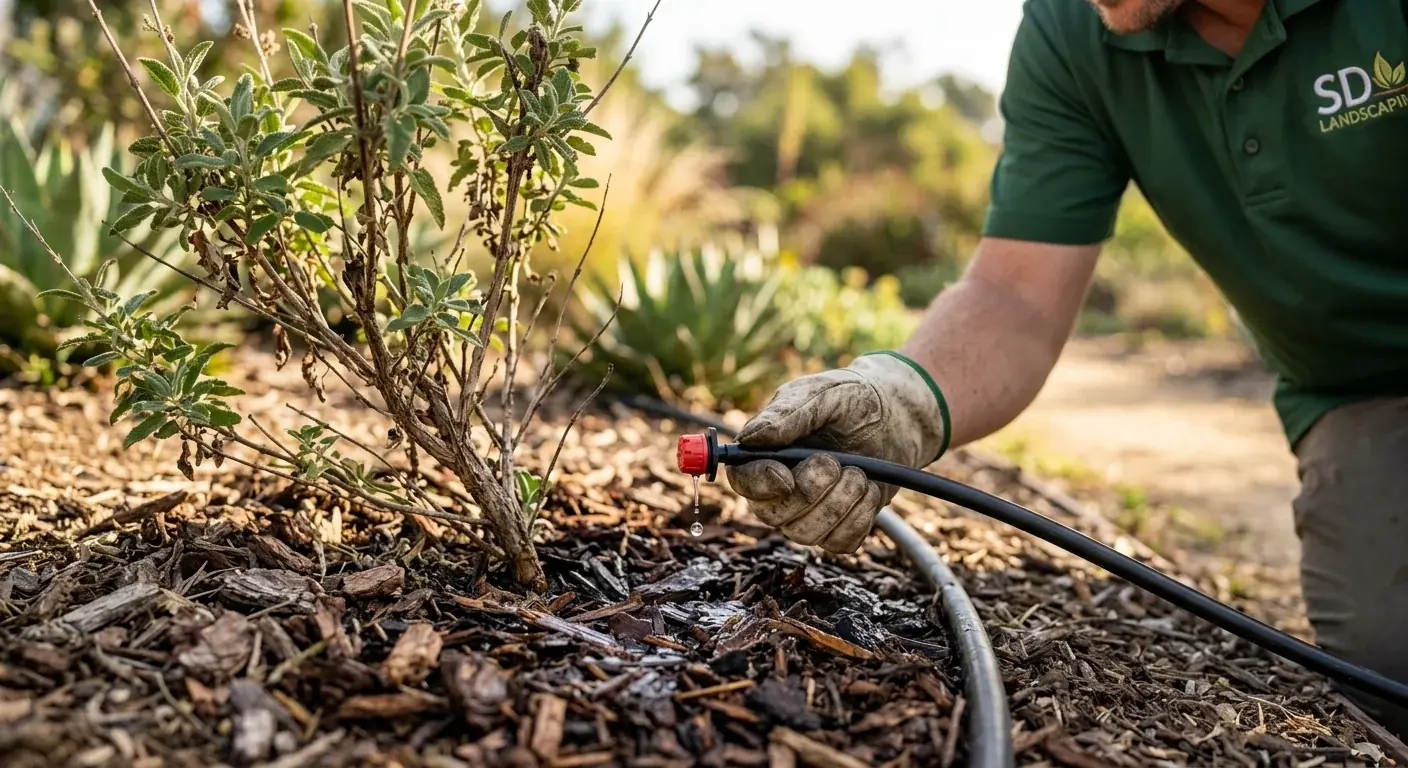
Why spray can lose water to wind and evaporation
San Diego County yards see sun and, in many neighborhoods, wind. Spray patterns that land on sidewalks, driveways, or neighboring lots are lost to the plants. UC IPM’s lawn watering guide tells homeowners not to let sprinklers run off the lawn, to water when the top of the soil has dried, and to use deeper, less frequent cycles for most lawns. Those turf rules still apply if you keep lawn spray. For beds and shrubs, drip is a different delivery method, not a 30 percent savings coupon.
Do not use a fictional gallons-per-year worksheet from this page to plan a water bill. Read your meter or agency usage history, then compare a proposed drip schedule after a contractor measures the zones.
Drip components: emitters, tubing, filters, and pressure regulators
A conversion is a designed system, not a bag of parts.
- Tubing: Main line and smaller laterals carry water from a valve or faucet to the plants.
- Emitters: Devices rated in gallons per hour deliver water at the root zone. Flow must match plant groups and soil. Pressure-compensating emitters exist for uneven grades; use the product the designer specifies.
- Filters: Municipal water can carry sediment. Manufacturers require filtration so small openings do not clog.
- Pressure regulators: Spray valves often run at higher pressure than drip tubing is designed for. A regulator brings the converted zone into the product’s operating range.
Fittings, end caps, and stakes complete the assembly. Sizing belongs to the valve’s flow capacity and the emitter load, which is why a whole-yard conversion is usually quoted after a site visit.
How to compare conversion quotes
Skip invented DIY and professional price bands. Ask each bidder to itemize:
- Zones converted versus zones left on spray
- Pressure regulation and filtration per converted valve
- Emitter type, spacing, and plant hydrozones
- Controller program changes
- Trenching, restoration, and leak repairs found during the work
- Whether the conversion is part of a turf-replacement project with separate rebate paperwork
A single-bed hose-bib kit is a different job from converting several spray valves. Our DIY drip guide draws that line without treating either path as a published rate.
Water use: what you can actually measure
A conversion can reduce waste from overspray and from watering pavement. It can also fail if emitters clog, pressure is wrong, or the controller still runs spray-length cycles. Compare:
- Current zone runtimes and how many days they run
- Visible runoff or dry spots
- Meter readings before and after, once the new schedule is stable
City of San Diego potable landscape watering is limited to before 10 a.m. or after 6 p.m., with additional rain and runoff rules on the city’s water-use restrictions page. Other agencies have their own rules. Pair drip with drought-tolerant landscaping only when the plants and hydrozones match.
Rebate offsets for drip retrofits
The SoCal Water$mart turf replacement program requires irrigation modification or conversion on qualifying projects: convert overhead spray to drip, micro-spray, bubblers, or rotating nozzles, or cap heads and hand-water. No overhead spray may remain in a finished qualifying project area. Confirm current dollars, plant counts, the 250-square-foot (or entire small-site) turf rule, and synthetic-turf exclusion on the official eligibility page before removing lawn.
A stand-alone drip retrofit without turf removal may or may not have a local incentive. Check the agency on your water bill. Weather-based controller rebates are a separate product; use the program estimator rather than a copied dollar amount from an old article. Our smart irrigation controller rebate guide is the place for that checklist.
DIY versus a professional conversion
DIY can fit one small, uniform bed with an accessible connection. Call a professional when you have multiple zones, mixed plant types, slope, or a controller that must run drip and remaining spray correctly. Bloom Pro SD does not warrant parts or labor. Any warranty is in the contractor’s or manufacturer’s writing.
Frequently asked questions
Why is drip better than spray in San Diego?
Drip puts water at the soil instead of in the air, which can cut wind drift and pavement overspray. It is not automatically better for turf, and it does not guarantee a lower bill.
What does a drip system actually consist of?
Tubing, emitters, a filter, and a pressure regulator, plus fittings. Exact sizes come from the products and the zone design.
What does converting spray to drip cost in San Diego?
There is no single reliable number without a defined scope. Compare itemized estimates for the valves, parts, trenching, and programming you actually need.
Can I get a rebate for converting to drip?
Sometimes as part of a qualifying turf replacement, because the program requires irrigation changes. A drip-only project needs a current check with your water agency. Do not start work before any required reservation.
When to call us
If you want a spray-to-drip conversion quoted, call (760) 400-6355. We will match you with a licensed local pro. You contract with that professional directly.