A plant list that thrives in Coronado can struggle in an Eastlake backyard. The gap is sun, heat, and soil, not a lack of care. Successful Chula Vista landscaping starts with the parcel: hours of sun, how water moves, and what the soil actually is. Do not treat the whole city as one climate.
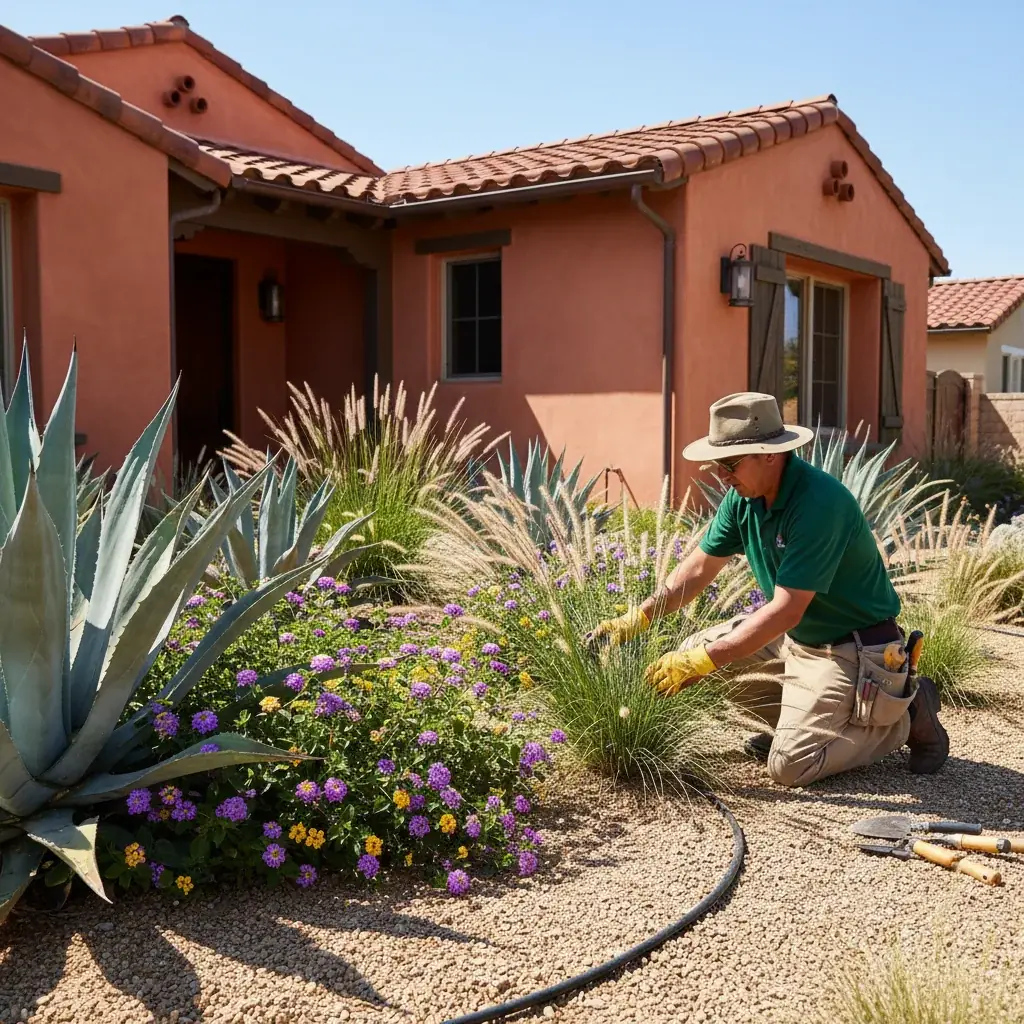
Why a coastal plant list can fail east of the freeways
Western Chula Vista still feels marine influence. Farther east, the marine layer burns off earlier and heat stays on the plants longer. Evapotranspiration (water lost from soil and leaves) is higher inland than on the immediate coast. That is a reason to irrigate to the plant and the soil, not to copy a coastal neighbor’s controller.
A fuchsia-and-fern palette built for fog will need more water than a drought-tolerant design made for reflected heat. Stress shows up as browning, pests, and a water bill you did not plan. This page does not publish ET numbers or bill dollars. Probe soil and follow your water agency’s current rules.
Soil: test the lot, do not assume the subdivision
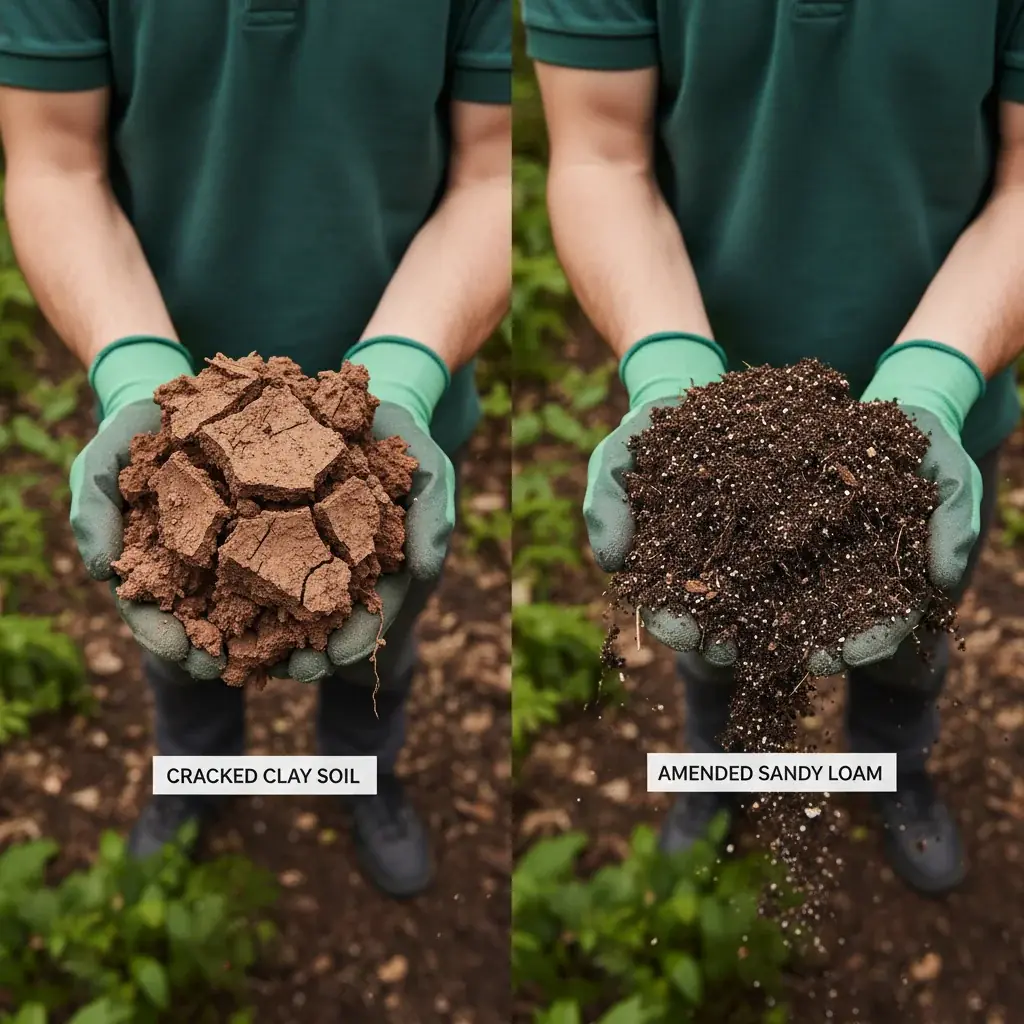
Many South Bay lots, especially graded newer tracts, have heavy clay. Clay drains slowly, then holds water around roots. It also compacts. Roots stall. Summer cracking is a clue, not a diagnosis for every street.
Checklist:
- Dig a hole after irrigation. Does water perch or run off?
- Can you push a probe into moist soil, or does it stop?
- Get a simple soil test before you add compost as a rule. Amendment depth is a contractor call for that plant list.
- Choose plants that tolerate the drainage you actually have, or change the bed (raised, graded, or a different species).
UC IPM lawn guidance still applies if you keep turf: even coverage, deep infrequent watering, mow with the one-third rule.
Heat-tolerant plants to look up, not a guaranteed palette
Look for species used in Mediterranean, South African, and Australian dry-summer gardens, plus California natives that Calscape lists for your ZIP. Confirm each tag.
Structure: agaves (softer-tipped vs spiny), aloes, desert spoon. Inland cold nights change which agave you want. See succulents for San Diego.
Flower: lantana, Cleveland sage and other salvias, bougainvillea, Texas ranger. All need the right sun and drainage.
Grasses: muhly and blue fescue are common accents. They are not lawn substitutes unless the cultivar is sold that way.
Layer for year-round form. One species en masse is a design choice, not a requirement.
Irrigation for inland heat
Spray that was sized for a coastal lawn wastes water on inland beds. Drip or other low-volume emitters put water at the root zone and cut wet foliage. Efficiency claims vary by product and installation. Use WaterSense-labeled equipment where it fits, and a written irrigation plan. Do not treat a blog percentage as your system’s rating.
If some lawn remains: water deeply, less often, in the early morning when the lawn actually needs it, per UC IPM and your provider. Smart controllers can help if they are installed and scheduled for the site. Rebate amounts for controllers are agency-specific. Check SoCal Water$mart irrigation controllers.
Shade and hardscape without invented degrees
Patios, permeable paving, and shade structures make inland yards usable in summer. Materials, drainage, and permits are site-specific. A deciduous tree on the hot side of the house is a common cooling strategy. Species and setbacks come from the designer and the city, not from this page. Landscape design is the intake for that mix.
Permeable surfaces matter if you also want a turf rebate. Concrete that replaces turf can disqualify that area.
Rebates: Sweetwater, Otay, and the regional program
Chula Vista addresses are commonly served by Sweetwater Authority or Otay Water District. Both may participate in regional turf replacement. Do not budget an invented local per-square-foot stack from this blog.
Use the SoCal Water$mart estimator for your address. The regional published rate in our claims ledger is $2.00 per square foot of removed live turf, up to 5,000 square feet per year, with possible local top-ups that change with funding. Approval to proceed is required before turf comes out. Dead turf does not qualify. Synthetic turf does not qualify. Details: drought-tolerant rebates and turf rebate per square foot.
Ask the independent contractor, in writing, who files the application. Bloom Pro SD does not promise rebate approval or paperwork.
Frequently asked questions
Why do coastal plant choices fail in Chula Vista?
East-side heat and, on many lots, clay drainage. A Point Loma plant list can lose more water than it can replace. Walk the yard.
What kind of soil does Chula Vista have?
Often clay on graded pads, but not on every parcel. Test yours.
Which plants hold up east of I-805?
Heat-adapted Mediterranean, Australian, South African, and local native species that match sun and drainage. Confirm on the tag and Calscape.
What rebates are available in Chula Vista?
Check the SoCal Water$mart estimator and your named water agency. Apply and get approval before removal. This page does not publish a local dollar stack.
When to call us
Bloom Pro SD matches you with licensed independent landscapers for design, irrigation, and planting. You contract with them. They set the written quote.
Call (760) 400-6355.